

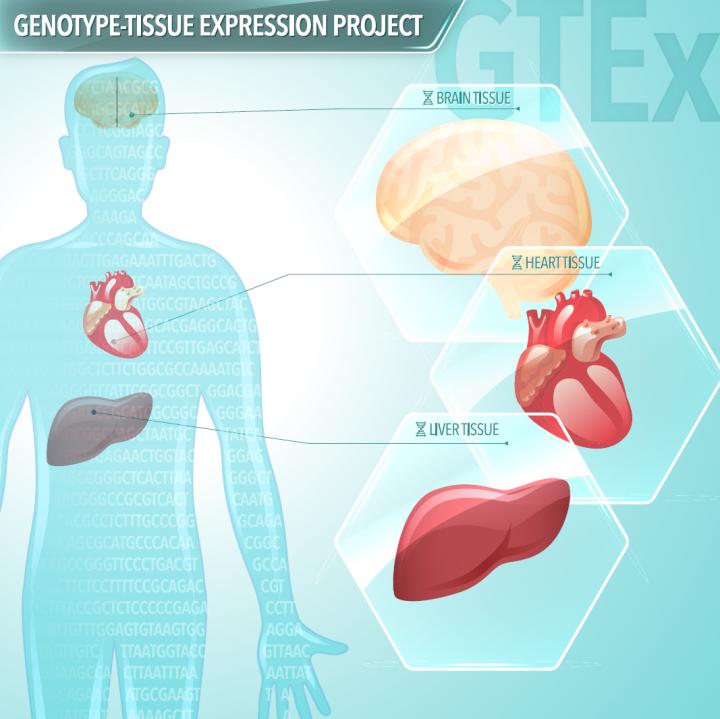
GTEx findings reveal new insights into how DNA differences influence gene activity, disease susceptibility. Researchers funded by the National Institutes of Health Genotype-Tissue Expression (GTEx) project have created a new and much-anticipated data resource to help establish how differences in an individual's genomic make-up can affect gene activity and contribute to disease. The new resource will enable scientists to examine the underlying genomics of many different human tissues and cells at the same time, and promises to open new avenues to the study and understanding of human biology.

| Molecular & Cell Biology | May 8, 2015 03:10 AM |
| Full story | 0 Comments | 5832 views |
| Molecular & Cell Biology | May 8, 2015 03:10 AM |
For years, scientists have been puzzled by the presence of short stretches of genetic material floating inside a variety of cells, ranging from bacteria to mammals, including humans. These fragments are pieces of the genetic instructions cells use to make proteins, but are too short a length to serve their usual purpose. Reporting in this week's Cell, researchers at Rockefeller have discovered a major clue to the role these fragments play in the body -- and in the process, may have opened up a new frontier in the fight against breast cancer.
| Full story | 0 Comments | 102469 views |

| Biology | May 8, 2015 03:10 AM |
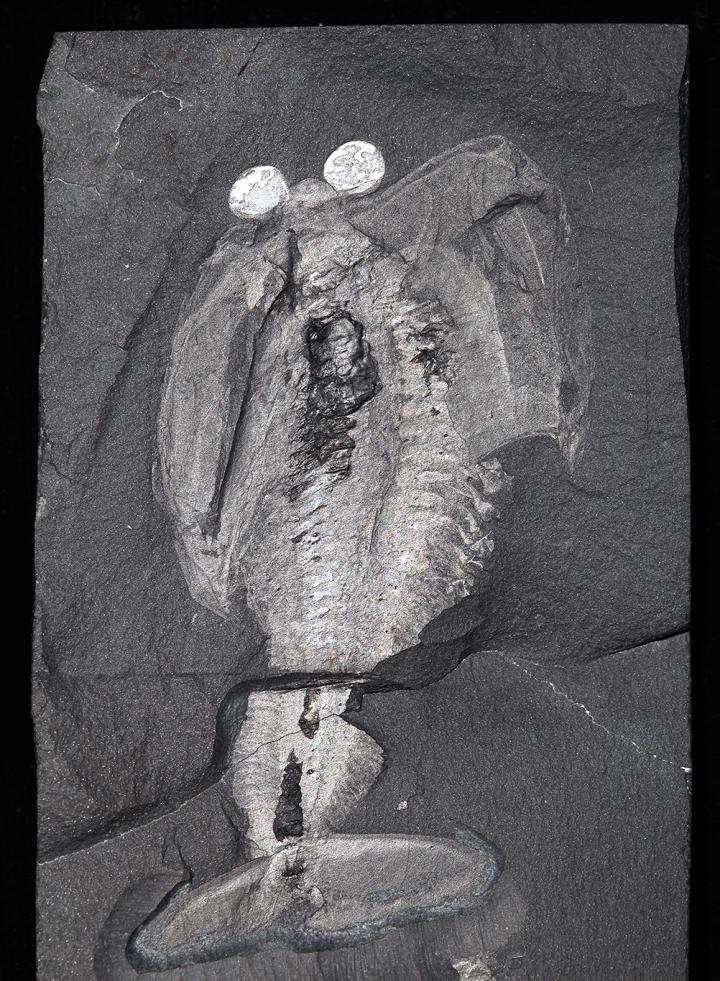
This is Odaraia alata, an arthropod resembling a submarine from the middle Cambrian Burgess Shale. A new study from the University of Cambridge has identified one of the oldest fossil brains ever discovered - more than 500 million years old - and used it to help determine how heads first evolved in early animals. The results, published today (7 May) in the journal Current Biology, identify a key point in the evolutionary transition from soft to hard bodies in early ancestors of arthropods, the group that contains modern insects, crustaceans and spiders.
| Full story | 0 Comments | 6800 views |

| Health & Medicine | May 8, 2015 03:10 AM |
The United States makes up less than five percent of the world's population but consumes 80 percent of the global opioid supply and approximately 99 percent of all hydrocodone--the most commonly prescribed opioid in the world. And, according to the authors of a new literature review in the May issue of The Journal of the American Academy of Orthopaedic Surgeons, orthopaedic surgeons are the third highest prescribers of opioid prescriptions among physicians in the United States--behind primary care physicians and internists.
| Full story | 0 Comments | 6193 views |

| Biotechnology | May 8, 2015 03:10 AM |
Researchers have customized and refined a technique derived from the immune system of bacteria to develop the CRISPR-Cas9 genome engineering system, which enables targeted modifications to the genes of virtually any organism. The discovery and development of CRISPR-Cas9 technology, its wide range of potential applications in the agriculture/food industry and in modern medicine, and emerging regulatory issues are explored in a Review article published in OMICS: A Journal of Integrative Biology. The article is available free on the OMICS website until June 5, 2015.
| Full story | 0 Comments | 6607 views |

| Microbiology | May 8, 2015 03:10 AM |
Researchers at Harvard T. H. Chan School of Public Health and the Broad Institute have identified a protein on the surface of human red blood cells that serves as an essential entry point for invasion by the malaria parasite. The presence of this protein, called CD55, was found to be critical to the Plasmodium falciparum parasite's ability to attach itself to the red blood cell surface during invasion. This discovery opens up a promising new avenue for the development of therapies to treat and prevent malaria.
| Full story | 0 Comments | 5640 views |
| Health & Medicine | May 8, 2015 03:10 AM |
The measles virus is known to cast a deadly shadow upon children by temporarily suppressing their immune systems. While this vulnerability was previously thought to have lasted a month or two, a new study shows that children may actually live in the immunological shadow of measles for up to three years - leaving them highly susceptible to a host of other deadly diseases.
| Full story | 0 Comments | 4411 views |

- In some genetic cases of microcephaly, stem cells fail to launch
- Yale team discovers how Zika virus causes fetal brain damage
- Scientists uncover the way a common cell enzyme alerts the body to invading bacteria
- Arctic gives clues on worst mass extinction of life
- Calcium channel blockers caught in the act at atomic level
Search Bio News Net
Free Biology Newsletter
- Flexibility That A.C.A. Lent to Work Force Is Threatened by...International Herald Tribune
- Bacteria Behind Legionnaires’ Disease Found at New York Police StationInternational Herald Tribune
- Prescription Price Crisis? 28 Million Americans See Spike in Drug...MSNBC.com: Health
- Seizing on Opioid Crisis, a Drug Maker Lobbies Hard for...International Herald Tribune
- Republicans are taking a big political risk on health careAP Health News
- Why We're So Divided Over Saving WolvesNational Geographic News