

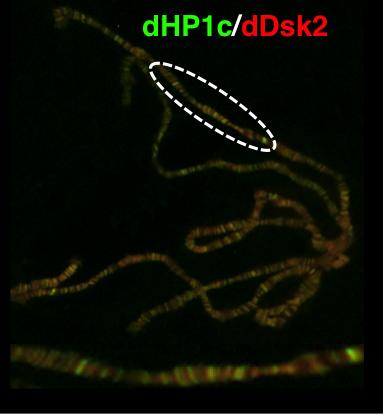
This is a microscope image of polytene chromosomes from Drosophila melanogaster, in which, using staining techniques, scientists have visualized the protein dDsk2, a molecule never previously associated with chromatin Until today, the proteins known as ubiquitin receptors have been associated mainly with protein degradation, a basic cell cleaning process. A new function now described for the protein dDsk2 by the team headed by Ferran Azorín, group leader at the Institute for Research in Biomedicine (IRB Barcelona) and CSIC research professor, links ubiquitin receptors for the first time with the regulation of gene expression. This discovery, published today in Nature Communications, opens up a double scenario, one focused on basic epigenomic research and the other biomedical, because of the link between dDsk2 and neurodegenerative diseases.

| Molecular & Cell Biology | April 28, 2015 06:32 PM |
| Full story | 0 Comments | 5910 views |

| Biology | April 28, 2015 06:32 PM |
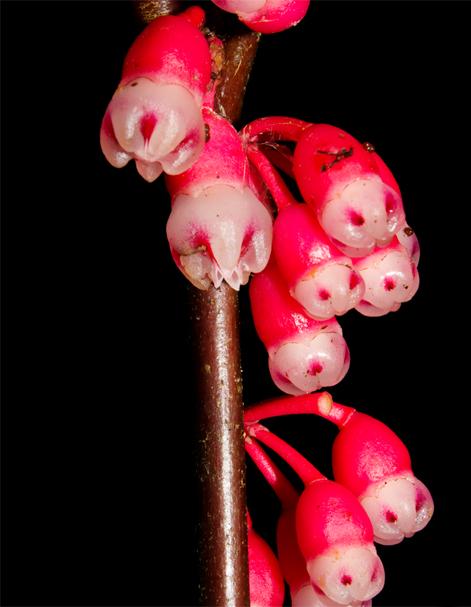
This is the gorgeous new Psammisia sophiae from Colombia. The description of five new species of blueberry relatives from Colombia highlights the country's great diversity of the plant family Ericaceae and the importance of field exploration. These new mortiños, as locally known, are added to the hundreds of blueberry relatives that are native to Colombia. The new additions are endemic species that exhibit morphological characters unparalleled within the genera in which they are classified. The study was published in the open access journal PhytoKeys.
| Full story | 0 Comments | 5305 views |

| Environment | April 28, 2015 06:32 PM |
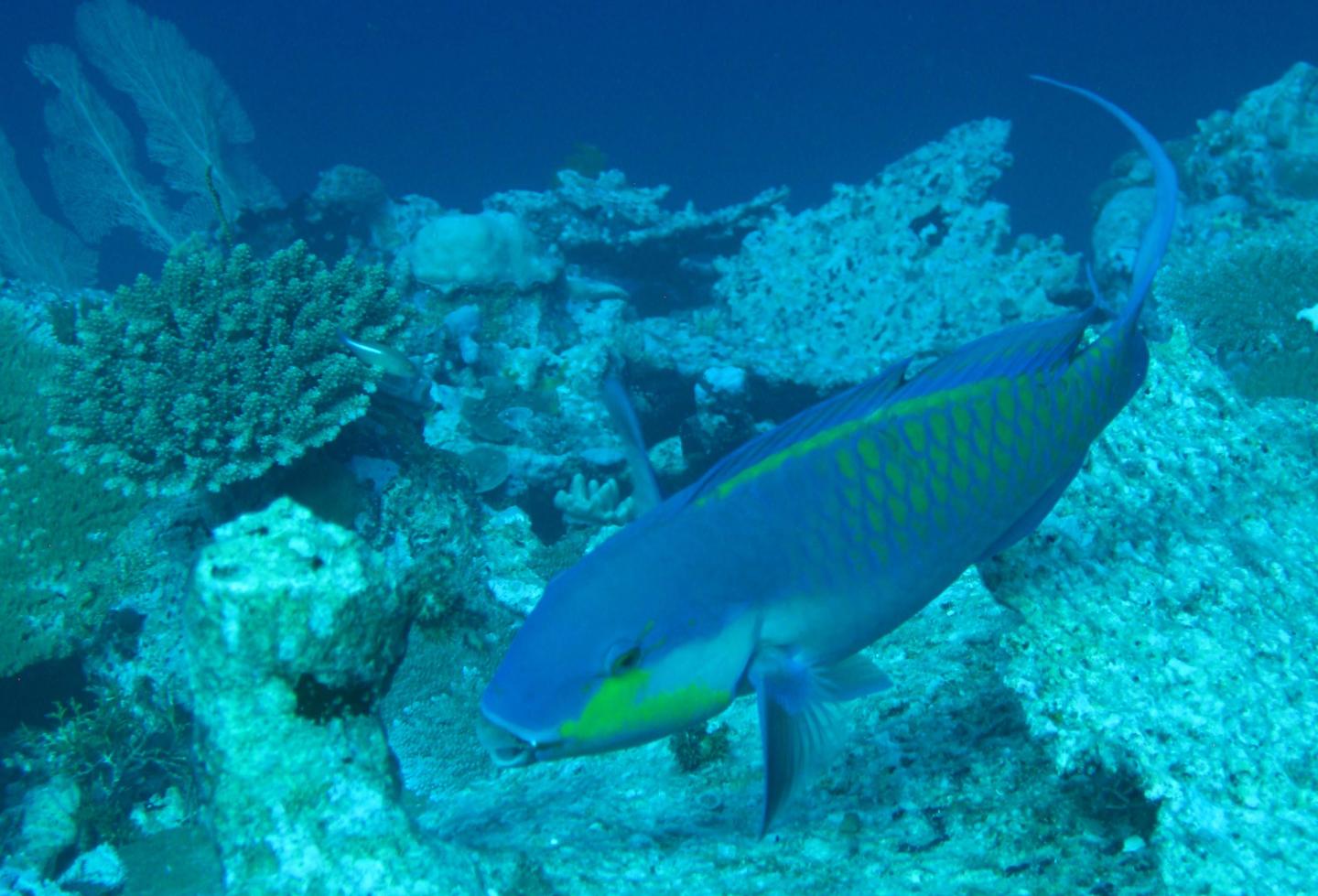
Parrot grind up coral during feeding and, after digesting the edible content, excrete the rest as sand, which can then be used in island building. As well as being a beautiful species capable of changing its colour, shape and even gender, new research published today shows that parrotfish, commonly found on healthy coral reefs, can also play a pivotal role in providing the sands necessary to build and maintain coral reef islands.
| Full story | 0 Comments | 5626 views |

| Biotechnology | April 28, 2015 06:32 PM |
Emory scientists have adapted an antiviral enzyme from bacteria called Cas9 into an instrument for inhibiting hepatitis C virus in human cells.
| Full story | 0 Comments | 6160 views |

- In some genetic cases of microcephaly, stem cells fail to launch
- Yale team discovers how Zika virus causes fetal brain damage
- Scientists uncover the way a common cell enzyme alerts the body to invading bacteria
- Arctic gives clues on worst mass extinction of life
- Calcium channel blockers caught in the act at atomic level
Search Bio News Net
Free Biology Newsletter
- Flexibility That A.C.A. Lent to Work Force Is Threatened by...International Herald Tribune
- Bacteria Behind Legionnaires’ Disease Found at New York Police StationInternational Herald Tribune
- Prescription Price Crisis? 28 Million Americans See Spike in Drug...MSNBC.com: Health
- Seizing on Opioid Crisis, a Drug Maker Lobbies Hard for...International Herald Tribune
- Republicans are taking a big political risk on health careAP Health News
- Why We're So Divided Over Saving WolvesNational Geographic News