

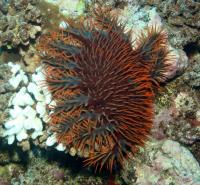
This is a crown-of-thorns sea star feeding on a coral. Can fish save coral reefs from dying? UC Santa Barbara researchers have found one case where fish have helped coral reefs to recover from cyclones and predators.

| Environment | November 10, 2011 05:39 PM |
| Full story | 0 Comments | 8581 views |

| Biotechnology | November 10, 2011 05:39 PM |
A team of researchers at EPFL, the University of Lausanne and the Salk Institute created super strong, marathon mice and nematodes by reducing the function of a natural inhibitor, suggesting treatments for age-related or genetically caused muscle degeneration are within reach.
| Full story | 0 Comments | 11421 views |

| Molecular & Cell Biology | November 10, 2011 05:39 PM |
Cells develop and thrive by turning genes on and off as needed in a precise pattern, a process known as regulated gene transcription. In a paper published in the Nov. 9 issue of the Journal of Neuroscience, researchers at the University of California, San Diego School of Medicine say this process is even more complex than previously thought, with regulated genes actually relocated to other, more conducive places in the cell nucleus.
| Full story | 0 Comments | 7221 views |
| Molecular & Cell Biology | November 10, 2011 05:39 PM |
Atherosclerosis, commonly referred to as "hardening of the arteries," is a major risk factor for heart attack and stroke. The cause of atherosclerosis is not well understood but, for some time, chronic inflammatory immune responses have been implicated in driving disease pathology. Now, a new study, published online on November 10th by Cell Press from the journal Immunity, identifies a type of immune cell that is not associated with promoting disease, but with protection against atherosclerosis. The findings substantially advance the understanding of the complex immune responses associated with atherosclerosis and may guide research to develop new therapeutic interventions.
| Full story | 0 Comments | 7591 views |

| Biology | November 10, 2011 05:38 PM |
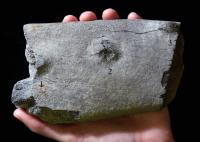
Whale bone fossil showing three tooth marks from a shark. The marks on the rib indicate the whale was once severely bitten by a strong-jawed animal. A fragment of whale rib found in a North Carolina strip mine is offering scientists a rare glimpse at the interactions between prehistoric sharks and whales some 3- to 4-million years ago during the Pliocene.
| Full story | 0 Comments | 8289 views |

- In some genetic cases of microcephaly, stem cells fail to launch
- Yale team discovers how Zika virus causes fetal brain damage
- Scientists uncover the way a common cell enzyme alerts the body to invading bacteria
- Arctic gives clues on worst mass extinction of life
- Calcium channel blockers caught in the act at atomic level
Search Bio News Net
Free Biology Newsletter
- Flexibility That A.C.A. Lent to Work Force Is Threatened by...International Herald Tribune
- Bacteria Behind Legionnaires’ Disease Found at New York Police StationInternational Herald Tribune
- Prescription Price Crisis? 28 Million Americans See Spike in Drug...MSNBC.com: Health
- Seizing on Opioid Crisis, a Drug Maker Lobbies Hard for...International Herald Tribune
- Republicans are taking a big political risk on health careAP Health News
- Why We're So Divided Over Saving WolvesNational Geographic News