

University of Adelaide scientists are part of an international research team that has uncovered the first example of a bacterium causing disease in humans by targeting a molecule that is incorporated into our bodies from our diet. The discovery has been published in the prestigious international journal Nature.

| Molecular & Cell Biology | October 30, 2008 08:17 PM |
A major puzzle for neurobiologists is how the brain can modify one microscopic connection, or synapse, at a time in a brain cell and not affect the thousands of other connections nearby. Plasticity, the ability of the brain to precisely rearrange the connections between its nerve cells, is the framework for learning and forming memories.
| Full story | 0 Comments | 8971 views |

| Biology | October 30, 2008 08:17 PM |
The world's rarest big cat is alive and well. At least one of them, that is, according to researchers from the Wildlife Conservation Society (WCS) who captured and released a female Far Eastern leopard in Russia last week.
| Full story | 0 Comments | 8623 views |
| Molecular & Cell Biology | October 30, 2008 08:17 PM |
Two biologists at the University of California, San Diego have discovered the first of a new class of cellular motor proteins that "rewind" sections of the double-stranded DNA molecule that become unwound, like the tangled ribbons from a cassette tape, in "bubbles" that prevent critical genes from being expressed.
| Full story | 0 Comments | 7407 views |

| Bioinformatics | October 30, 2008 08:17 PM |
Researchers have revealed the complete mitochondrial genome of one of the world's most celebrated mummies, known as the Tyrolean Iceman or Ötzi. The sequence represents the oldest complete DNA sequence of modern humans' mitochondria, according to the report published online on October 30th in Current Biology, a Cell Press publication.
| Full story | 0 Comments | 8793 views |
| Biology | October 30, 2008 08:17 PM |
A previously undescribed, cold-loving fungus has been linked to white-nose syndrome, a condition associated with the deaths of over 100,000 hibernating bats in the northeastern United States. The findings are published in this week's issue of Science.
| Full story | 0 Comments | 7901 views |

| Health & Medicine | October 30, 2008 08:17 PM |
A new discovery by London biologists may yield new ways of handling the problem of transplant rejection. In a research article published in the November 2008 print issue of The FASEB Journal (http://www.fasebj.org), the scientists confirm the two-way transfer of a molecule (called "MHC") that instructs the immune system to tell "self" from "non-self." By disrupting the transfer of this molecule, newly transplanted organs should become "invisible" to the host's immune system. Such an advance would be considered a major medical breakthrough because current methods of preventing organ rejection involve weakening the host's immune system, which can lead to life-threatening infections.
| Full story | 0 Comments | 6330 views |
| Biology | October 30, 2008 08:17 PM |
Next week marks a pivotal moment for Eastern Pacific tuna. The Inter-American Tropical Tuna Commission (IATTC), the international body charged with the conservation and management of tuna and associated species in the eastern tropical Pacific Ocean, will meet in San Diego from Nov. 2-7 to consider conservation measures for vulnerable tuna populations. Whether this 16-nation Commission will act to protect declining tuna stocks, or once again demonstrate their impotence to do so, remains to be seen. The fate of Pacific tuna stocks hangs in the balance.
| Full story | 0 Comments | 6005 views |

| Environment | October 30, 2008 08:17 PM |
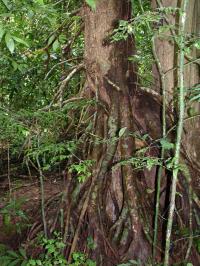
The distinctive trunk and aerial roots of the tropical tree Symphonia globulifera in a rain forest in Panama. A "living fossil" tree species is helping a University of Michigan researcher understand how tropical forests responded to past climate change and how they may react to global warming in the future.
| Full story | 0 Comments | 11099 views |
| Health & Medicine | October 30, 2008 08:17 PM |
The incidence of malaria has fallen significantly in The Gambia in the last 5 years, according to a study carried out by experts there with support from scientists based in London.
| Full story | 0 Comments | 6474 views |

- In some genetic cases of microcephaly, stem cells fail to launch
- Yale team discovers how Zika virus causes fetal brain damage
- Scientists uncover the way a common cell enzyme alerts the body to invading bacteria
- Arctic gives clues on worst mass extinction of life
- Calcium channel blockers caught in the act at atomic level
Search Bio News Net
Free Biology Newsletter
- Flexibility That A.C.A. Lent to Work Force Is Threatened by...International Herald Tribune
- Bacteria Behind Legionnaires’ Disease Found at New York Police StationInternational Herald Tribune
- Prescription Price Crisis? 28 Million Americans See Spike in Drug...MSNBC.com: Health
- Seizing on Opioid Crisis, a Drug Maker Lobbies Hard for...International Herald Tribune
- Republicans are taking a big political risk on health careAP Health News
- Why We're So Divided Over Saving WolvesNational Geographic News