

EVEN when they tiptoe discreetly through the undergrowth, nature lovers and ecotourists may be having an unexpectedly damaging impact on wildlife. A study of protected Californian forest has shown that hiking, wildlife-watching and similar low-impact activities are linked to a sharp drop in numbers of carnivores such as bobcats and coyotes.

| Health & Medicine | August 13, 2008 06:31 PM |
As athletes from around the world compete in the Beijing Olympics, many are on alert for respiratory problems caused by air pollution. They should also be concerned about its toxic effects on the heart and cardiovascular system, mounting research shows.
| Full story | 0 Comments | 7329 views |

| Environment | August 13, 2008 06:31 PM |
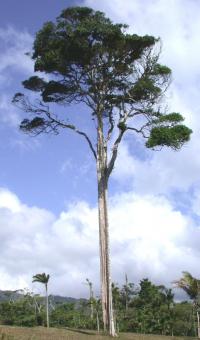
Rare trees in the Amazon basin are more likely to
go extinct than common species, according to scenarios based on neutral
theory.
Common tree species in the Amazon will survive even grim scenarios of deforestation and road-building, but rare trees could suffer extinction rates of up to 50 percent, predict Smithsonian scientists and colleagues in the Aug. 12 issue of the journal Proceedings of the National Academy of Science.
| Full story | 0 Comments | 8620 views |

| Molecular & Cell Biology | August 13, 2008 06:31 PM |
Seeing disease-fighting white blood cells vanish from the blood usually signals a weakened immune system.
| Full story | 0 Comments | 7433 views |
| Environment | August 13, 2008 06:31 PM |

Jeremy Jackson, Scripps Professor of Oceanography. Human activities are cumulatively driving the health of the world's oceans down a rapid spiral, and only prompt and wholesale changes will slow or perhaps ultimately reverse the catastrophic problems they are facing.
| Full story | 0 Comments | 7158 views |

| Microbiology | August 13, 2008 06:31 PM |
"Flesh-eating" or "Strep" bacteria are able to survive and spread in the body by degrading a key immune defense molecule, according to researchers at the University of California, San Diego, School of Medicine and Skaggs School of Pharmacy and Pharmaceutical Sciences. The finding, which could aid in development of new treatments for serious infections in human patients, will be reported in the August 14 issue of the journal Cell Host & Microbe.
| Full story | 0 Comments | 13417 views |

- In some genetic cases of microcephaly, stem cells fail to launch
- Yale team discovers how Zika virus causes fetal brain damage
- Scientists uncover the way a common cell enzyme alerts the body to invading bacteria
- Arctic gives clues on worst mass extinction of life
- Calcium channel blockers caught in the act at atomic level
Search Bio News Net
Free Biology Newsletter
- Flexibility That A.C.A. Lent to Work Force Is Threatened by...International Herald Tribune
- Bacteria Behind Legionnaires’ Disease Found at New York Police StationInternational Herald Tribune
- Prescription Price Crisis? 28 Million Americans See Spike in Drug...MSNBC.com: Health
- Seizing on Opioid Crisis, a Drug Maker Lobbies Hard for...International Herald Tribune
- Republicans are taking a big political risk on health careAP Health News
- Why We're So Divided Over Saving WolvesNational Geographic News