


A yellowing infected potato plant. The white sugary-looking substance is psyllid excreta. The clear whitish substance is psyllid exoskeleton. To make a discovery and get to name it is just about every scientist's dream. For one graduate student at UC Riverside that dream already has come true.

| Microbiology | August 12, 2008 06:04 PM |
| Full story | 0 Comments | 7837 views |

| AIDS & HIV | August 12, 2008 06:04 PM |
India is home to the third-largest number of human immunodeficiency virus (HIV) cases in the world and, as in the U.S. and many African nations, the rate of infection among women continues to rise faster than that among men. In a new study, researchers at the Harvard School of Public Health (HSPH) have found that married Indian women who experienced physical and sexual abuse at the hands of their husbands were approximately four times more likely to become infected with HIV than married women who were not abused. This first large-scale, national study to examine the relationship between intimate partner violence (IPV) against wives and clinically verified HIV infection appears in the August 13, 2008 issue of JAMA.
| Full story | 0 Comments | 9293 views |

| Molecular & Cell Biology | August 12, 2008 06:04 PM |
Researchers using positron emission tomography (PET) have validated a long-held theory that individual personality traits—particularly reward dependency—are connected to brain chemistry, a finding that has implications for better understanding and treating substance abuse and other addictive behaviors.
| Full story | 0 Comments | 7381 views |

| Biology | August 12, 2008 05:10 PM |
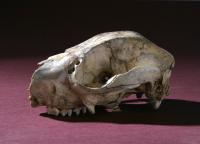
Protemnodon skull from cave at Mt. Cripps, northwest Tasmania. Research led by UK and Australian scientists sheds new light on the role that our ancestors played in the extinction of Australia's prehistoric animals. The study, published this week in the journal Proceedings of the National Academy of Sciences of the USA, provides the first evidence that Tasmania's giant kangaroos and marsupial 'rhinos' and 'leopards' were still roaming the island when humans first arrived. The findings suggest that the mass extinction of Tasmania's large prehistoric animals was the result of human hunting, and not climate change as previously believed.
| Full story | 0 Comments | 7530 views |
| Microbiology | August 12, 2008 04:10 PM |

Jessica Green of the University of Oregon's Center for Ecology and Evolutionary Biology is using molecular technique to revisit the diversity of microbes around the world. Microbial biologists, including the University of Oregon's Jessica L. Green, may not have Jimmy Buffett's music from 1977 in mind, but they are changing attitudes about evolutionary diversity on Earth, from oceanic latitudes to mountainous altitudes.
| Full story | 0 Comments | 5459 views |

| Stem Cell Research | August 12, 2008 02:10 PM |
Researchers have discovered a central molecular switch in fruit fly embryos that opens new avenues for studying the causes of birth defects and cancer in humans. Writing about their study in the Aug. 12 Developmental Cell, scientists at Cincinnati Children's Hospital Medical Center determined the switch to be a main tuning mechanism for instructing cells whether to form sensory nerves or blood cells in different parts of the body.
| Full story | 0 Comments | 6763 views |
| Biology | August 12, 2008 12:10 PM |

In a recent paper in The Royal Society's Biology Letters, conservationists with the Wildlife Conservation Society and the Zoological of London found that the oldest matriarch elephants may retain valuable memories of permanent sources of food and water and their that become crucial in times of drought. Credit: (c) Charles Foley A recent study by the Wildlife Conservation Society and the Zoological Society of London (ZSL) suggests that old female elephants—and perhaps their memories of distant, life-sustaining sources of food and water—may be the key to survival during the worst of times.
| Full story | 0 Comments | 6770 views |
| Molecular & Cell Biology | August 12, 2008 10:10 AM |
Researchers at the University of Newcastle, England, and the Virginia Bioinformatics Institute at Virginia Tech in the United States have revealed a large reservoir of mitochondrial DNA mutations present in the general population. Clinical analysis of blood samples from almost 3,000 infants born in north Cumbria, England, showed that at least 1 in 200 individuals in the general public harbor mitochondrial DNA mutations that may lead to disease. The findings, which highlight the need to develop new approaches to prevent the transmission of mitochondrial diseases, were published in The American Journal of Human Genetics.*
| Full story | 0 Comments | 8299 views |

- In some genetic cases of microcephaly, stem cells fail to launch
- Yale team discovers how Zika virus causes fetal brain damage
- Scientists uncover the way a common cell enzyme alerts the body to invading bacteria
- Arctic gives clues on worst mass extinction of life
- Calcium channel blockers caught in the act at atomic level
Search Bio News Net
Free Biology Newsletter
- Flexibility That A.C.A. Lent to Work Force Is Threatened by...International Herald Tribune
- Bacteria Behind Legionnaires’ Disease Found at New York Police StationInternational Herald Tribune
- Prescription Price Crisis? 28 Million Americans See Spike in Drug...MSNBC.com: Health
- Seizing on Opioid Crisis, a Drug Maker Lobbies Hard for...International Herald Tribune
- Republicans are taking a big political risk on health careAP Health News
- Why We're So Divided Over Saving WolvesNational Geographic News