

A laser-activated antimicrobial offers hope for new treatments of bacterial infections, even those that are resistant to current drugs. Research published today in the open access journal BMC Microbiology describes the use of a dye, indocyanine green, which produces bacteria-killing chemicals when lit by a specific kind of laser light.

| Health & Medicine | July 1, 2008 02:30 PM |
Often, a gentle hand on your shoulder when you're upset is all it takes to ease your mind and calm your nerves.
| Full story | 0 Comments | 5306 views |

| Environment | July 1, 2008 02:30 PM |
Would shrinking your carbon footprint, recycling more, and going green be easier if you could monitor your household's environmental impact? That's the question a team of Canadian industry consultants set out to answer. They report their findings in a forthcoming issue of the International Journal of Environmental Technology and Management from Inderscience Publishers.
| Full story | 0 Comments | 5421 views |

| Molecular & Cell Biology | July 1, 2008 02:30 PM |
Virginia Commonwealth University and VCU Massey Cancer Center researchers have uncovered how a gene, melanoma differentiation associated gene-7/interleukin-24 (mda-7/IL-24), induces a bystander effect that kills cancer cells not directly receiving mda-7/IL-24 without harming healthy ones, a discovery that could lead to new therapeutic strategies to fight metastatic disease.
| Full story | 0 Comments | 5499 views |

| Microbiology | July 1, 2008 02:30 PM |
Recent scientific findings explain why patients with a rare immunodeficiency disorder are unusually susceptible to certain common infections. By revealing the exact molecular mechanisms involved, they also give us clues as to why some 'healthy' people are more prone to these infections than others, and suggest potential treatments.
| Full story | 0 Comments | 4964 views |
| Health & Medicine | July 1, 2008 02:30 PM |
As bombs burst in air this July 4, chances are that sunburn will be the red glare that most folks see – and feel. But unfortunately, even when there is no burn, the effects of the sun's ultraviolet (UV) rays can have deadly consequences. Thanks to a new research study published in the July 2008 issue of The FASEB Journal, scientists now know why one type of UV light (UVB) is more likely to cause skin cancer than the other (UVA). This information should be useful to public health officials and government regulatory agencies in identifying specific criteria for exactly how effective consumer products, like sunscreen, are in preventing skin damage leading to skin cancer. It should also allow scientists to pursue new lines of research and treatment into repairing the damage caused by the sun's rays.
| Full story | 0 Comments | 6649 views |
| Environment | July 1, 2008 02:30 PM |
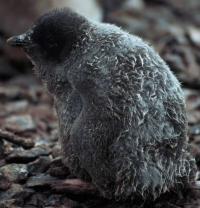
Rain has soaked this Adélie penguin chick in Antarctica before its feathers are capable of repelling water. Though the icy continent is in essence a desert, coastal rainfall is becoming more common with changing climate. Credit: Dee Boersma Like the proverbial canary in the coal mine, penguins are sounding the alarm for potentially catastrophic changes in the world's oceans, and the culprit isn't only climate change, says a University of Washington conservation biologist.
| Full story | 0 Comments | 6372 views |

- In some genetic cases of microcephaly, stem cells fail to launch
- Yale team discovers how Zika virus causes fetal brain damage
- Scientists uncover the way a common cell enzyme alerts the body to invading bacteria
- Arctic gives clues on worst mass extinction of life
- Calcium channel blockers caught in the act at atomic level
Search Bio News Net
Free Biology Newsletter
- Flexibility That A.C.A. Lent to Work Force Is Threatened by...International Herald Tribune
- Bacteria Behind Legionnaires’ Disease Found at New York Police StationInternational Herald Tribune
- Prescription Price Crisis? 28 Million Americans See Spike in Drug...MSNBC.com: Health
- Seizing on Opioid Crisis, a Drug Maker Lobbies Hard for...International Herald Tribune
- Republicans are taking a big political risk on health careAP Health News
- Why We're So Divided Over Saving WolvesNational Geographic News