

In the event of an outbreak or a bioterrorist attack, rapid identification of the genetic changes responsible for virulence or drug resistance is essential to mounting an effective response. Standard DNA sequencing and analysis of a pathogen genome is time-intensive and likely impractical during an emergency. Researchers have now developed a comparative genomics strategy to drastically reduce the time needed to accurately identify unique genetic properties of a potential outbreak strain. This report, which demonstrates the approach using next-generation sequencing technology, is published online today in Genome Research (www.genome.org).

Scientists develop strategy to rapidly describe outbreak strains with next-generation DNA sequencing |
| Biotechnology | April 10, 2008 11:20 PM |
| Full story | 0 Comments | 5928 views |

| Biology | April 10, 2008 10:20 PM |
Female penguins mate with males who bring them pebbles to build egg nests. Hummingbirds mate to gain access to the most productive flowers guarded by larger males.
| Full story | 0 Comments | 11713 views |

| Molecular & Cell Biology | April 10, 2008 09:20 PM |
Researchers at Johns Hopkins have discovered that blood vessels in the head can guide growing facial nerve cells with blood pressure controlling proteins. The findings, which suggest that blood vessels throughout the body might have the same power of persuasion over many nerves, are published this week in Nature.
| Full story | 0 Comments | 5179 views |
| Biology | April 10, 2008 08:20 PM |
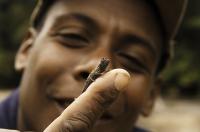
A stump-tailed chameleon from Madagascar. Using data from thousands of species of lemurs, frogs, geckos, butterflies, ants, and plants, scientists from the Bronx Zoo-based Wildlife Conservation Society, University of California, Berkeley and other organizations have completed an analytical colossus for Madagascar that will guide plans to safeguard the island’s unique natural heritage. The massive study is the cover story in the most recent edition of Science.
| Full story | 0 Comments | 8352 views |
| Biology | April 10, 2008 07:20 PM |
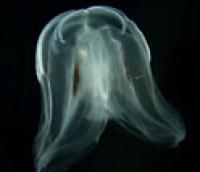
The evolutionary history of the comb jelly has revealed surprising clues about Earth's first animal. A new study mapping the evolutionary history of animals indicates that Earth's first animal--a mysterious creature whose characteristics can only be inferred from fossils and studies of living animals--was probably significantly more complex than previously believed.
| Full story | 0 Comments | 11897 views |

| Environment | April 10, 2008 06:20 PM |
Air pollution from power plants and automobiles is destroying the fragrance of flowers and thereby inhibiting the ability of pollinating insects to follow scent trails to their source, a new University of Virginia study indicates. This could partially explain why wild populations of some pollinators, particularly bees – which need nectar for food – are declining in several areas of the world, including California and the Netherlands.
| Full story | 0 Comments | 5537 views |

- In some genetic cases of microcephaly, stem cells fail to launch
- Yale team discovers how Zika virus causes fetal brain damage
- Scientists uncover the way a common cell enzyme alerts the body to invading bacteria
- Arctic gives clues on worst mass extinction of life
- Calcium channel blockers caught in the act at atomic level
Search Bio News Net
Free Biology Newsletter
- Flexibility That A.C.A. Lent to Work Force Is Threatened by...International Herald Tribune
- Bacteria Behind Legionnaires’ Disease Found at New York Police StationInternational Herald Tribune
- Prescription Price Crisis? 28 Million Americans See Spike in Drug...MSNBC.com: Health
- Seizing on Opioid Crisis, a Drug Maker Lobbies Hard for...International Herald Tribune
- Republicans are taking a big political risk on health careAP Health News
- Why We're So Divided Over Saving WolvesNational Geographic News