

A smile is one of the most universally recognizable facial expressions, helping to depict an individual’s happiness, confidence, attractiveness, sociability and sincerity. And now, according to a recent study published in the Journal of Periodontology (JOP), the official publication of the American Academy of Periodontology (AAP), a smile may also help convey healthy teeth and gums. Researchers found evidence that periodontal, or gum, disease may negatively affect an individual’s smiling patterns and deter someone from displaying positive emotions through a smile.

| Molecular & Cell Biology | March 31, 2008 10:23 PM |
A team of Canadian and French researchers has identified a novel gene responsible for a significant fraction of ALS (sporadic amyotrophic lateral sclerosis) cases. ALS is commonly referred to as Lou Gehrig’s disease, an incurable neuromuscular disorder that affects motor neurons and leads to paralysis and death within one to five years.
| Full story | 0 Comments | 7501 views |

| Health & Medicine | March 31, 2008 09:23 PM |
The Norwegian Tooth Bank is requesting milk teeth from 100 000 children in Norway and could become the biggest tooth bank in the world. Milk teeth can give unique information about environmental influences and nutrition in the foetus and in early childhood. The Tooth Bank is a sub-project in the Norwegian Mother and Child Cohort Study (MoBa), and is a collaborative project between the Norwegian Institute of Public Health and the University of Bergen.
| Full story | 0 Comments | 7901 views |
| Molecular & Cell Biology | March 31, 2008 08:23 PM |
University of Florida chemists are the first to use a new tool to identify the molecular signatures of serious diseases -- without any previous knowledge of what these microscopic signatures or “biomarkers” should look like.
| Full story | 0 Comments | 6876 views |
| Molecular & Cell Biology | March 31, 2008 07:23 PM |
One of the earliest general anaesthetics to be used by the medical profession, chloroform, has shed light on a mystery that’s puzzled doctors for more than 150 years – how such anaesthetics actually work.
| Full story | 0 Comments | 6811 views |
| Molecular & Cell Biology | March 31, 2008 07:18 PM |
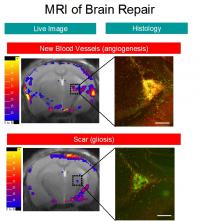
Probes administered by eye drop attach to special cells during repair and cause them to have different magnetic movement, or magnetic resonance, when viewed by a magnetic resonance imaging scanner. The images generated by the MRI scanner make it possible to see these repair processes in action. This method is the first to provide scientists, clinicians, teachers, and students a means to visualize the process of brain repair in live subjects. Credit: Image courtesy Philip Liu of Harvard Medical School. Biologists have just confirmed what poets have known for centuries: eyes really are windows of the soul—or at least of the brain. In a new study published in the April 2008 print issue of The FASEB Journal (http://www.fasebj.org), Harvard researchers describe the development of gene probe eye drops that—for the first time—make it possible to monitor and detect tissue repair in the brain of living organisms using MRI. Current methods involve a risky, invasive, and relatively slow process of penetrating the skull to extract tissue samples and then examining those samples in a laboratory.
| Full story | 0 Comments | 6850 views |

| Environment | March 31, 2008 06:23 PM |
Could part of the answer to saving the Earth from global warming lie in the earth beneath our feet?
| Full story | 0 Comments | 7540 views |

| Microbiology | March 31, 2008 06:18 PM |
Researchers are finding out which bugs grow in intensive care units to develop a novel sampling regime that would indicate the threat of MRSA and other superbugs in the environment, scientists heard today (Monday 31 March 2008) at the Society for General Microbiology’s 162nd meeting being held this week at the Edinburgh International Conference Centre.
| Full story | 0 Comments | 7466 views |
| Molecular & Cell Biology | March 31, 2008 05:18 PM |
It's well known that the left and right sides of the brain differ in many animal species and this is thought to influence cognitive performance and social behaviour. For instance, in humans, the left half of the brain is concerned with language processing whereas the right side is better at comprehending musical melody.
| Full story | 0 Comments | 6155 views |
| Microbiology | March 31, 2008 04:18 PM |
One of the world’s deadliest diseases, caused by the Ebola virus, may finally be preventable thanks to US and Canadian researchers, who have successfully tested several Ebola vaccines in primates and are now looking to adapt them for human use.
| Full story | 0 Comments | 9471 views |
| Health & Medicine | March 31, 2008 03:18 PM |
This is the first time this intervention has been conducted in Europe, and the second in the world. Thanks to the work of the expert group of Hospital Clínic de Barcelona, the extirpation of a kidney ‒affected by a malignant tumour‒ through the vagina has been achieved. This fact sets a milestone in the framework of minimally invasive surgery. The operation, presented this morning in a press conference, uses several cutting edge technology instruments of advanced surgery.
| Full story | 0 Comments | 6983 views |

| Biology | March 31, 2008 02:18 PM |
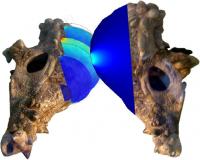
Fossil evidence and computer simulations show which pachycephalosaurs could butt heads. After half a century of debate, a University of Alberta researcher has confirmed that dome-headed dinosaurs called pachycephalosaurs could collide with each other during courtship combat. Eric Snively, an Alberta Ingenuity fellow at the U of A, used computer software to smash the sheep-sized dinosaurs together in a virtual collision and results showed that their bony domes could emerge unscathed.
| Full story | 0 Comments | 9490 views |
| Health & Medicine | March 31, 2008 01:18 PM |
Researchers at Yale School of Medicine now have a clearer understanding of why synthetic estrogens such as those found in many widely-used plastics have a detrimental effect on a developing fetus, cause fertility problems, as well as vaginal and breast cancers.
| Full story | 2 Comments | 7075 views |
| Biology | March 31, 2008 12:18 PM |
Looking for evidence of life on Mars or other planets? Finding cellulose microfibers would be the next best thing to a close encounter, according to new research from the University of North Carolina at Chapel Hill.
| Full story | 0 Comments | 6055 views |

- In some genetic cases of microcephaly, stem cells fail to launch
- Yale team discovers how Zika virus causes fetal brain damage
- Scientists uncover the way a common cell enzyme alerts the body to invading bacteria
- Arctic gives clues on worst mass extinction of life
- Calcium channel blockers caught in the act at atomic level
Search Bio News Net
Free Biology Newsletter
- Flexibility That A.C.A. Lent to Work Force Is Threatened by...International Herald Tribune
- Bacteria Behind Legionnaires’ Disease Found at New York Police StationInternational Herald Tribune
- Prescription Price Crisis? 28 Million Americans See Spike in Drug...MSNBC.com: Health
- Seizing on Opioid Crisis, a Drug Maker Lobbies Hard for...International Herald Tribune
- Republicans are taking a big political risk on health careAP Health News
- Why We're So Divided Over Saving WolvesNational Geographic News