

A deficiency of oxygen and the heavy metal molybdenum in the ancient deep ocean may have delayed the evolution of animal life on Earth for nearly two billion years.

| Molecular & Cell Biology | March 26, 2008 10:20 PM |
The brain cells called astrocytes, and not just neurons, are sensitive to the substances called cannabinoids—the active chemicals in marijuana.
| Full story | 0 Comments | 7339 views |
| Molecular & Cell Biology | March 26, 2008 09:20 PM |
Ten years ago great attention was attracted by the discovery that it was possible to demonstrate signal transfer in proteins using statistical methods. In an article in the journal Proceedings of the National Academy of Science (PNAS) Uppsala researchers are now presenting results of experiments that contradict the theory.
| Full story | 0 Comments | 5691 views |

| Biology | March 26, 2008 08:20 PM |
The brain can sense the calories in food, independent of the taste mechanism, researchers have found in studies with mice. Their finding that the brain’s reward system is switched on by this “sixth sense” machinery could have implications for understanding the causes of obesity. For example, the findings suggest why high-fructose corn syrup, widely used as a sweetener in foods, might contribute to obesity.
| Full story | 0 Comments | 7567 views |
| Molecular & Cell Biology | March 26, 2008 07:20 PM |
Neurons spoke to Dr. Joe Z. Tsien when he was a sophomore college student searching for some meaningful extracurricular activity.
| Full story | 0 Comments | 8499 views |
| Molecular & Cell Biology | March 26, 2008 06:20 PM |
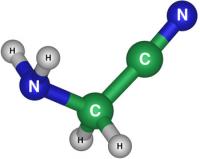
Amino acetonitrile (NH2CH2CN). The "Large Molecule Heimat" is a very dense, hot gas clump within the star forming region Sagittarius B2. In this source of only 0,3 light-year diameter, which is heated by a deeply embedded newly formed star, most of the interstellar molecules known to date have been found, including the most complex ones such as ethyl alcohol, formaldehyde, formic acid, acetic acid, glycol aldehyde (a basic sugar), and ethylene glycol.
| Full story | 0 Comments | 7596 views |
| Biology | March 26, 2008 06:20 PM |
Chimpanzees make judgments about the actions and dispositions of strangers by observing others’ behavior and interactions in different situations. Specifically, chimpanzees show an ability to recognize certain behavioral traits and make assumptions about the presence or absence of these traits in strangers in similar situations thereafter. These findings¹, by Dr. Francys Subiaul - from the George Washington University in Washington DC - and his team, have just been published online in Animal Cognition, a Springer journal.
| Full story | 0 Comments | 6432 views |

| Environment | March 26, 2008 11:09 AM |
CSIRO is collaborating in a NASA-funded project, using a CSIRO-designed instrument, to help develop new methods of measuring forest carbon stores on a large scale.
| Full story | 0 Comments | 6249 views |
| Biology | March 26, 2008 11:09 AM |
They are separated by a vast ocean and by millions of years, but tiny prehistoric bones found on an Australian farm have been directly linked to a strange and secretive little animal that lives today in the southern rainforests of South America.
| Full story | 0 Comments | 7042 views |
| Environment | March 26, 2008 11:09 AM |
In an investigative report published today by Eyes on the Forest, evidence shows that a new logging road in Riau Province -- strongly indicated as illegally built by companies connected to Asia Pulp & Paper (APP) -- is cutting into the heart of Sumatra’s largest contiguous peatland forest, a rare hydrological ecosystem that acts as one of the planet’s biggest carbon stores.
| Full story | 0 Comments | 5775 views |
| Molecular & Cell Biology | March 26, 2008 11:09 AM |
International investigations of an organism that one UT Southwestern Medical Center researcher calls a “silly little green scum” have led to key insights into the basic mechanisms of reproduction.
| Full story | 0 Comments | 6845 views |

| Bioinformatics | March 26, 2008 11:09 AM |
Scientists have discovered two key proteins that guide one of the two groups of pathogenic bacteria to make their hardy outer shells -- their defense against the world.
| Full story | 0 Comments | 6428 views |

- In some genetic cases of microcephaly, stem cells fail to launch
- Yale team discovers how Zika virus causes fetal brain damage
- Scientists uncover the way a common cell enzyme alerts the body to invading bacteria
- Arctic gives clues on worst mass extinction of life
- Calcium channel blockers caught in the act at atomic level
Search Bio News Net
Free Biology Newsletter
- Flexibility That A.C.A. Lent to Work Force Is Threatened by...International Herald Tribune
- Bacteria Behind Legionnaires’ Disease Found at New York Police StationInternational Herald Tribune
- Prescription Price Crisis? 28 Million Americans See Spike in Drug...MSNBC.com: Health
- Seizing on Opioid Crisis, a Drug Maker Lobbies Hard for...International Herald Tribune
- Republicans are taking a big political risk on health careAP Health News
- Why We're So Divided Over Saving WolvesNational Geographic News