

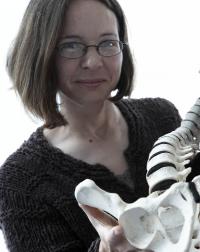
Engineer Dr. Ruth Wilcox, University of Leeds. New research could offer hope for victims of the most devastating spinal injuries - typically those caused in car crashes.

| Biotechnology | October 29, 2007 10:33 PM |
| Full story | 0 Comments | 6177 views |

| Environment | October 29, 2007 09:33 PM |
Ohio State University geologists and their colleagues have uncovered evidence of when Earth may have first supported an oxygen-rich atmosphere similar to the one we breathe today.
| Full story | 0 Comments | 7195 views |

| Microbiology | October 29, 2007 08:33 PM |
Outbreaks of filovirus haemorrhagic fevers (FHFs) such as those caused by the Ebola and Marburg viruses can only be controlled if agencies have the support and trust of local communities, according to two papers just published in the online edition of the Journal of Infectious Diseases as part of a special supplement on filovirusues.
| Full story | 0 Comments | 5566 views |
| Microbiology | October 29, 2007 07:33 PM |
Discovery by Hebrew University of Jerusalem researchers of a new communication factor that enables bacteria to “talk to each other” and causes their death could have significant consequences leading to development of a new class of antibiotic medications.
| Full story | 0 Comments | 6074 views |

| Biology | October 29, 2007 06:33 PM |
A 50-million-year-old fossilised spider has been brought back to life in stunning 3D by a scientist at The University of Manchester.
| Full story | 0 Comments | 10029 views |
| Microbiology | October 29, 2007 05:33 PM |
Genetically engineered mice may hold the key to helping scientists from Queensland University of Technology and Harvard hasten the development of a vaccine to protect adolescent girls against the most common sexually transmitted disease, Chlamydia.
| Full story | 0 Comments | 7092 views |
| Biotechnology | October 29, 2007 04:33 PM |
Placing tiny radioactive spheres directly into the liver through its blood supply halted growth of tumors that had spread to the organ in 71 percent of patients tested in a small clinical trial, researchers from Mayo Clinic Jacksonville report.
| Full story | 0 Comments | 7503 views |
| Biology | October 29, 2007 03:33 PM |
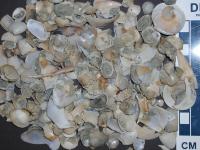
Susan Kidwell explains how studies of molluscs -- clams and snail -- can be used for ecological assessments in the Proceedings of the National Academy of Sciences. Inventories of living and dead organisms could serve as a relatively fast, simple and inexpensive preliminary means of assessing human impact on ecosystems. The University of Chicago's Susan Kidwell explains how measuring the degree of live-dead mismatch could be used as an ecological tool in the Oct. 26 early online edition of the Proceedings of the National Academy of Sciences.
| Full story | 0 Comments | 7027 views |

- In some genetic cases of microcephaly, stem cells fail to launch
- Yale team discovers how Zika virus causes fetal brain damage
- Scientists uncover the way a common cell enzyme alerts the body to invading bacteria
- Arctic gives clues on worst mass extinction of life
- Calcium channel blockers caught in the act at atomic level
Search Bio News Net
Free Biology Newsletter
- Flexibility That A.C.A. Lent to Work Force Is Threatened by...International Herald Tribune
- Bacteria Behind Legionnaires’ Disease Found at New York Police StationInternational Herald Tribune
- Prescription Price Crisis? 28 Million Americans See Spike in Drug...MSNBC.com: Health
- Seizing on Opioid Crisis, a Drug Maker Lobbies Hard for...International Herald Tribune
- Republicans are taking a big political risk on health careAP Health News
- Why We're So Divided Over Saving WolvesNational Geographic News