


How do adult stem cells protect themselves from accumulating genetic mutations that can lead to cancer?

| Biology | August 29, 2007 10:30 PM |
Biologists at Harvard University have identified the ancient fossilized remains of a pollen-bearing bee as the first hint of orchids in the fossil record, a find they say suggests orchids are old enough to have co-existed with dinosaurs.
| Full story | 0 Comments | 6591 views |

| Microbiology | August 29, 2007 09:30 PM |
A review of measures taken to address a 2004 outbreak of the highly infectious Norwalk virus at The Johns Hopkins Hospital has provided the first solid documentation of expenses and efforts in the United States to stop the infection from spreading among patients, staff and visitors. Total hospital costs for the three-month outbreak - including extra cleaning supplies, staff sick leave, diagnostic tests, replacement staff, and salaries and lost revenue from closed beds - were estimated at more than $650,000.
| Full story | 0 Comments | 7918 views |

| Health & Medicine | August 29, 2007 08:30 PM |
University of Pennsylvania researchers and their colleagues at the Wistar Institute and University of Oxford have discovered the molecular process by which the PAX5 protein, necessary for lymphocyte development, promotes the growth of common lymphomas, thereby unveiling a potential new target in the fight against cancer.
| Full story | 0 Comments | 5984 views |
| Biology | August 29, 2007 07:30 PM |
It appears that chemical warfare has been around a lot longer than poison arrows, mustard gas or nerve weapons – about 100 million years, give or take a little.
| Full story | 0 Comments | 7999 views |

| Molecular & Cell Biology | August 29, 2007 06:30 PM |
Gene networks are some of the most basic features of a living organism. An external or internal stimulus activates some genes, which in turn control others genes whose activity turns on or off various biological processes (such as the cell cycle, energy production, DNA repair, cellular suicide etc). Many of the regulatory functions are controlled by attachment of special proteins (transcription factors) to 6 - 10 nucleotide long binding sequences located on the DNA, activating or suppressing expression of the regulated gene. Our ability to identify these binding sites is essential to understand the way biological networks operate.
| Full story | 0 Comments | 7496 views |
| Health & Medicine | August 29, 2007 03:39 PM |
Touching stories of living donor transplantation are continuously happening in hospitals. One of these stories is reported recently in the August 14 issue of the World Journal of Gastroenterology because of its shining significance in hepatology. This article is going to bring comfort to many families.
| Full story | 0 Comments | 6913 views |
| Health & Medicine | August 29, 2007 01:39 PM |
Neighborhood property values predict local obesity rates better than education or incomes, according to a study from the University of Washington being published online this week by the journal Social Science and Medicine. For each additional $100,000 in the median price of homes, UW researchers found, obesity rates in a given ZIP code dropped by 2 percent.
| Full story | 0 Comments | 6765 views |
| Biology | August 29, 2007 11:39 AM |
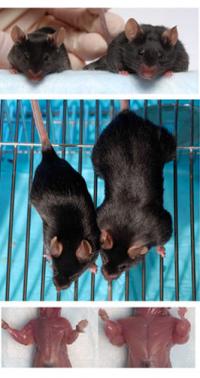
Comparison of body and muscle size between normal (left) and double mutant mice lacking myostatin and overproducing follistatin (right). The Johns Hopkins scientist who first showed that the absence of the protein myostatin leads to oversized muscles in mice and men has now found a second protein, follistatin, whose overproduction in mice lacking myostatin doubles the muscle-building effect.
| Full story | 0 Comments | 13934 views |

- In some genetic cases of microcephaly, stem cells fail to launch
- Yale team discovers how Zika virus causes fetal brain damage
- Scientists uncover the way a common cell enzyme alerts the body to invading bacteria
- Arctic gives clues on worst mass extinction of life
- Calcium channel blockers caught in the act at atomic level
Search Bio News Net
Free Biology Newsletter
- Flexibility That A.C.A. Lent to Work Force Is Threatened by...International Herald Tribune
- Bacteria Behind Legionnaires’ Disease Found at New York Police StationInternational Herald Tribune
- Prescription Price Crisis? 28 Million Americans See Spike in Drug...MSNBC.com: Health
- Seizing on Opioid Crisis, a Drug Maker Lobbies Hard for...International Herald Tribune
- Republicans are taking a big political risk on health careAP Health News
- Why We're So Divided Over Saving WolvesNational Geographic News