

Large, seemingly useless pieces of RNA - a molecule originally considered only a lowly messenger for DNA - play an important role in letting cells know where they are in the body and what they are supposed to become, researchers at Stanford University School of Medicine have discovered.

| AIDS & HIV | June 28, 2007 09:37 PM |
A growing number of drug-resistant strains of HIV are a threat to the effectiveness of current treatments despite anti-HIV drug cocktails decreasing the number of HIV-related deaths and improving the quality of life for HIV patients. Existing methods of detecting drug-resistant forms of HIV are expensive, time consuming, and often fail to identify small populations of drug-resistant HIV. Now, researchers at the University of Pennsylvania School of Medicine have developed a drug resistance screening method that analyzes multiple HIV variants at the same time, while also saving time and money.
| Full story | 0 Comments | 5942 views |

| Molecular & Cell Biology | June 28, 2007 08:37 PM |
The body may hold a secret to normalizing skin cell growth that is over zealous in psoriasis and non-melanoma skin cancers and too slow in aging and sun-damaged skin, researchers say.
| Full story | 0 Comments | 8192 views |
| Molecular & Cell Biology | June 28, 2007 07:37 PM |
Researchers at the University of Warwick’s Warwick Medical School have uncovered a process that locks the body’s metabolism in a diabetic state after only relatively limited exposure to high glucose levels.
| Full story | 0 Comments | 6614 views |
| Molecular & Cell Biology | June 28, 2007 06:37 PM |
Exercise has a similar effect to antidepressants on depression. This has been shown by previous research. Now Astrid Bjørnebekk at Karolinska Institutet has explained how this can happen: exercise stimulates the production of new brain cells.
| Full story | 0 Comments | 12613 views |

| Biology | June 28, 2007 05:37 PM |
The reproductive monopoly of the ant queen is not as strong as is often thought. Dr. Heikki Helanterä and Prof. Lotta Sundström, biologists working at the University of Helsinki, Finland, investigated worker ovary development and egg laying in nine Northern European wood ant species of the genus Formica, and revealed wide spread reproductive endeavours by workers. For example, in species such as Formica cinerea, Formica pratensis, and Formica truncorum approximately one in five workers is fully equipped to lay eggs. Furthermore, genetic analysis of egg parentage showed that these workers are really laying eggs on a large scale. For example in the species with the most worker reproduction, Formica truncorum, as many as one in four of eggs are indeed laid by the workers.
| Full story | 0 Comments | 8192 views |

| Health & Medicine | June 28, 2007 04:37 PM |
Can adopting a healthier lifestyle later in life help -- or is it too late? In a study published in the July 2007 issue of The American Journal of Medicine, researchers from the Medical University of South Carolina, Charleston found that people 45 to 64 years of age who added healthy lifestyle behaviors could substantially reduce their risk for cardiovascular disease (CVD) and reduce their death rate. Once these people achieved 4 healthy behaviors, eating at least 5 fruits and vegetables daily, exercising at least 2.5 hours per week, maintaining their Body Mass Index (BMI) between 18.5 and 30 kg/m, and not smoking, investigators saw a 35% reduction in CVD incidence and a 40% reduction in mortality compared to people with less healthy lifestyles.
| Full story | 0 Comments | 5675 views |

| Biotechnology | June 28, 2007 02:32 PM |
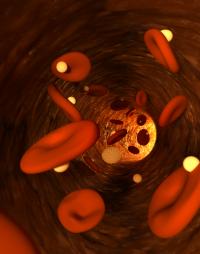
Polymer nanoparticles attach to red blood cells and remain in circulation for prolonged times. Unattached nanoparticles are rapidly cleared by body's immune system. Researchers at the University of California, Santa Barbara have discovered that attaching polymeric nanoparticles to the surface of red blood cells dramatically increases the in vivo lifetime of the nanoparticles. The research, published in the July 07 issue of Experimental Biology and Medicine, could offer applications for the delivery of drugs and circulating bioreactors.
| Full story | 0 Comments | 6187 views |
| Health & Medicine | June 28, 2007 10:32 AM |
The respiratory form of tularemia, a potentially serious bacterial disease, is a significant public health concern because it is highly infectious, it has a high mortality rate if untreated, and it could be introduced into a population in an intentional act of bioterror. Though much research is focused on developing drugs and vaccines targeted to the bacterium that causes tularemia, Francisella tularensis, little is known about the role that antibodies play in protecting against infection.
| Full story | 0 Comments | 5769 views |

- In some genetic cases of microcephaly, stem cells fail to launch
- Yale team discovers how Zika virus causes fetal brain damage
- Scientists uncover the way a common cell enzyme alerts the body to invading bacteria
- Arctic gives clues on worst mass extinction of life
- Calcium channel blockers caught in the act at atomic level
Search Bio News Net
Free Biology Newsletter
- Flexibility That A.C.A. Lent to Work Force Is Threatened by...International Herald Tribune
- Bacteria Behind Legionnaires’ Disease Found at New York Police StationInternational Herald Tribune
- Prescription Price Crisis? 28 Million Americans See Spike in Drug...MSNBC.com: Health
- Seizing on Opioid Crisis, a Drug Maker Lobbies Hard for...International Herald Tribune
- Republicans are taking a big political risk on health careAP Health News
- Why We're So Divided Over Saving WolvesNational Geographic News