

Modern man"s earliest known close ancestor was significantly more apelike than previously believed, a New York University College of Dentistry professor has found.

| Biology | March 25, 2007 10:18 PM |
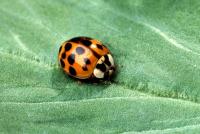
Researchers have recently identified several chemicals produced by ladybugs that can taint the aroma and flavor of wine. Ladybugs may look pretty but they also have a dark side. In some places, the polka-dotted insects have become a nuisance by invading homes and crops, including some vineyards. To make matters worse, the bugs produce a foul-smelling liquid that, besides irritating homeowners, can be inadvertently processed along with grapes and taint the aroma and flavor of wine.
| Full story | 0 Comments | 9279 views |

| Health & Medicine | March 25, 2007 09:18 PM |
In one of the most comprehensive and definitive studies of its kind to date, a team of researchers at the University of California, Davis have proven that organically grown kiwifruit contain more health-promoting factors than those grown under conventional conditions. The research is reported in the SCI’s magazine Chemistry & Industry. The debate over the relative health benefits of organic versus conventional food has raged for years, with UK environment secretary David Miliband declaring in January that buying organic is just a lifestyle choice.
| Full story | 0 Comments | 5298 views |

| Biotechnology | March 25, 2007 08:18 PM |
By mimicking Nature's way of distinguishing one type of cell from another, University of Wisconsin-Madison scientists now report they can more effectively seek out and kill cancer cells while sparing healthy ones.
| Full story | 0 Comments | 3854 views |
| Health & Medicine | March 25, 2007 07:18 PM |
Indulging in an isotope-enhanced steak or chicken fillet every now and again could add as much as 10 years to your life. Scientists have shown for the first time that food enriched with natural isotopes builds bodily components that are more resistant to the processes of ageing. The concept has been demonstrated in worms and researchers hope that the same concept can help extend human life and reduce the risk of cancer and other diseases of ageing, reports Marina Murphy in Chemistry & Industry, the magazine of the SCI.
| Full story | 0 Comments | 3524 views |

| Microbiology | March 25, 2007 02:34 PM |
For parents, 8 million cases of acute middle ear infections every year add up to a lot of sleepless nights and trips to the pediatrician. But new research from a collaboration between Rockefeller University and St. Jude Children’s Hospital could change all that.
| Full story | 0 Comments | 4410 views |
| Biotechnology | March 25, 2007 12:33 PM |
Tissue engineering has emerged as a promising alternative for the reconstitution of lost or damaged organs and tissues, circumventing the complications associated with traditional transplants. Tissue engineers attempt to repair or regenerate damaged tissue by using engineered tissue substitutes that can sustain functionality during regeneration and eventually integrate into the host tissue. The traditional tissue-engineering paradigm combines isolated cells with appropriate bioactive agents in a biomaterial scaffold. It is widely recognized that scaffold architecture can profoundly influence the behavior of cells on tissue-engineering constructs.
| Full story | 0 Comments | 4801 views |
| Biotechnology | March 25, 2007 10:33 AM |
Dental enamel is the hardest tissue produced by the body. It cannot regenerate itself, because it is formed by a layer of cells that is lost by the time the tooth appears in the mouth. The enamel spends the remainder of its lifetime vulnerable to wear, damage, and decay. For this reason, it is exciting to consider the prospect of artificially growing enamel, or even whole teeth, using culturing and transplantation techniques. In the emergent field of tooth-tissue engineering, several groups have developed their own approaches. Although there has been some success in producing enamel-like and tooth-like tissues, problems remain to be solved before the technology comes close to being tested in humans. One of the issues has been how to produce, in culture, sufficient numbers of enamel-forming cells.
| Full story | 0 Comments | 6857 views |

- In some genetic cases of microcephaly, stem cells fail to launch
- Yale team discovers how Zika virus causes fetal brain damage
- Scientists uncover the way a common cell enzyme alerts the body to invading bacteria
- Arctic gives clues on worst mass extinction of life
- Calcium channel blockers caught in the act at atomic level
Search Bio News Net
Free Biology Newsletter
- Flexibility That A.C.A. Lent to Work Force Is Threatened by...International Herald Tribune
- Bacteria Behind Legionnaires’ Disease Found at New York Police StationInternational Herald Tribune
- Prescription Price Crisis? 28 Million Americans See Spike in Drug...MSNBC.com: Health
- Seizing on Opioid Crisis, a Drug Maker Lobbies Hard for...International Herald Tribune
- Republicans are taking a big political risk on health careAP Health News
- Why We're So Divided Over Saving WolvesNational Geographic News