

An ichthyologist from the Wildlife Conservation Society's New York Aquarium received the ultimate honor recently, when a freshwater fish discovered on the African island nation of Madagascar was named after him.

| Biotechnology | January 24, 2007 10:46 PM |
A new nanotechnology that can examine single molecules in order to determine gene expression, paving the way for scientists to more accurately examine single cancer cells, has been developed by an interdisciplinary team of researchers at UCLA's California Nanosystems Institute (CNSI), New York University's Courant Institute of Mathematical Sciences, and Veeco Instruments, a nanotechnology company. Their work appears in the January issue of the journal Nanotechnology.
| Full story | 0 Comments | 5190 views |

| Biology | January 24, 2007 09:46 PM |
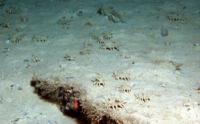
Elpidia glacialisUnder the former Larsen ice shelf east of the Antarctic Peninsula, deep-sea sea cucumbers and stalked feather stars were ubiquitously found in shallow waters. These animals usually inhabit far greater water depths.
| Full story | 0 Comments | 8108 views |

| Molecular & Cell Biology | January 24, 2007 08:46 PM |
The National Science Foundation has announced the award of $263,274 to Williams College biologist Claire Ting. It will support her work in exploring the structure, function and evolution of the photosynthetic apparatus in one of the most important marine primary producers of the world.
| Full story | 0 Comments | 5075 views |
| Biology | January 24, 2007 07:46 PM |
A strikingly unusual animal was recently discovered in the cloud-forests of Peru. The large rodent is about the size of a squirrel and looks a bit like one, except its closest relatives are spiny rats.
| Full story | 0 Comments | 6946 views |
| Molecular & Cell Biology | January 24, 2007 06:46 PM |
Many cancers arise due to defects in genes that normally suppress tumor growth. Now, for the first time, MIT researchers have shown that re-activating one of those genes in mice can cause tumors to shrink or disappear.
| Full story | 0 Comments | 5212 views |
| Biology | January 24, 2007 05:46 PM |
A male fish can size up potential rivals, and even rank them from strongest to weakest, simply by watching how they perform in territorial fights with other males, according to a new study by Stanford University scientists. The researchers say their discovery provides the first direct evidence that fish, like people, can use logical reasoning to figure out their place in the pecking order.
| Full story | 0 Comments | 4510 views |

| Health & Medicine | January 24, 2007 04:17 PM |
New predictions about bird flu, involving the use of a mathematical model, suggest that international cooperation to share antiviral drugs might be the best way to deal with an emerging pandemic.
| Full story | 0 Comments | 5735 views |
| Biology | January 24, 2007 02:17 PM |

Researchers are just beginning to understand the mechanisms governing the complex network interactions between plants and pollinators, such as hummingbirds, shown in this illustration from Ernst Haeckel's Kunstformen der Natur (1904). Credit: Maravall et al. A field of spring wildflowers, abuzz with busy insects seeking nectar and spreading pollen, may look like a perfect model of random interaction. But ecologists have discovered order within this anarchy. For instance, as the number of species grows, the number of interactions does too, while the connectivity (the fraction of possible interactions that actually occur) and the nestedness (the relative importance of generalist species as mutualistic partners of specialist species) shrinks.
| Full story | 0 Comments | 6970 views |

| Microbiology | January 24, 2007 12:17 PM |
How DNA replicates is a critical question for understanding life. DNA replication remains difficult to investigate in eukaryotes,where it occurs within the confines of the double-membrane nucleus. However, the process is far easier to study in the much simpler virus. In simian virus 40 (SV40), the large T-antigen protein (T-ag) is responsible for recognizing DNA sequences required to start replication, called the origin of replication. SV40 T-ag can also cause DNA to melt or unwind. In a new study published online in the open access journal PLoS Biology, Gretchen Meinke, Andrew Bohm, and colleagues report the crystal structure of the DNA-binding domain of SV40 T-ag on a DNA fragment derived from the viral origin of replication.
| Full story | 0 Comments | 5964 views |
| Biology | January 24, 2007 10:17 AM |
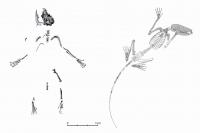
Composite (left) and reconstructed (right) skeletons of D. szalayi, the oldest known ancestor of primates. (Bloch, et al./ PNAS) The origins and earliest branches of primate evolution are clearer and more ancient by 10 million years than previous studies estimated, according to a study featured on the cover of the Jan. 23 print edition of the Proceedings of the National Academy of Sciences.
| Full story | 0 Comments | 9117 views |

- In some genetic cases of microcephaly, stem cells fail to launch
- Yale team discovers how Zika virus causes fetal brain damage
- Scientists uncover the way a common cell enzyme alerts the body to invading bacteria
- Arctic gives clues on worst mass extinction of life
- Calcium channel blockers caught in the act at atomic level
Search Bio News Net
Free Biology Newsletter
- Flexibility That A.C.A. Lent to Work Force Is Threatened by...International Herald Tribune
- Bacteria Behind Legionnaires’ Disease Found at New York Police StationInternational Herald Tribune
- Prescription Price Crisis? 28 Million Americans See Spike in Drug...MSNBC.com: Health
- Seizing on Opioid Crisis, a Drug Maker Lobbies Hard for...International Herald Tribune
- Republicans are taking a big political risk on health careAP Health News
- Why We're So Divided Over Saving WolvesNational Geographic News