

A novel approach to treating infectious diseases is being developed by researchers at Cardiff University.

| Health & Medicine | September 11, 2006 10:27 PM |
The latest generation of cancer chemotherapeutic drugs specifically targets mutant enzymes or "oncoproteins" that have run amok and now promote uncontrolled cell growth. As promising as these drugs are, cancer cells with their backs against the wall have the tendency to fight back. A major goal of cancer research is to frustrate these acts of cellular desperation.
| Full story | 2 Comments | 4399 views |

| Biotechnology | September 11, 2006 09:27 PM |
Detecting bacteria, viruses and other dangerous substances in hospitals, airplanes and other commonly contaminated places could soon be as easy as wiping a napkin or paper towel across a surface, says a researcher from Cornell University.
| Full story | 2 Comments | 5353 views |

| Molecular & Cell Biology | September 11, 2006 08:27 PM |
The study, which was directed by Scripps Research Professor Benjamin Cravatt, Ph.D., is being published in the September 8 issue of The Journal of Biological Chemistry.
| Full story | 0 Comments | 4606 views |
| Health & Medicine | September 11, 2006 07:27 PM |
Chemists in Japan have found that brown seaweed, a flavor component used in many Asian soups and salads, contains a compound that appears in animal studies to promote weight loss by reducing the accumulation of fat. Called fucoxanthin, the compound achieved a 5 percent to 10 percent weight reduction in test animals and could be developed into a natural extract or drug to help fight obesity, the researchers say.
| Full story | 0 Comments | 7395 views |
| Health & Medicine | September 11, 2006 06:27 PM |
The promise of regenerative medicine and the nanotechnology catapulting it into the forefront of chemistry are highlighted in two papers being presented on Monday, Sept. 11, in San Francisco during the American Chemical Society's 232nd national meeting. The presentations occur on the second day of a three-day symposium, "Advances in Nanomedicine," Sept. 10-12. Both papers will be presented at the Sir Francis Drake Hotel, Monterey/Cypress Rooms.
| Full story | 0 Comments | 4220 views |

| Microbiology | September 11, 2006 04:04 PM |
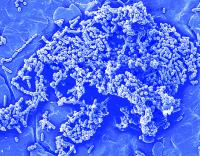
Bacteria can aggregate and produce dangerous biofilms that make them physically resistant to antibiotics. Bacterial infections are becoming more deadly worldwide due to increased resistance to antibiotics. Now, chemists at the University of Wisconsin-Madison have developed a powerful strategy to fight these deadly infections: Instead of killing the bacteria directly, the scientists designed a group of compounds that can block the chemical signals that the bacteria use to communicate in an effort to stop their spread.
| Full story | 0 Comments | 7471 views |
| Health & Medicine | September 11, 2006 01:04 PM |
A researcher at the University of Navarra, Borja Sáez Ochoa, has proposed a new genetic diagnostic method for multiple myeloma (MM), a type of bone marrow cancer, which permits the detection of this disease in earlier stages.
| Full story | 0 Comments | 4825 views |

- In some genetic cases of microcephaly, stem cells fail to launch
- Yale team discovers how Zika virus causes fetal brain damage
- Scientists uncover the way a common cell enzyme alerts the body to invading bacteria
- Arctic gives clues on worst mass extinction of life
- Calcium channel blockers caught in the act at atomic level
Search Bio News Net
Free Biology Newsletter
- Flexibility That A.C.A. Lent to Work Force Is Threatened by...International Herald Tribune
- Bacteria Behind Legionnaires’ Disease Found at New York Police StationInternational Herald Tribune
- Prescription Price Crisis? 28 Million Americans See Spike in Drug...MSNBC.com: Health
- Seizing on Opioid Crisis, a Drug Maker Lobbies Hard for...International Herald Tribune
- Republicans are taking a big political risk on health careAP Health News
- Why We're So Divided Over Saving WolvesNational Geographic News