

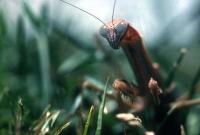
Hungry female praying mantids are more likely to cannibalize.Female praying mantids are notorious for sexual cannibalism – that is, for eating their male partner during mating. However, the possibility that males may also have something to gain from this violent act has never been resolved experimentally. In a paper in the August issue of The American Naturalist, Jonathan Lelito and William Brown (SUNY-Fredonia), study male risk-taking behavior in a praying mantis by altering the risk of cannibalism and observing changes in male behavior. They find that the males are able to assess the risk of cannibalism and become more cautious in the presence of particularly hungry females.

| Biology | July 26, 2006 11:10 PM |
| Full story | 2 Comments | 9304 views |

| Health & Medicine | July 26, 2006 10:10 PM |
Simple models predict that only one strain of an infectious disease can exist at one time, but observation suggests otherwise. In a study in the August issue of The American Naturalist, Ken Eames and Matt Keeling (University of Warwick) use a mathematical model to help explain multiple strains, showing that the way humans interact is all-important. The researchers found that the coexistence of multiple infectious disease strains result from monogamous populations.
| Full story | 0 Comments | 6012 views |
| Biology | July 26, 2006 09:10 PM |
Performance on the dance floor may not always show it, but people are rarely born with two left feet. We have genes that instruct our arms and legs to grow in the right places and point in the right directions. They also provide for the spaces between our fingers and toes and every other formative detail of our limbs.
| Full story | 3 Comments | 6576 views |
| Biology | July 26, 2006 08:10 PM |
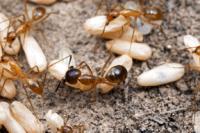
Desert carpetner ants store excess fat and pass it to colony members through lipid-rich oral secretions or unfertilized eggs.In a fascinating new study from the September/October 2006 issue of Physiological and Biochemical Zoology, Daniel A. Hahn (University of Florida) explores the ability of ants to store excess fat and pass it to colony members through lipid-rich oral secretions or unfertilized eggs. For perennial organisms, such as ant colonies, investing heavily in nutrient stores when food availability is high is a potential bet-hedging strategy for dealing with times of famine.
| Full story | 0 Comments | 6182 views |
| Biology | July 26, 2006 07:10 PM |
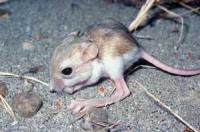
A twenty-seven day old desert kangaroo rat, Dipdomys deserti, learning how to use its cheek pouches.The warm deserts of North America are hopping with multiple species of kangaroo rats and pocket mice despite limited seed resources. Why doesn't one species win out in the rat race? Ecologist Mary Price (University of California, Riverside and University of Arizona) and theoretical biologist John Mittler (University of Washington) teamed up to explore their hunch that coexistence might follow from the propensity of these rodents to store harvested seeds and to steal from one another's caches.
| Full story | 0 Comments | 7523 views |

| Biotechnology | July 26, 2006 06:10 PM |
A major international scientific effort was launched last week to develop and use a radical new approach to boost rice production and avoid potential rice shortages, or even future famine.
| Full story | 0 Comments | 9789 views |

| Microbiology | July 26, 2006 02:08 PM |
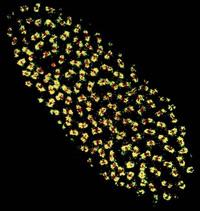
The image shows a fluorescent microscope image of a Drosophila embryo infected with Wolbachia. The embryo is about 1.5 mm long.Scientists have made a major breakthrough in understanding the genetics of the insect parasite that is being targeted by researchers as a way of preventing the spread of malaria.
| Full story | 0 Comments | 7494 views |

| Molecular & Cell Biology | July 26, 2006 12:08 PM |
Researchers at Sunnybrook Health Sciences Centre have made a critical discovery in T cell development bringing immunologists one step closer to enabling the creation of tailored T cell therapy that could one day be used to treat patients with AIDS or other immune system deficiencies.
| Full story | 0 Comments | 6251 views |
| Molecular & Cell Biology | July 26, 2006 10:08 AM |
Cancer researchers have discovered that a recently identified protein critical for repairing damaged genes uses an unusual mechanism to keep its repairs accurate.
| Full story | 0 Comments | 6700 views |

- In some genetic cases of microcephaly, stem cells fail to launch
- Yale team discovers how Zika virus causes fetal brain damage
- Scientists uncover the way a common cell enzyme alerts the body to invading bacteria
- Arctic gives clues on worst mass extinction of life
- Calcium channel blockers caught in the act at atomic level
Search Bio News Net
Free Biology Newsletter
- Flexibility That A.C.A. Lent to Work Force Is Threatened by...International Herald Tribune
- Bacteria Behind Legionnaires’ Disease Found at New York Police StationInternational Herald Tribune
- Prescription Price Crisis? 28 Million Americans See Spike in Drug...MSNBC.com: Health
- Seizing on Opioid Crisis, a Drug Maker Lobbies Hard for...International Herald Tribune
- Republicans are taking a big political risk on health careAP Health News
- Why We're So Divided Over Saving WolvesNational Geographic News