

A deadly fish virus has been found for the first time in a variety of freshwater fish in the northeastern United States by Cornell University researchers.

| Biology | June 19, 2006 10:46 PM |
In an exciting study that provides new understanding of how animals learn--and learn from each other--researchers have demonstrated that bats that use frog acoustic cues to find quality prey can rapidly learn these cues by observing other bats. While numerous examples are known of instances where predators can use so-called "social learning" to learn new visual and olfactory cues associated with prey, this kind of learning of an acoustic cue had not been previously described. The work is reported by Rachel A. Page and Michael J. Ryan of the University of Texas at Austin and the Smithsonian Tropical Research Institute and appears in the June 20th issue of Current Biology.
| Full story | 0 Comments | 4945 views |
| Biology | June 19, 2006 10:16 PM |
New findings reported this week reveal that at least some primates can use their stored knowledge of recent weather as a tool for guiding their foraging behavior when searching for ripening fruit. The work, which potentially informs our understanding of how cognitive skills developed in humans and other primates, is reported by Karline Janmaat, Richard Byrne, and Klaus Zuberbühler of the University of St. Andrews in the June 20th issue of Current Biology.
| Full story | 0 Comments | 4735 views |
| Biology | June 19, 2006 09:15 PM |
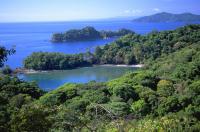
Bahia Honda, PanamaOn 15 June, 2006, the first publication to assemble terrestrial biodiversity information from Bahia Honda, Panama, was presented by Santiago Castroviejo and Alicia Ibaez, editors, at the Smithsonian Tropical Research Institute (STRI) in Panama City.
| Full story | 0 Comments | 7177 views |
| Biology | June 19, 2006 08:16 PM |
Thirty-five years ago Arthur DeVries of the University of Illinois at Urbana-Champaign first documented antifreeze glycoproteins (AFGPs) in Antarctic notothenioid fishes. This month three colleagues report they've solved the ensuing, long-running mystery of where these AFGPs, which allow the fish to survive in icy waters, are produced.
| Full story | 0 Comments | 5338 views |
| Biology | June 19, 2006 07:16 PM |
Scientists at Cardiff University, using a novel method to estimate population, have found that there may be many more giant pandas remaining in the wild than previously thought.
| Full story | 0 Comments | 7589 views |

| Biotechnology | June 19, 2006 06:16 PM |
Millions of diabetics face a lifetime of daily injections to replace the insulin their bodies fail to produce, as well as a host of risks that includes blindness, amputation, kidney failure, and heart disease. For many, particularly those afflicted with juvenile diabetes, transplants of the pancreatic tissue in which insulin is produced might alleviate these problems. Unfortunately, there are not nearly enough organ donors available for transplantation.
| Full story | 0 Comments | 4882 views |

| Microbiology | June 19, 2006 02:36 PM |
Scientists at St. Jude Children's Research Hospital have announced that a vaccine they developed a few years ago against one antigenic variant of the avian influenza virus H5N1 may protect humans against future variants of the virus. Vaccines based on this model might therefore be suitable for stockpiling for use during a pandemic (worldwide epidemic) until a new vaccine could be developed specifically against the variant causing the outbreak, the researchers said. An antigen is a molecule that stimulates production of antibodies by the immune system.
| Full story | 1 Comment | 6274 views |

| Environment | June 19, 2006 10:36 AM |
On an island near the North Pole, heads of State from five Nordic countries and the Global Crop Diversity Trust laid the cornerstone today for a "fail-safe" seed vault to be carved into an Arctic mountain. The vault will ensure the long-term survival of the world's vital food crops. As polar bears prowled the island, the head of the Trust called the repository a major hedge against catastrophe--part of a broad global strategy to protect the world's food supply through conserving critical seed collections around the world, from the tropics to the highest latitudes.
| Full story | 0 Comments | 8032 views |

- In some genetic cases of microcephaly, stem cells fail to launch
- Yale team discovers how Zika virus causes fetal brain damage
- Scientists uncover the way a common cell enzyme alerts the body to invading bacteria
- Arctic gives clues on worst mass extinction of life
- Calcium channel blockers caught in the act at atomic level
Search Bio News Net
Free Biology Newsletter
- Flexibility That A.C.A. Lent to Work Force Is Threatened by...International Herald Tribune
- Bacteria Behind Legionnaires’ Disease Found at New York Police StationInternational Herald Tribune
- Prescription Price Crisis? 28 Million Americans See Spike in Drug...MSNBC.com: Health
- Seizing on Opioid Crisis, a Drug Maker Lobbies Hard for...International Herald Tribune
- Republicans are taking a big political risk on health careAP Health News
- Why We're So Divided Over Saving WolvesNational Geographic News