

During embryonic development, nerve cells hesitantly extend tentacle-like protrusions called axons that sniff their way through a labyrinth of attractive and repulsive chemical cues that guide them to their target.

| Health & Medicine | June 15, 2006 10:27 PM |
A study published in this month's issue of Angiology shows that supplementation with the pine bark extract Pycnogenol® (pic-noj-en-all) improves blood flow to the muscles which speeds recovery after physical exercise. The study of 113 participants demonstrated that Pycnogenol significantly reduces muscular pain and cramps in athletes and healthy, normal individuals.
| Full story | 0 Comments | 6771 views |

| Molecular & Cell Biology | June 15, 2006 09:27 PM |
Of the thousands of proteins produced in our cells, few are as important as the enzyme RNA polymerase (RNAP), which has the unique ability to faithfully copy genetic information from DNA. In fact, all organisms--from bacteria to people--depend on RNAP to initiate the complex process of protein synthesis. Despite its crucial role in cell biology, fundamental questions remain about how the RNAP enzyme actually works.
| Full story | 0 Comments | 4866 views |

| Biology | June 15, 2006 08:27 PM |
Pick up a leaf and it is hard not to notice the pattern made by the veins. For years, biologists, mathematicians and even poets and philosophers have tried to decipher the rules and regulations behind those varied designs and now new research published in part at the University of Alberta offers a big clue to how those patterns are formed.
| Full story | 0 Comments | 6533 views |

| AIDS & HIV | June 15, 2006 07:27 PM |
The virulence characteristic of HIV-1--the virus predominantly responsible for human AIDS--might amount to an accident of evolution, new evidence reveals. A gene function lost during the course of viral evolution predisposed HIV-1 to spur the fatal immune system failures that are the hallmarks of AIDS, researchers report in the June 16, 2006 Cell.
| Full story | 0 Comments | 5965 views |
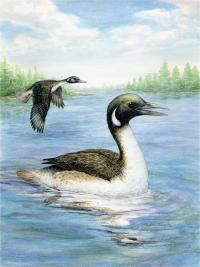
Reconstruction of the Early Cretaceous (~110-115 million year old) amphibious bird Gansus yumenensis, in a lake in what is now the Changma Basin of northwestern Gansu Province, China. Image courtesy of Mark A. Klingler/CMNH, via Science-AAAS.If it flapped its wings, dove like a duck, and lived in China about 110 million years ago, it must be Gansus yumenensis, one of the oldest members of the lineage leading to modern birds. Spectacular new fossil specimens of the loon-like ancient bird, reported in the June 16, 2006, issue of the journal Science, help fill in the avian family tree and suggest that today's birds may have gotten their start in aquatic environments.
| Full story | 0 Comments | 3379 views |
| Molecular & Cell Biology | June 15, 2006 05:08 PM |
Wiring the developing brain is like creating a topiary garden. Shrubs don't automatically assume the shape of ornamental elephants, and neither do immature nerve cells immediately recognize the "right" target cell. Abundant foliage, either vegetal or neuronal, must first sprout and then be sculpted into an ordered structure.
| Full story | 0 Comments | 3385 views |

| Environment | June 15, 2006 04:06 PM |
Ecosystems behave in unpredictable ways and, because of this, restoration ecologists are often faced with unforeseen challenges. Researchers, in a recent article published in Restoration Ecology, argue that restoration methods of the past may not always be applicable in the future They see the largest potential challenge ahead is restoring environments undergoing the most rapid rate of change in the earth's history. This global climate change is likely to have important regional consequences for biota and ecosystems.
| Full story | 0 Comments | 4546 views |
| Health & Medicine | June 15, 2006 02:06 PM |
University of Cincinnati (UC) researchers say exposure to a certain group of fungal spores--abundant in the air that we breathe every day--can make young children more susceptible to developing multiple allergies later in life.
| Full story | 0 Comments | 6677 views |
| Environment | June 15, 2006 12:05 PM |
Researchers at the University of Warwick's plant research arm Warwick HRI have received a £295,000 Darwin initiative grant to develop a butterfly farming industry in Guyana that will help support 5000 people in 16 rainforest communities and help save the rainforest itself.
| Full story | 0 Comments | 6745 views |
| Biology | June 15, 2006 10:09 AM |
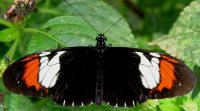
Heliconius heurippa, live specimen, hybrid species resulting from mating of H. cydno x H. melpomene.In a matter of months, butterflies sporting the yellow and red wing color pattern of a wild species were created through simple laboratory crosses of two other wild species, researchers report in the June 15, 2006 edition of the journal Nature.
| Full story | 0 Comments | 6356 views |

- In some genetic cases of microcephaly, stem cells fail to launch
- Yale team discovers how Zika virus causes fetal brain damage
- Scientists uncover the way a common cell enzyme alerts the body to invading bacteria
- Arctic gives clues on worst mass extinction of life
- Calcium channel blockers caught in the act at atomic level
Search Bio News Net
Free Biology Newsletter
- Flexibility That A.C.A. Lent to Work Force Is Threatened by...International Herald Tribune
- Bacteria Behind Legionnaires’ Disease Found at New York Police StationInternational Herald Tribune
- Prescription Price Crisis? 28 Million Americans See Spike in Drug...MSNBC.com: Health
- Seizing on Opioid Crisis, a Drug Maker Lobbies Hard for...International Herald Tribune
- Republicans are taking a big political risk on health careAP Health News
- Why We're So Divided Over Saving WolvesNational Geographic News