Biology News Net
RSS 2.0 Feed
General
GeneralNovember 7, 2005 11:37 PM

I was just thinking : strange, I didn't received a message since I left for Mexico! And then, I tried to send myself an email (to the admin account, see at the bottom of the page for the address). Didn't receive it! Turns out that my mailbox had a very small default quota (10 megs), was setup to keep every message since the beginning AND had a special 'spam' folder that I didn't have access to using my POP email reader on my desktop.

Cleaned the mess, and now I can receive emails again. I apologize in advance if you tried to contact me; just do so again! admin @ biologynews.net ... comments, suggestions, design ideas, problems, etc... I always love to hear from you ;)

0 Comments 10563 views
General

Anyone knows of a student in design or graphism? Looking for some new icons and logo (I designed the current ones, and can't say I'm 100% satisfied). Obviously I would love to hire a professional, but I really don't think I can afford it. Just drop me a mail if you know of someone!

Anonymous sperm donor traced on internet
Scientists explain why viruses thrive during winter
How a disease can change the world
Young hockey player injuries studied - surprising findings
New treatment for multiple sclerosis tested

0 Comments 7503 views
Molecular & Cell Biology

Researchers at the University of Pennsylvania School of Medicine have discovered that nerve-cell dendrites have the capacity to splice messenger RNA (pre-mRNA), a process once believed to only take place in the nucleus of cells.

Health & Medicine

For patients with seasonal affective disorder (SAD), starting treatment with an antidepressant medication during the fall can reduce the risk of developing depression throughout the fall and winter months, reports a study in the Oct. 15 issue of Biological Psychiatry, official journal of the Society of Biological Psychiatry, published by Elsevier, a world-leading scientific and medical publisher.

Environment

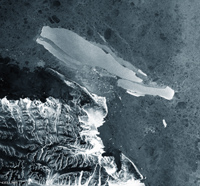
esa11705_1sm.jpg
B-15A break-up in progress, 30 October
After five years of being the world's largest free-floating object, the B-15A iceberg has finally broken up off Antarctica's Cape Adare.

Health & Medicine

UQ biochemists are working with American researchers to pinpoint why only some parts of the brain are damaged in alcoholics.

Microarray

A novel "Flu Chip" developed at the University of Colorado at Boulder that can determine the genetic signatures of specific influenza strains from patient samples within hours may help world health officials combat coming epidemics and pandemics.

Molecular & Cell Biology

Researchers at Yale have brought to light a mechanism that regulates the way an internal organelle, the Golgi apparatus, duplicates as cells prepare to divide, according to a report in Science Express.

Environment

According to research reported this week in Current Biology, tsunami damage to coral reefs closest to the epicenter of the 2004 Sumatra-Andaman earthquake was occasionally spectacular, but surprisingly limited, particularly when compared to damage from chronic human misuse in the region.