
Biology News Net
RSS 2.0 Feed
Biotechnology

Proteins are the puzzle-pieces of life, involved in how organisms grow and flourish, but studying their complex biological processes in living systems has been extremely difficult. Now, a team of chemists and neurobiologists led by Timothy Dore at the University of Georgia and Erin M. Schuman at the California Institute of Technology has found a way to use light to regulate protein synthesis in specific locations.

The new method, which uses so-called "caged compounds" that can be turned on with light, could lead to more intricate studies of such important but poorly understood processes, such as protein synthesis in nerve synapses.

Microbiology

ubonn062405.1sm.jpg
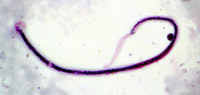
Wuchereria worms under the microscope (c) Sabine Wand
The disease is triggered off by the bite of an infected mosquito: together with its anticoagulant the mosquito pumps threadworm larvae into its host's body. These gravitate towards the lymph nodes, where they grow into threadworms which may be up to ten centimetres long. The body reacts by producing inflammation which halts the flow of lymphatic fluid. The consequence of this is that arms, legs and genitals swell to monstrous proportions – hence the name elephantiasis. More than 120 million people worldwide are infected with the pathogen wuchereria bancrofti.

Health & Medicine

H. Lee Moffitt Cancer Center & Research Institute, working in partnership with the University of South Florida (USF), has discovered a new use for an old, previously discredited anti-cancer drug that could add another weapon in the arsenal against several cancers, including tumors of the breast, ovary, colon, skin and prostate.

Molecular & Cell Biology

Scientists have found a new role for a previously identified enzyme that may make it a target for anti-inflammatory treatments.

The finding by researchers at Washington University School of Medicine in St. Louis shows that an enzyme known as cathepsin G regulates the ability of immune cells known as neutrophils to secrete chemicals that attract other immune cells and start the local inflammatory process. Over time, the excessive accumulation of immune cells can lead to tissue and cartilage damage in joints, causing pain and limiting mobility.

Stem Cell Research

In a ground-breaking study, scientists at Children's Hospital of Pittsburgh have discovered that adult, or post-natal, stem cells have the same ability as embryonic stem cells to multiply, a previously unknown characteristic indicating that post-natal stem cells may play an important therapeutic role.