
Biology News Net
RSS 2.0 Feed
Biology

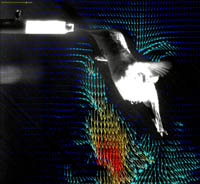
oregon062205_1sm.jpgHumans with an appreciation of beauty may have marveled for millennia at the artistry of a darting hummingbird, but scientists announced today that for the first time they can more fully explain how a hummingbird can hover.

Using a powerful technology that was originally developed for engineering, researchers were able to exactly document the movement of air around a hummingbird's wings and show how its flight is accomplished with the body structure of a bird but some of the aerodynamic tricks of an insect.

This gives it an ability to hover almost indefinitely - an evolutionary advantage in feeding on plant nectar that no other bird has - and an elegance that has charmed people for generations.

Stem Cell Research

Researchers at Wake Forest University School of Medicine have successfully isolated stem cells from human skin, expanded them in the laboratory and coaxed them into becoming fat, muscle and bone cells. The study, one of the first studies to show the ability of a single adult stem cell to become multiple tissue types, is reported today in Stem Cells and Development.

Biology

A tiny fossil found more than 10 years ago in central Alberta has proved to be the key to answering a long unsolved evolutionary question, say researchers from the University of Alberta.

Back in 1991, Dr. Richard Fox and his research team found a 60 million year-old incomplete skull fossil that they now believe is the first evidence of an extinct mammal with a venom delivery apparatus. The research will be published June 23, 2005 in Nature.

Molecular & Cell Biology

First discovered only a few brief years ago, microRNAs are small, remarkably powerful molecules that appear to play a pivotal role in gene silencing, one of the body's main strategies for regulating its genome. A scant 22 nucleotides in length, miRNAs appear to work by binding to and somehow interfering with messenger RNA, itself responsible for translating genes into proteins.

Microbiology

When it comes to gaining entry into cells, size matters. A team from Brown University and the Max Planck Institute for Metals Research has created a model that explains how viruses and other bioparticles slip inside cells without a special protein coating called clathrin.

Molecular & Cell Biology

In a clever bit of biology called site-specific recombination, DNA can travel inside an organism, or into another organism, and perform a sort of grafting surgery that allows it to insert its chromosome into a chromosome of the target cell. The process is important because mobile DNA can carry genes that cause drug resistance or transmit viruses that cause disease or tumors that result in certain leukemias or other cancers.

Molecular & Cell Biology

The cellular signaling protein Wnt, which is involved in embryonic development and cancer, contributes to disease progression of both rheumatoid arthritis and osteoarthritis. The article by Nakamura et al., "Expression profiles and functional analyses of Wnt-related genes in human joint disorders," appears in the July issue of The American Journal of Pathology and is accompanied by a commentary.