
Biology News Net
RSS 2.0 Feed
Biology

k8085-3i.jpg
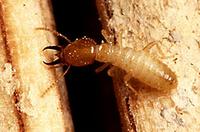
Formosan subterranean termite
Wild celery and two weed species found throughout the western United States may contribute to safe, natural control of the Formosan subterranean termite, Coptotermes formosanus.

Agricultural Research Service (ARS) scientists say that, in lab tests, three compounds that they isolated from these plants scored high kill rates against the invasive termites, which cause about $1 billion in damage annually in the United States.

Molecular & Cell Biology

Research from Dartmouth Medical School, demonstrating how malaria parasites form mutations that make them stubbornly resistant to drug therapy, may hold the key to a new treatments for a disease that afflicts more than half a billion people worldwide.

Health & Medicine

There are 300 million cases of malaria each year worldwide, causing one million deaths. Around 90% of these deaths occur in Africa, mostly in young children. One of the greatest challenges facing Africa in the fight against malaria is drug resistance; resistance to chloroquine (CQ), the cheapest and most widely used antimalarial, is common throughout Africa, and resistance to sulfadoxine-pyrimethamine (SP), the first-developed and least expensive alternative to CQ, is also increasing. These trends have forced many countries to change their treatment policies and use more expensive drugs, including drug combinations that will hopefully slow the development of resistance and minimize transmission of resistant parasites.

Biology

The University of Washington Alaska Salmon Program, the world's longest-running effort to monitor salmon and their ecosystems, has received nearly $2.4 million from the Gordon and Betty Moore Foundation to expand its sampling scope and sophistication.

Bioinformatics

The Institute for Systems Biology announced today at its 2005 international symposium on Computational Challenges in Systems Biology that ISB's Human Proteome Folding Project launched on IBM's World Community Grid in November 2004 has already predicted 50,000 protein structures.

Biology

A Johns Hopkins University graduate student may have figured out why rates of extinction were so low for many of the major groups of marine life during one of the greatest ice ages of them all, which occurred from about 330 million to 290 million years ago, late in the Paleozoic Era.

Molecular & Cell Biology

Mitochondria, as they are defined in textbooks, are essential for eukaryotic cells--including our own--because they make large amounts of energy as they use oxygen. However, some eukaryotic cells, including important parasites of humans--such as Entamoeba histolytica, the causal agent of amoebic dysentery--live in environments that are too oxygen poor to support this process. Nevertheless, Entamoeba still contains a somewhat mysterious organelle, called a mitosome, that is evolutionarily derived from mitochondria. As reported by researchers this week, the mitosome can represent a surprisingly pared-down version of the much more sophisticated mitochondrion.

Molecular & Cell Biology

Researchers at the University of Chicago have found that a recently discovered biological process known as sumoylation -- until now thought to be active only in the nucleus -- also occurs near the cell's surface where it regulates at least one and possibly many kinds of proteins, providing a novel target for the development of new drugs.

Stem Cell Research

With careful coaxing, stem cells from the brain can form insulin-producing cells that mimic those missing in people with diabetes, according to a paper published in the April 26 issue of PLoS Medicine.

Molecular & Cell Biology

New research on prions, the infectious proteins behind "mad cow" disease and Creutzfeld-Jakob disease in humans, suggests that the ability of prions in one species to infect other species depends on the shape of the toxic threadlike fibers produced by the prion. Two studies on the topic appear in the 8 April issue of the journal Cell.