


In the Room of DOOM (Dissolved Oxygen Oyster Mortality), oyster tanks mimic the day-night oxygen swings that oysters experience in shallow Bay waters. In shallow waters around the world, where nutrient pollution runs high, oxygen levels can plummet to nearly zero at night. Oysters living in these zones are far more likely to pick up the lethal Dermo disease, a team of scientists from the Smithsonian Environmental Research Center discovered. Their findings were published Wednesday in the journal PLOS ONE.

Category: Biology
| Biology | February 11, 2015 06:22 PM |
| Full article | 0 Comments | 7997 views |
| Biology | February 3, 2015 06:34 PM |
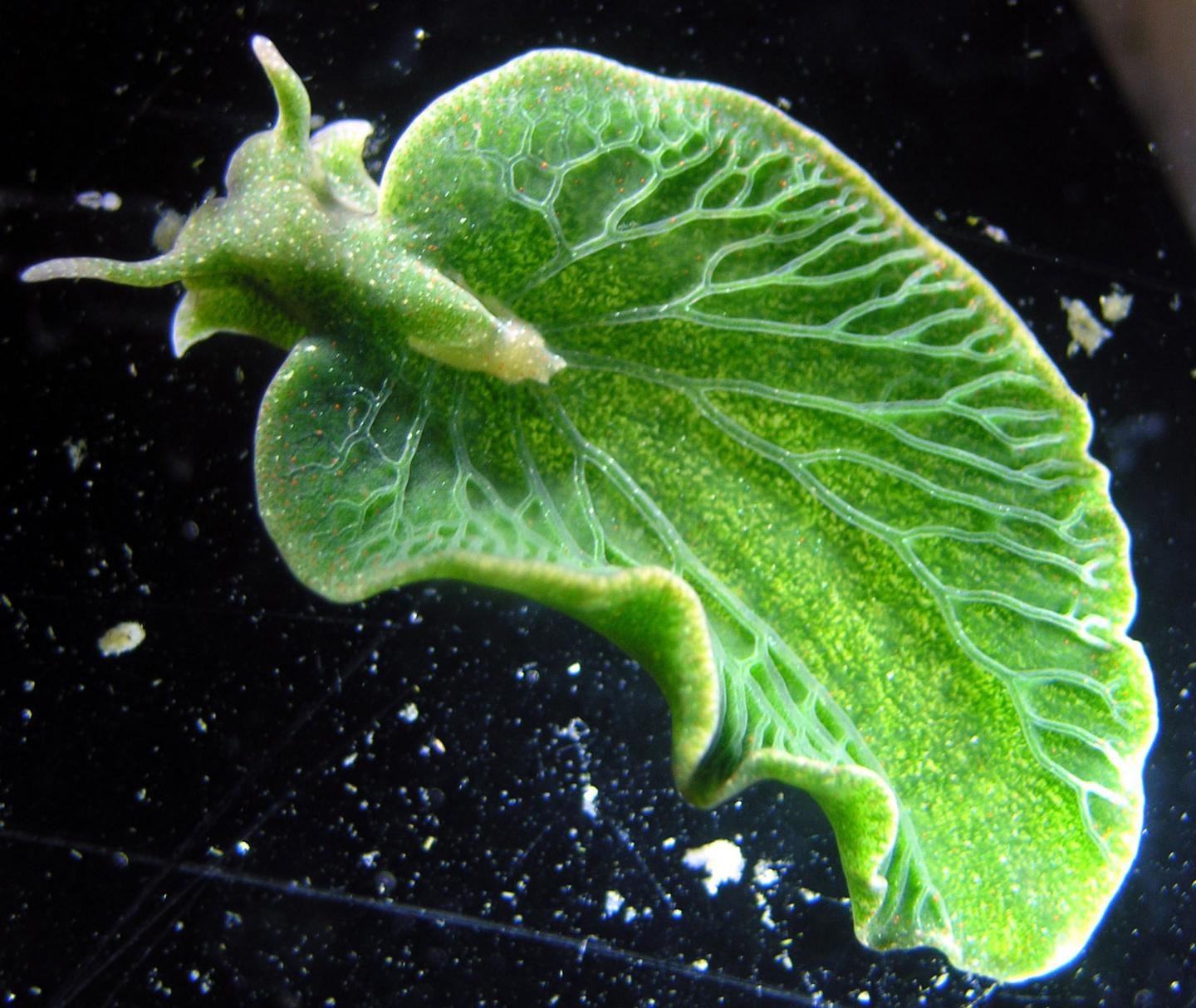
The rich green color of the photosynthesizing sea slug, Elysia chlorotica, helps to camouflage it on the ocean floor. How a brilliant-green sea slug manages to live for months at a time "feeding" on sunlight, like a plant, is clarified in a recent study published in The Biological Bulletin.
| Full article | 0 Comments | 13249 views |
| Biology | January 29, 2015 06:35 PM |
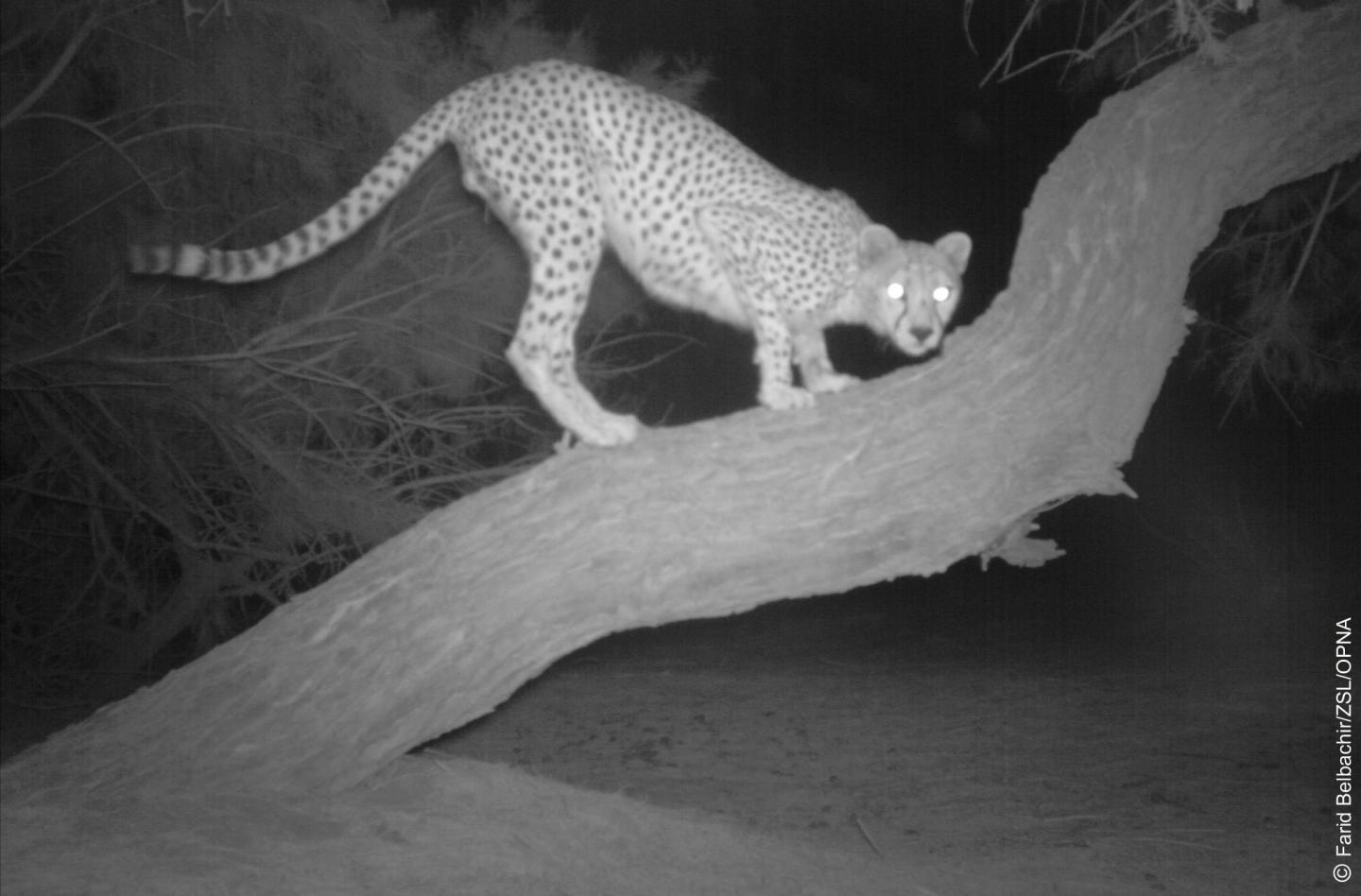
Research by scientists and conservationists from the Wildlife Conservation Society, the Zoological Society of London, and other groups published today in PLOS ONE shows that critically endangered Saharan cheetahs exist... Research by scientists and conservationists from the Wildlife Conservation Society, the Zoological Society of London, and other groups published today in PLOS ONE shows that critically endangered Saharan cheetahs exist at incredibly low densities and require vast areas for their conservation. The research also offers some of the world's only photographs of this elusive big cat.
| Full article | 0 Comments | 8646 views |
| Biology | January 19, 2015 04:49 PM |
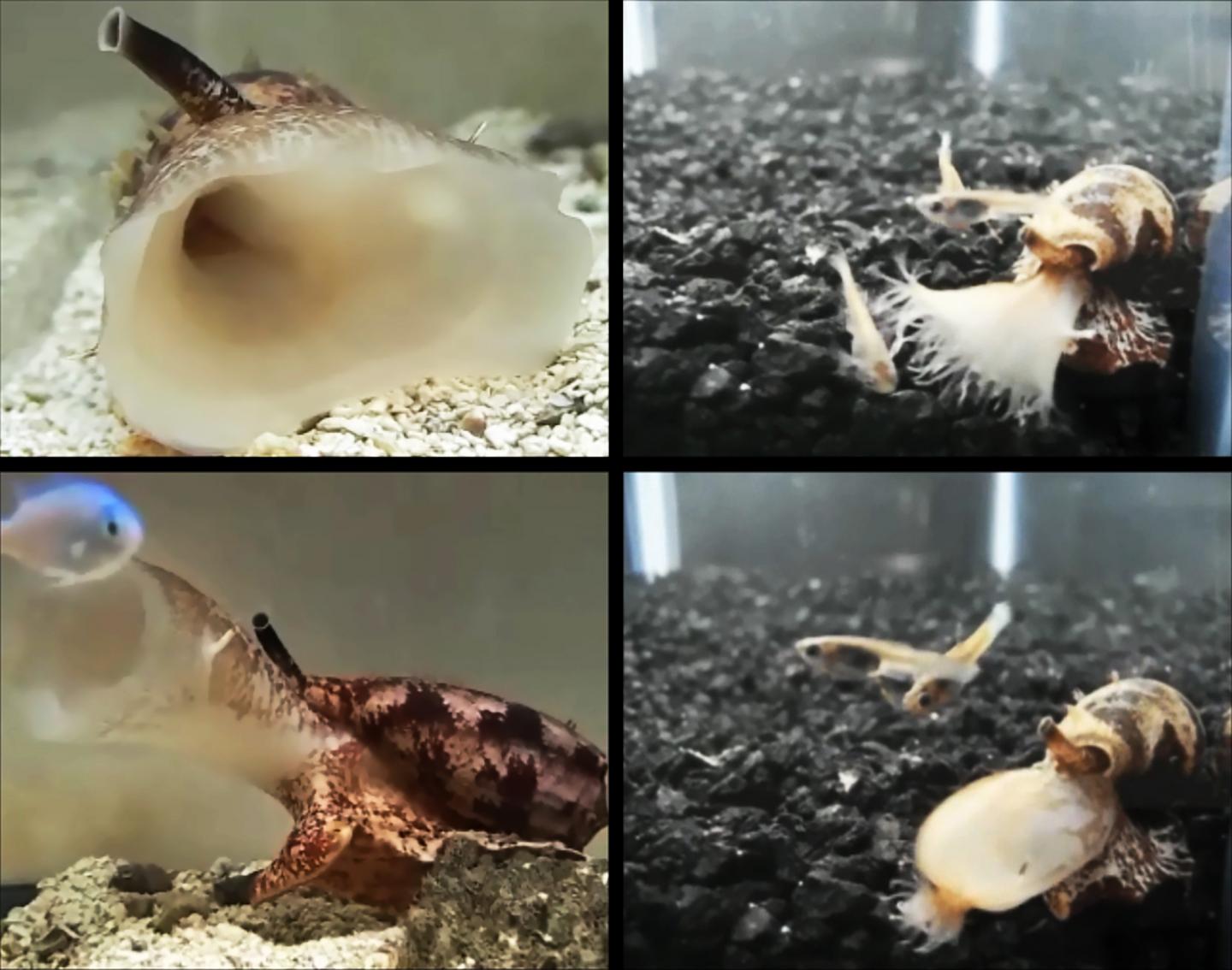
The images show two species of cone snail, Conus geographus (left) and Conus tulipa (right) attempting to capture their fish prey. As they approach potential prey, the snails release a... As predators go, cone snails are slow-moving and lack the typical fighting parts. They've made up for it by producing a vast array of fast-acting toxins that target the nervous systems of prey. A new study reveals that some cone snails add a weaponized form of insulin to the venom cocktail they use to disable fish.
| Full article | 0 Comments | 10554 views |
| Biology | January 15, 2015 06:00 PM |
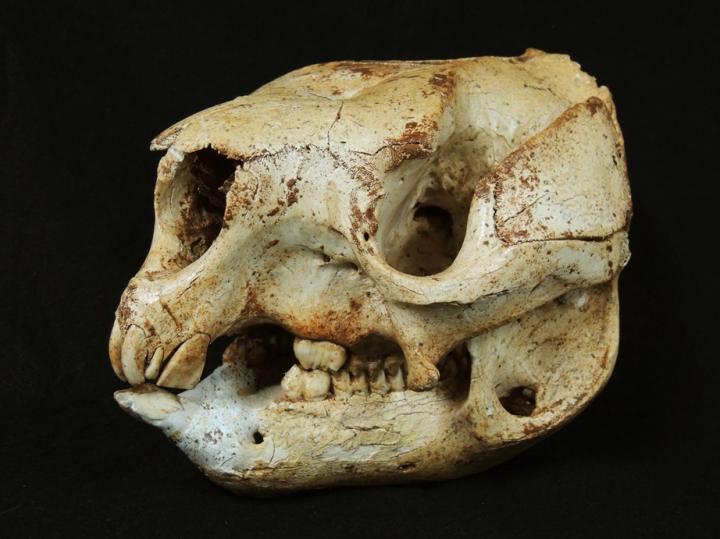
This is the skull of an extinct short-faced kangaroo (Simosthenurus occidentalis). Ancient DNA from these animals reveals they are a highly distinct evolutionary lineage. Scientists have finally managed to extract DNA from Australia's extinct giant kangaroos - the mysterious marsupial megafauna that roamed Australia over 40,000 years ago.
| Full article | 0 Comments | 9598 views |
| Biology | January 14, 2015 05:32 PM |
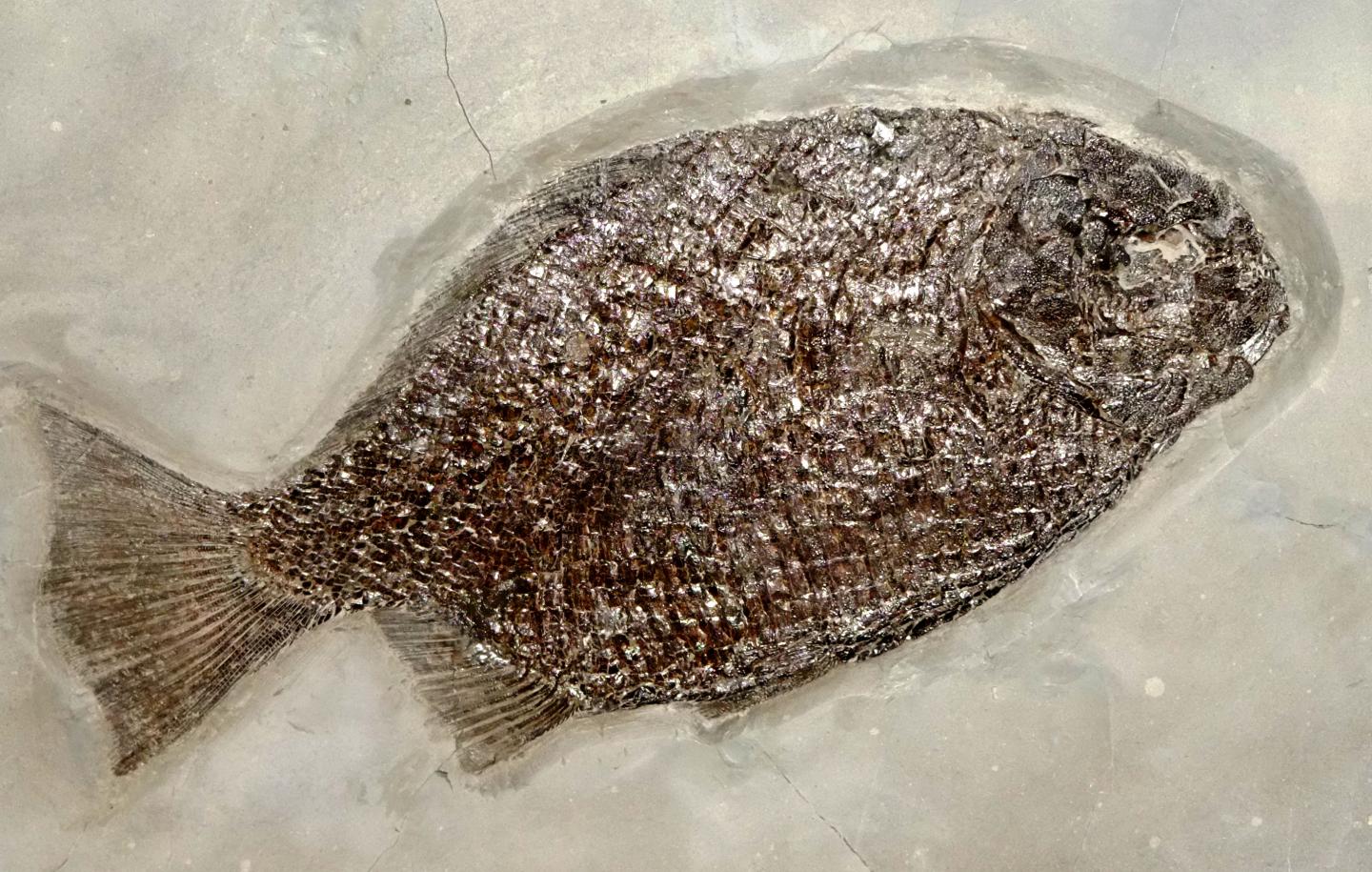
This image shows a perfectly preserved example of the Lower Jurassic fish Dapedium from Lyme Regis, Dorset. Perfectly preserved specimens such as this allow us to calculate the biomechanical function... The feeding habits of an unusual 200-million-year-old fish have been uncovered by a University of Bristol undergraduate in a groundbreaking study which has been published in Palaeontology, a leading scientific journal, this week - a rare achievement for an undergraduate student.
| Full article | 0 Comments | 7854 views |
| Biology | December 9, 2014 06:20 PM |
This is Dr Stephen Munro at the School of Anthropology and Archaeology at ANU. An international team of scientists has discovered the earliest known engravings from human ancestors on a 400,000 year-old fossilised shell from Java.
| Full article | 0 Comments | 13891 views |
| Biology | December 2, 2014 06:51 PM |

Pictured here are Dr. Turi King and Professor Kevin Schürer from the University of Leicester. International research led by the University of Leicester published in Nature Communications reveals:
- Analysis of all the available evidence confirms identity of King Richard III to the point of 99.999% (at its most conservative).
- Analysis of the mitochondrial DNA shows a match between Richard III and modern female-line relatives, Michael Ibsen and Wendy Duldig.
- The male line of descent is broken at one or more points in the line between Richard III and living male-line relatives descended from Henry Somerset, 5th Duke of Beaufort.
- King Richard was almost certainly blue-eyed and probably had blond hair at least during his childhood.
- The portrait which appears to most closely match the genetically-determined hair and eye colour is the Arched-Frame Portrait in the Society of Antiquaries.
| Full article | 0 Comments | 10461 views |
| Biology | December 1, 2014 06:25 PM |
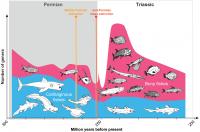
Cartilaginous fishes were very diverse during the Permian period. However, after severe losses among cartilaginous fishes during the Middle Permian extinction, bony fishes experienced a massive diversification in the subsequent... Today, ray-finned fish, which belong to the bony fish, are by far the most biodiverse fish group in both salt- and freshwater. Their spectacular variety of forms ranges from eels, tuna, flounders and angler fish all the way to seahorses. With around 1,100 species, the second most biodiverse group is the cartilaginous fish, which are almost exclusively marine and include sharks, rays and chimaeras. Exactly why bony fish managed to prevail in different habitats is the subject of debate: Do they have a better body plan, which is suited to more ecological niches than that of the cartilaginous fish? Or are other factors involved in their successful distribution? Paleontologists from the University of Zurich now reveal that climate catastrophes in the past played a crucial role in the dominance of ray-finned fish today.
| Full article | 0 Comments | 11476 views |
| Biology | November 24, 2014 04:47 PM |
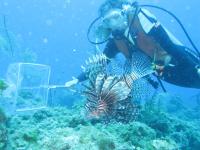
Stephanie Green studies lionfish in The Bahamas. If you live in lionfish territory in the Atlantic Ocean, the last thing you want to be is a small fish with a long, skinny body, resting by yourself at night, near the bottom of the seafloor.
| Full article | 0 Comments | 7533 views |
| Biology | November 20, 2014 06:24 PM |

Electrical and computer engineering professor Barry Van Veen wears an electrode net used to monitor brain activity via EEG signals. As real as that daydream may seem, its path through your brain runs opposite reality.
| Full article | 0 Comments | 9569 views |
| Biology | October 28, 2014 07:59 PM |
A population of endangered giant tortoises, which once dwindled to just over a dozen, has recovered on the Galapagos island of Española, a finding described as "a true story of success and hope in conservation" by the lead author of a study published today (Oct. 28).
| Full article | 0 Comments | 9688 views |
| Biology | October 27, 2014 07:20 PM |
Making mistakes while learning can benefit memory and lead to the correct answer, but only if the guesses are close-but-no-cigar, according to new research findings from Baycrest Health Sciences.
| Full article | 0 Comments | 11189 views |
| Biology | October 21, 2014 05:19 PM |
The way in which male moths locate females flying hundreds of meters away has long been a mystery to scientists.
| Full article | 0 Comments | 7413 views |
| Biology | October 16, 2014 05:21 PM |
Scientists tracing the real-time impact of viruses in the wild have found that entire amphibian communities are being killed off by closely related viruses introduced to mountainous areas of northern Spain.
| Full article | 0 Comments | 11269 views |
| Biology | October 6, 2014 07:35 PM |

This is a 3-D image of the hippocampus of a rat. The way neurons are interconnected in the brain is very complicated. This holds especially true for the cells of the hippocampus. It is one of the oldest brain regions and its form resembles a see horse (hippocampus in Latin). The hippocampus enables us to navigate space securely and to form personal memories. So far, the anatomic knowledge of the networks inside the hippocampus and its connection to the rest of the brain has left scientists guessing which information arrived where and when.
| Full article | 0 Comments | 11536 views |
| Biology | October 2, 2014 02:47 PM |
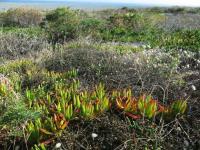
An iceplant, from a region of high diversity in South Africa, is overtopping and killing a native shrub on the New Zealand coast, a region with far less diversity. Dov Sax of Brown University and Jason Fridley of Syracuse University aren't proposing a novel idea to explain species invasiveness. In fact, Charles Darwin articulated it first. What's new about Sax and Fridley's "Evolutionary Imbalance Hypothesis" (EIH) is that they've tested it using quantifiable evidence and report in Global Ecology and Biogeography that the EIH works well.
| Full article | 0 Comments | 9194 views |
| Biology | September 24, 2014 06:26 PM |
Eyeless Mexican cavefish show no metabolic circadian rhythm in either light and dark or constant dark conditions, according to a study published September 24, 2014 in the open-access journal PLOS ONE by Damian Moran from Lund University, Sweden, and colleagues.
| Full article | 0 Comments | 8903 views |
| Biology | September 23, 2014 06:19 PM |
Achieving complete breakdown of plant biomass for energy conversion in industrialized bioreactors remains a complex challenge, but new research shows that termite fungus farmers solved this problem more than 30 million years ago. The new insight reveals that the great success of termite farmers as plant decomposers is due to division of labor between a fungus breaking down complex plant components and gut bacteria contributing enzymes for final digestion.
| Full article | 0 Comments | 7997 views |
| Biology | September 23, 2014 06:19 PM |
Although the immediate welfare consequences of removing infant chimpanzees from their mothers are well documented, little is known about the long-term impacts of this type of early life experience. In a year-long study, scientists from Lincoln Park Zoon observed 60 chimpanzees and concluded that those who were removed from their mothers early in life and raised by humans as pets or performers are likely to show behavioral and social deficiencies as adults.
| Full article | 0 Comments | 11139 views |
| Biology | September 19, 2014 06:16 PM |
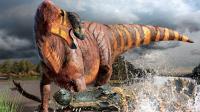
Rhinorex, a newly discovered dinosaur from the Late Cretaceous period, had an impressive nose. Call it the Jimmy Durante of dinosaurs – a newly discovered hadrosaur with a truly distinctive nasal profile. The new dinosaur, named Rhinorex condrupus by paleontologists from North Carolina State University and Brigham Young University, lived in what is now Utah approximately 75 million years ago during the Late Cretaceous period.
| Full article | 0 Comments | 9773 views |
| Biology | September 17, 2014 05:48 PM |
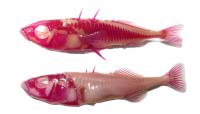
These are adult marine (top) and freshwater (bottom) threespine sticklebacks (Gasterosteus aculeatus) stained with a red dye that labels calcified bone. Sticklebacks, the roaches of the fish world, are the ideal animal in which to study the genes that control body shape. They've moved from the ocean into tens of thousands of freshwater streams and lakes around the world, each time changing their skeleton to adapt to the new environment.
| Full article | 0 Comments | 9058 views |
| Biology | September 3, 2014 05:17 AM |
It's hard to comprehend how bad the current rate of species extinction around the world has become without knowing what it was before people came along. The newest estimate is that the pre-human rate was 10 times lower than scientists had thought, which means that the current level is 10 times worse.
| Full article | 0 Comments | 12951 views |
| Biology | September 3, 2014 05:17 AM |
Move over antibiotic ointment, there might be a new salve to dominate medicine cabinets of the future, and it comes from an unlikely place—the lowly salamander. Salamanders may not be the cuddliest of animals, but they can regenerate lost limbs and achieve amazing recovery of seriously damaged body parts. Now, a new report published in the September 2014 issue of The FASEB Journal, identifies a small protein (called a "peptide") from the skin of salamanders that may be the key to unlocking the secret of this amazing wound healing trick in humans.
| Full article | 0 Comments | 9978 views |
| Biology | August 27, 2014 06:44 PM |
About 400 million years ago a group of fish began exploring land and evolved into tetrapods – today's amphibians, reptiles, birds, and mammals. But just how these ancient fish used their fishy bodies and fins in a terrestrial environment and what evolutionary processes were at play remain scientific mysteries.
| Full article | 0 Comments | 10182 views |
| Biology | August 25, 2014 06:06 PM |
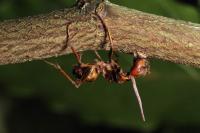
A dead ant manipulated by a species of so-called "zombie ant fungus " clings to a twig in a South Carolina forest. A parasitic fungus that reproduces by manipulating the behavior of ants emits a cocktail of behavior-controlling chemicals when encountering the brain of its natural target host, but not when infecting other ant species, a new study shows.
| Full article | 0 Comments | 9351 views |
| Biology | August 20, 2014 06:08 PM |
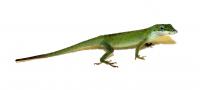
The green anole lizard (Anolis carolinensis), when caught by a predator, can lose its tail and then grow it back. By understanding the secret of how lizards regenerate their tails, researchers may be able to develop ways to stimulate the regeneration of limbs in humans. Now, a team of researchers from Arizona State University is one step closer to solving that mystery. The scientists have discovered the genetic "recipe" for lizard tail regeneration, which may come down to using genetic ingredients in just the right mixture and amounts.
| Full article | 0 Comments | 14143 views |
| Biology | August 13, 2014 06:16 PM |
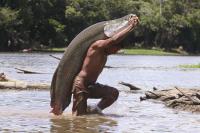
The arapaima fish, which once dominated Amazon fisheries, is long and can weigh as much as 400 pounds. An international team of scientists has discovered that a large, commercially important fish from the Amazon Basin has become extinct in some local fishing communities.
| Full article | 0 Comments | 10310 views |
| Biology | August 5, 2014 04:55 PM |
Spider silk is an impressive material; lightweight and stretchy yet stronger than steel. But the challenge that spiders face to produce this substance is even more formidable. Silk proteins, called spidroins, must convert from a soluble form to solid fibers at ambient temperatures, with water as a solvent, and at high speed. How do spiders achieve this astounding feat? In new research publishing in the open access journal PLOS Biology on August 5, Anna Rising and Jan Johansson show how the silk formation process is regulated. The work was done at the Swedish University of Agricultural Sciences (SLU) and Karolinska Institutet in collaboration with colleagues in Latvia, China and USA.
| Full article | 0 Comments | 11101 views |
| Biology | August 5, 2014 04:55 PM |
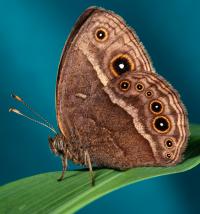
Yale University scientists have performed the first artificial selection on a structural color, using butterfly wings. This image shows a male Bicyclus anynana butterfly Yale University scientists have chosen the most fleeting of mediums for their groundbreaking work on biomimicry: They've changed the color of butterfly wings.
| Full article | 0 Comments | 9674 views |
Return to Biology News Net Homepage

- In some genetic cases of microcephaly, stem cells fail to launch
- Yale team discovers how Zika virus causes fetal brain damage
- Scientists uncover the way a common cell enzyme alerts the body to invading bacteria
- Arctic gives clues on worst mass extinction of life
- Calcium channel blockers caught in the act at atomic level
- Flexibility That A.C.A. Lent to Work Force Is Threatened by...International Herald Tribune
- Bacteria Behind Legionnaires’ Disease Found at New York Police StationInternational Herald Tribune
- Prescription Price Crisis? 28 Million Americans See Spike in Drug...MSNBC.com: Health
- Seizing on Opioid Crisis, a Drug Maker Lobbies Hard for...International Herald Tribune
- Republicans are taking a big political risk on health careAP Health News
- Why We're So Divided Over Saving WolvesNational Geographic News
Top Biology News about Biology
Biology Articles & News
Last 7 Days
Biology Articles & News
Most popular ever in Biology
- Brain circuit that drives sleep-wake states, sleep-preparation behavior is identified (488137)
- New species of pterosaur discovered in Patagonia (414292)
- U-M team recovers ancient whale in Egyptian desert (262207)
- Study finds shark fins & meat contain high levels of neurotoxins linked to Alzheimer's disease (208023)
- New life beneath sea and ice (94352)
- Darkness unveils vital metabolic fuel switch between sugar and fat (69268)
- Starfish outbreak threatens corals (65931)