

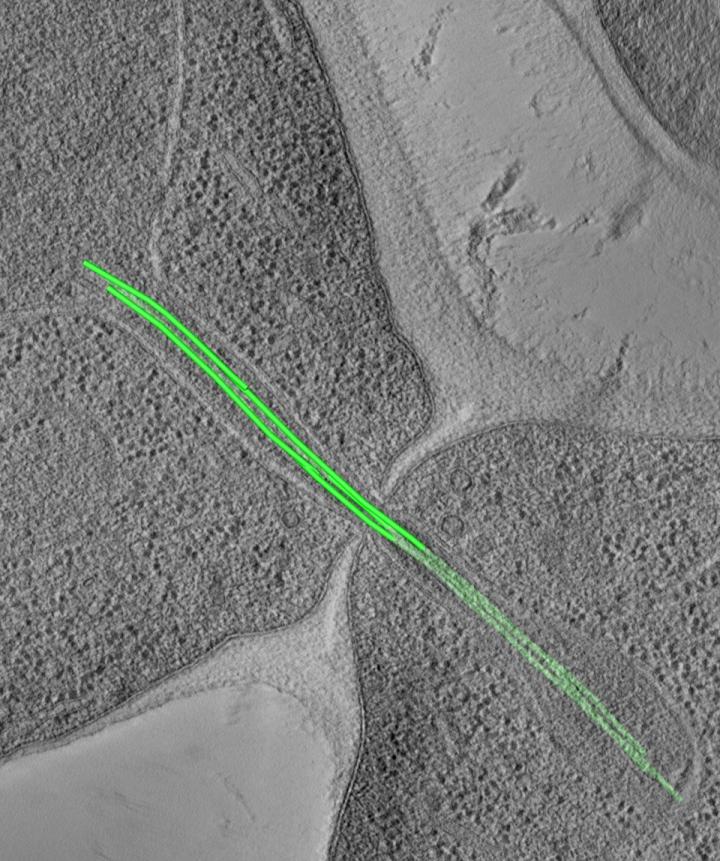
This is a tomographical slice of a budding yeast cell defective in condensin function (ycg1-2). The division septum advances on incompletely segregated chromosomes. The cells in our bodies are constantly dividing. From embryonic development to adult life, cell division is necessary for tissue growth and renewal. During division, cells must duplicate their genetic material (or DNA) and ensure identical copies are passed along to the daughter cells. The entire process must work perfectly. If not, the next generation of cells will not have the genetic material necessary to function properly. Their role becomes especially relevant in situations in which cells proliferate rapidly, like embryonic development or tumor proliferation.

| Molecular & Cell Biology | May 5, 2016 06:46 PM |
| Full story | 0 Comments | 6268 views |
| Molecular & Cell Biology | May 5, 2016 06:46 PM |
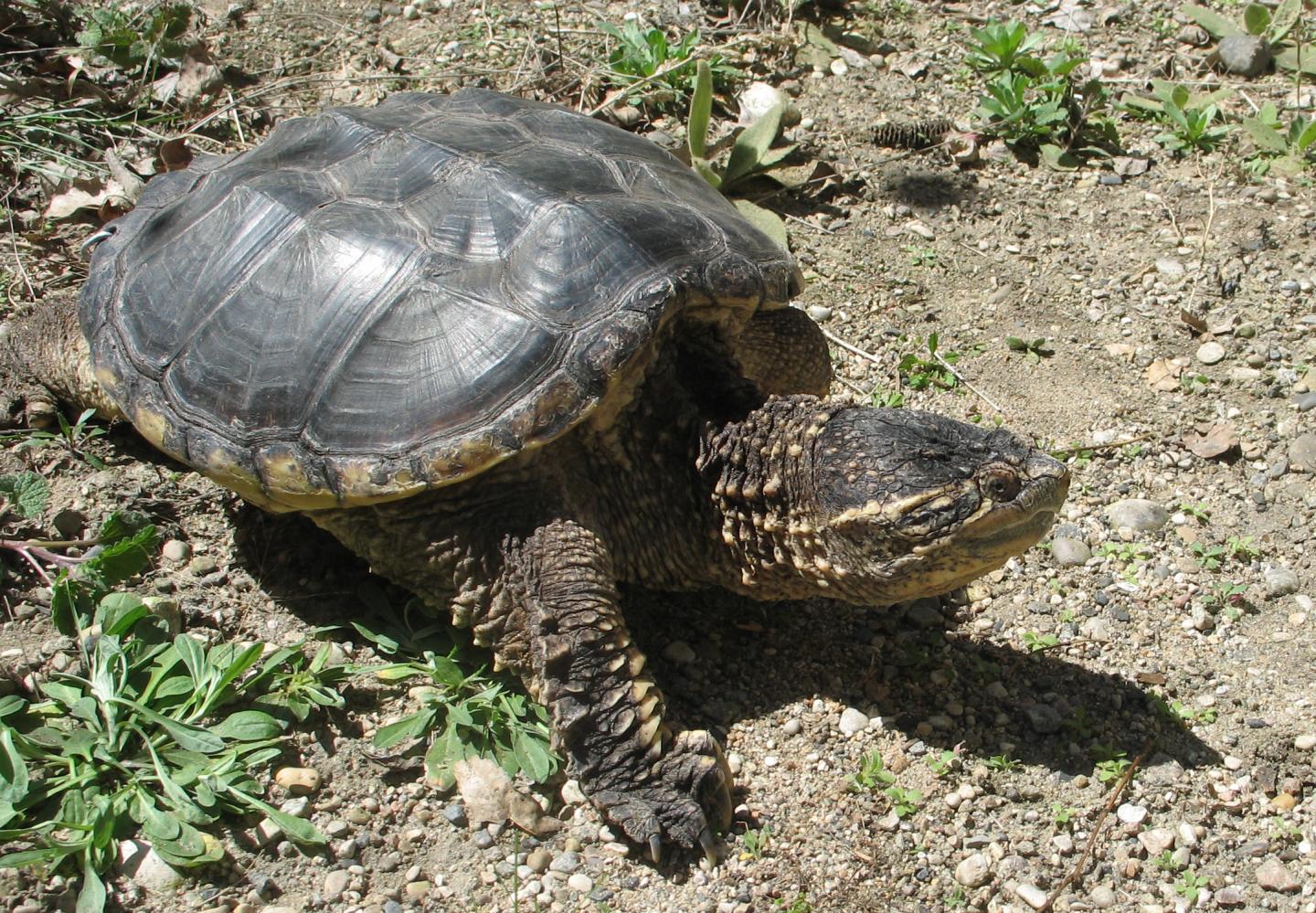
This is a snapping turtle. The sex of many reptile species is set by temperature. New research reported in the journal GENETICS identifies the first gene associated with temperature-dependent sex determination in any reptile. Variation at this gene in snapping turtles contributes to geographic differences in the way sex ratio is influenced by temperature. Understanding the genetics of sex determination could help predict how reptiles will evolve in response to climate change.
| Full story | 0 Comments | 6046 views |
| Molecular & Cell Biology | May 5, 2016 06:46 PM |
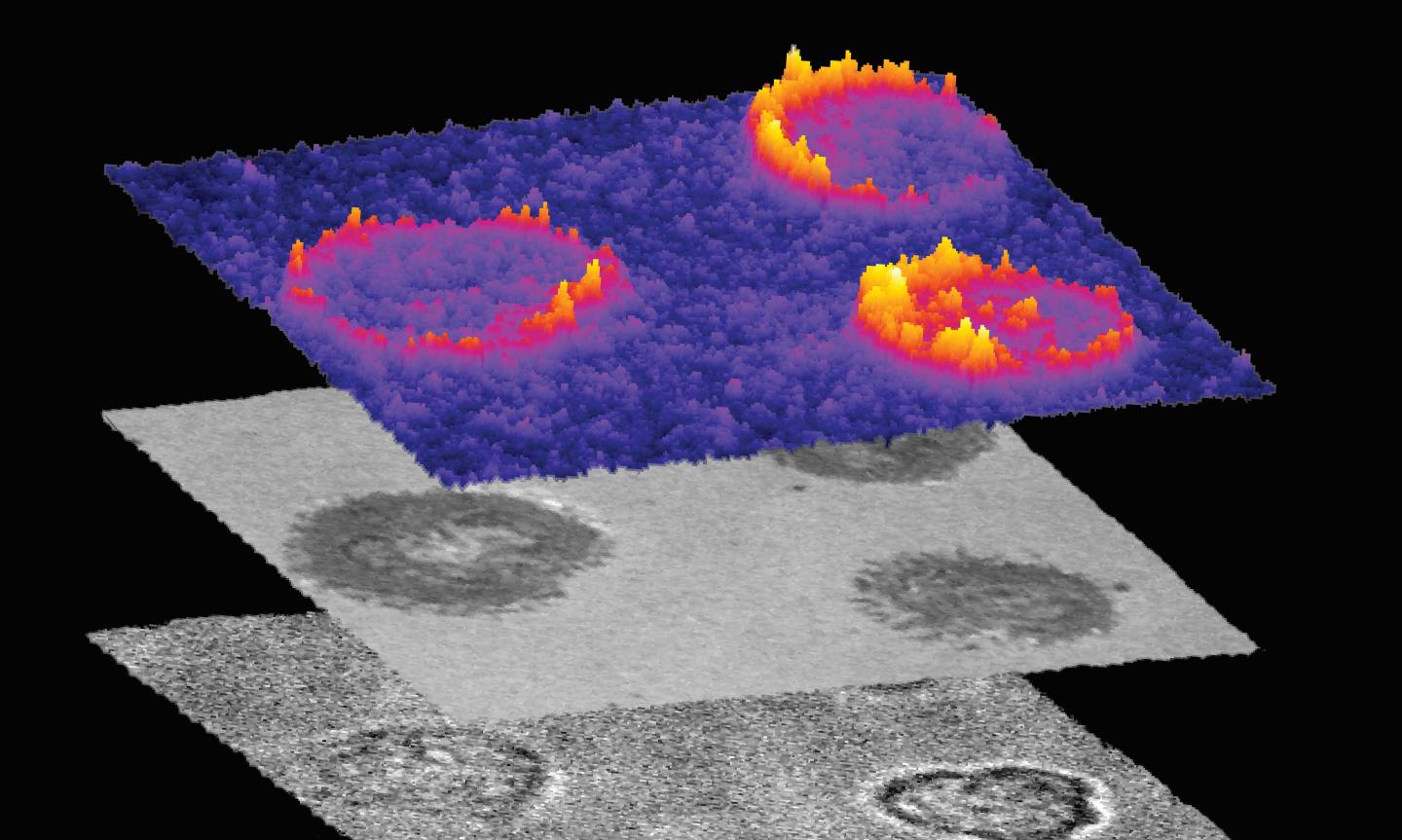
A 3-D rendering of a fluorescence image maps the piconewton forces applied by T cells. The height and color indicates the magnitude of the applied force. T cells, the security guards of the immune system, use a kind of mechanical "handshake" to test whether a cell they encounter is a friend or foe, a new study finds.
| Full story | 0 Comments | 5796 views |

| Biology | May 5, 2016 06:46 PM |
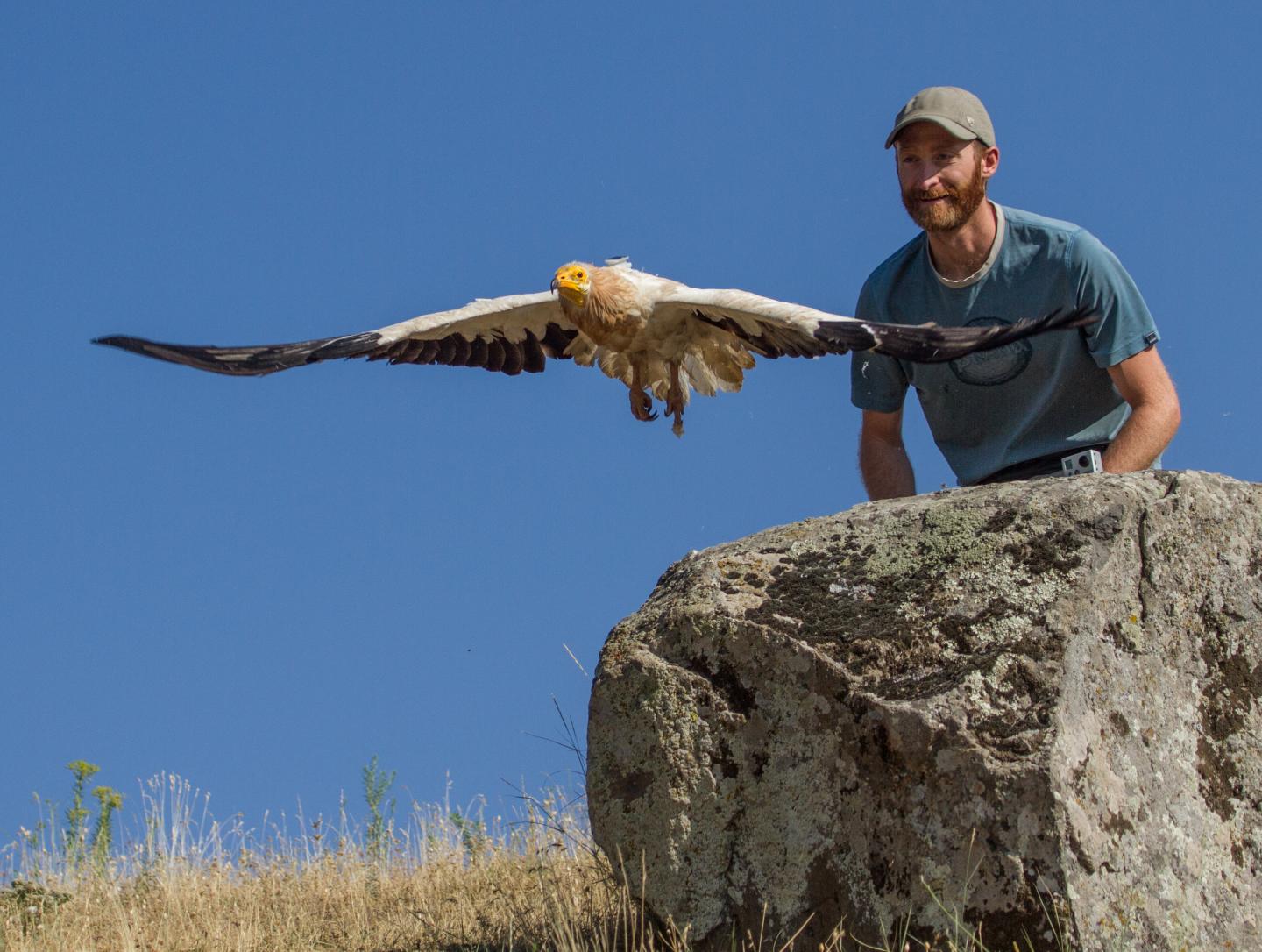
Evan R. Buechley releases an adult Egyptian Vulture in Armenia after tagging it with a satellite tracking device (visible on the back of the bird). Vultures. Cartoon characters in parched deserts often wish them to disappear, since circling vultures are a stereotypical harbinger of death. But, joking aside, vultures in some parts of the world are in danger of disappearing. And according to a new report from University of Utah biologists, such a loss would have serious consequences for ecosystems and human populations alike.
| Full story | 0 Comments | 7543 views |

- In some genetic cases of microcephaly, stem cells fail to launch
- Yale team discovers how Zika virus causes fetal brain damage
- Scientists uncover the way a common cell enzyme alerts the body to invading bacteria
- Arctic gives clues on worst mass extinction of life
- Calcium channel blockers caught in the act at atomic level
Search Bio News Net
Free Biology Newsletter
- Flexibility That A.C.A. Lent to Work Force Is Threatened by...International Herald Tribune
- Bacteria Behind Legionnaires’ Disease Found at New York Police StationInternational Herald Tribune
- Prescription Price Crisis? 28 Million Americans See Spike in Drug...MSNBC.com: Health
- Seizing on Opioid Crisis, a Drug Maker Lobbies Hard for...International Herald Tribune
- Republicans are taking a big political risk on health careAP Health News
- Why We're So Divided Over Saving WolvesNational Geographic News