

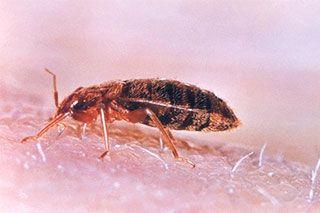
These bloodsuckers originally parasitized bats. The bed bug (Cimex lectularius) has been a familiar human parasite for more than 3,000 years. After a significant decrease in its population density in the middle of the last century, we have seen a dramatic increase again around the world over the past 20 years. In Australia, for instance, there is an increase of 4,500%.

| Bioinformatics | February 16, 2016 05:20 PM |
| Full story | 0 Comments | 9024 views |

| Stem Cell Research | February 16, 2016 05:20 PM |
A team of researchers led by scientists at St. Jude Children's Research Hospital is looking at ways to improve how blood-forming stem cells can be used for therapeutic interventions. The work has uncovered a group of genes that regulate how hematopoietic stem cells start to grow and thrive in mice. The function of many of these genes was previously unknown. Reconstitution of a robust blood-forming system is essential for recovery from many catastrophic diseases as well as from chemotherapy treatments. A report on this study appears today in the Journal of Experimental Medicine.
| Full story | 0 Comments | 7037 views |
| Stem Cell Research | February 16, 2016 05:20 PM |
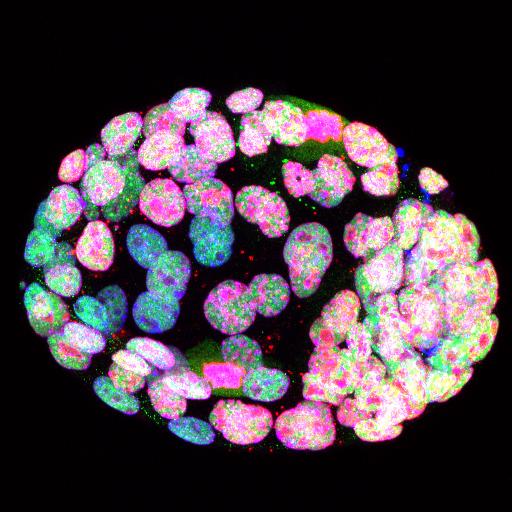
This is a dormant mouse blastocyst. After a gestation period of around ten months, fawns are born in early summer - when the weather is warm and food is plentiful for the mother. Six months would actually be enough for the embryo's development, but then offspring from mating in the later portion of summer would be born in winter. Therefore, nature prolongs the gestation period by a hormone-regulated pause in the development of the early embryos. Many animal species use this process, called diapause, to adjust their reproduction to environmental conditions.
| Full story | 0 Comments | 6609 views |

| Biology | February 16, 2016 05:20 PM |
The mechanism used by the National Institutes of Health (NIH) to allocate government research funds to scientists whose grants receive its top scores works essentially no better than distributing those dollars at random, new research suggests.
| Full story | 0 Comments | 6176 views |

- In some genetic cases of microcephaly, stem cells fail to launch
- Yale team discovers how Zika virus causes fetal brain damage
- Scientists uncover the way a common cell enzyme alerts the body to invading bacteria
- Arctic gives clues on worst mass extinction of life
- Calcium channel blockers caught in the act at atomic level
Search Bio News Net
Free Biology Newsletter
- Flexibility That A.C.A. Lent to Work Force Is Threatened by...International Herald Tribune
- Bacteria Behind Legionnaires’ Disease Found at New York Police StationInternational Herald Tribune
- Prescription Price Crisis? 28 Million Americans See Spike in Drug...MSNBC.com: Health
- Seizing on Opioid Crisis, a Drug Maker Lobbies Hard for...International Herald Tribune
- Republicans are taking a big political risk on health careAP Health News
- Why We're So Divided Over Saving WolvesNational Geographic News