

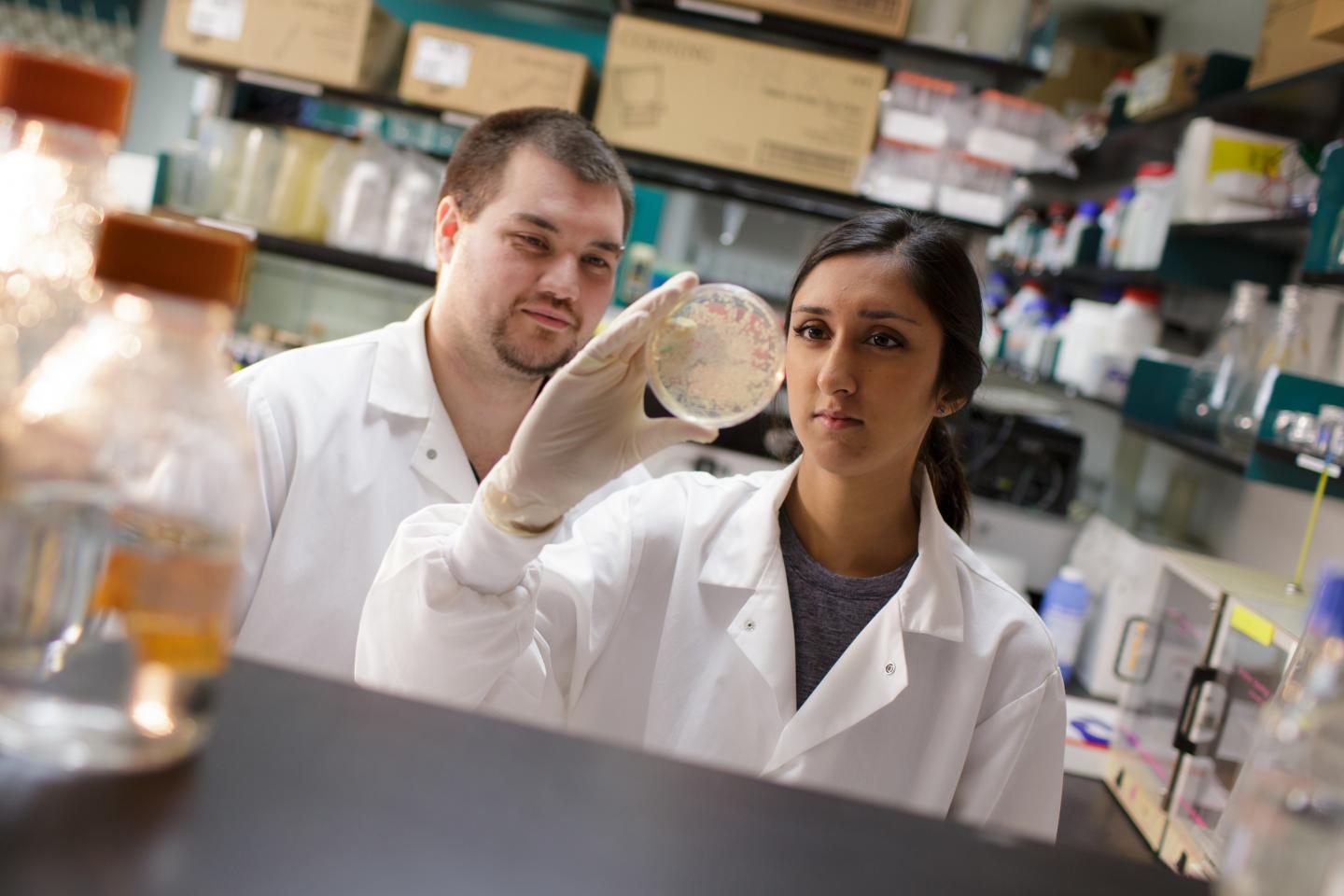
Brian Mahon and Avni Bhatt, graduate research assistants in the department of biochemistry and molecular biology, inspect a bacterium that is used to produce carbonic anhydrase. A type of bacteria plucked from the bottom of the ocean could be put to work neutralizing large amounts of industrial carbon dioxide in the Earth's atmosphere, a group of University of Florida researchers has found.

| Microbiology | October 22, 2015 03:41 PM |
| Full story | 0 Comments | 8077 views |

| Gene Therapy | October 22, 2015 03:41 PM |
Muscular dystrophy, which affects approximately 250,000 people in the U.S., occurs when damaged muscle tissue is replaced with fibrous, fatty or bony tissue and loses function. For years, scientists have searched for a way to successfully treat the most common form of the disease, Duchenne Muscular Dystrophy (DMD), which primarily affects boys. Now, a team of University of Missouri researchers have successfully treated dogs with DMD and say that human clinical trials are being planned in the next few years.
| Full story | 0 Comments | 9129 views |

| Health & Medicine | October 22, 2015 03:41 PM |

The photo shows a Bronze Age human skull from the Yamnaya culture painted with red ochre. Plague infections were common in humans 3,300 years earlier than the historical record suggests, reports a study published October 22 in Cell. By sequencing the DNA of tooth samples from Bronze Age individuals from Europe and Asia, the researchers discovered evidence of plague infections roughly 4,800 years ago. But it was at least another thousand years until the bacterium that causes the disease, Yersinia pestis, acquired key changes in virulence genes, allowing it to spread via fleas and evade the host immune system.
| Full story | 0 Comments | 6110 views |

| Molecular & Cell Biology | October 22, 2015 03:41 PM |
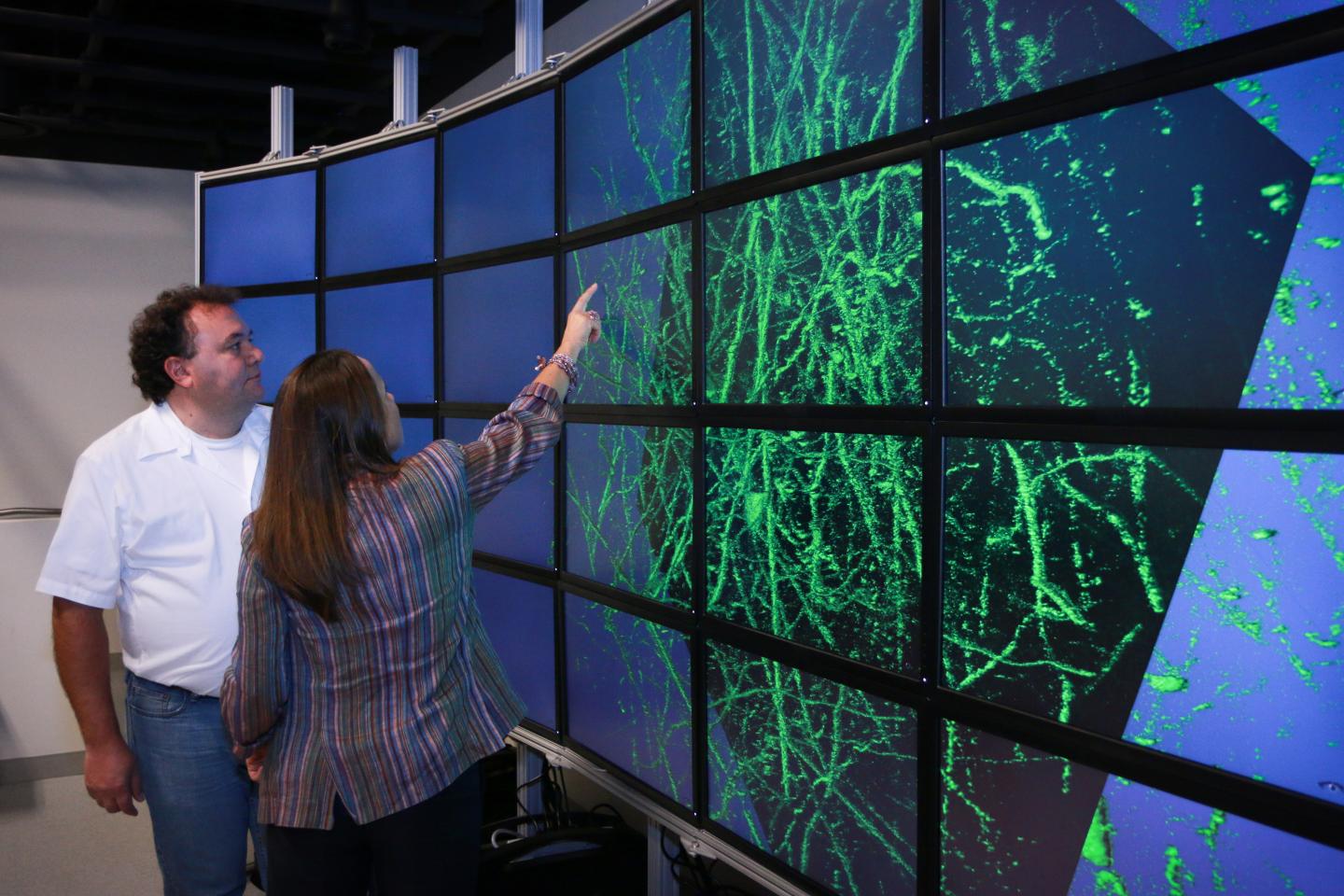
Alessandra Angelucci (right), a University of Utah professor of ophthalmology and visual science, and University of Utah computer science professor Valerio Pascucci stand in front of a computer model The animal brain is so complex, it would take a supercomputer and vast amounts of data to create a detailed 3-D model of the billions of neurons that power it.
| Full story | 0 Comments | 5196 views |

- In some genetic cases of microcephaly, stem cells fail to launch
- Yale team discovers how Zika virus causes fetal brain damage
- Scientists uncover the way a common cell enzyme alerts the body to invading bacteria
- Arctic gives clues on worst mass extinction of life
- Calcium channel blockers caught in the act at atomic level
Search Bio News Net
Free Biology Newsletter
- Flexibility That A.C.A. Lent to Work Force Is Threatened by...International Herald Tribune
- Bacteria Behind Legionnaires’ Disease Found at New York Police StationInternational Herald Tribune
- Prescription Price Crisis? 28 Million Americans See Spike in Drug...MSNBC.com: Health
- Seizing on Opioid Crisis, a Drug Maker Lobbies Hard for...International Herald Tribune
- Republicans are taking a big political risk on health careAP Health News
- Why We're So Divided Over Saving WolvesNational Geographic News