

Outbreaks of leukemia that have devastated some populations of soft-shell clams along the east coast of North America for decades can be explained by the spread of cancerous tumor cells from one clam to another. Researchers call the discovery, reported in the Cell Press journal Cell on April 9, 2015, "beyond surprising."

| Stem Cell Research | April 9, 2015 05:49 PM |
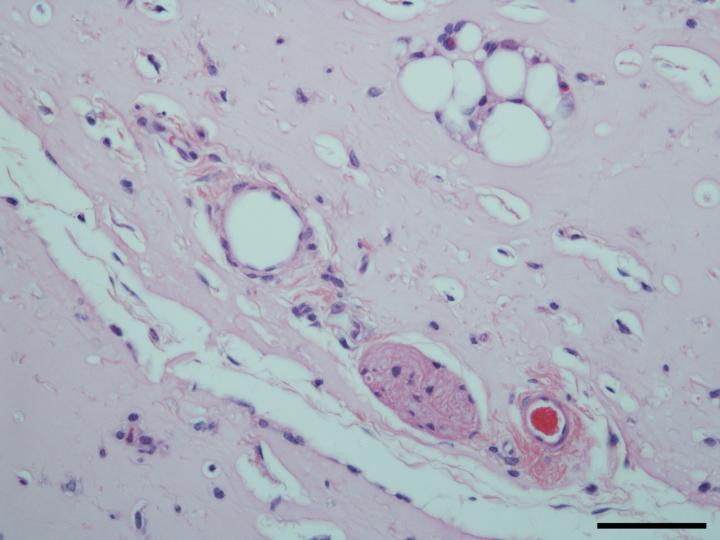
A microscope image shows mature blood vessels that formed in a hydrogel after two weeks of growth in a mouse model Rice University and Texas Children's Hospital scientists are using stem cells from amniotic fluid to promote the growth of robust, functional blood vessels in healing hydrogels.
| Full story | 0 Comments | 6579 views |

| Molecular & Cell Biology | April 9, 2015 05:49 PM |
KU Leuven researchers have zeroed in on what makes cancer cells in melanoma so aggressive. They also succeeded in taming the effect in cell cultures. Melanoma, a type of skin cancer, is notoriously quick to metastasize and responds poorly to existing cancer treatments. In their study, published in Nature Communications, the researchers report a significant step forward in the characterization and potential treatment of melanoma.
| Full story | 0 Comments | 5208 views |

| Environment | April 9, 2015 05:49 PM |
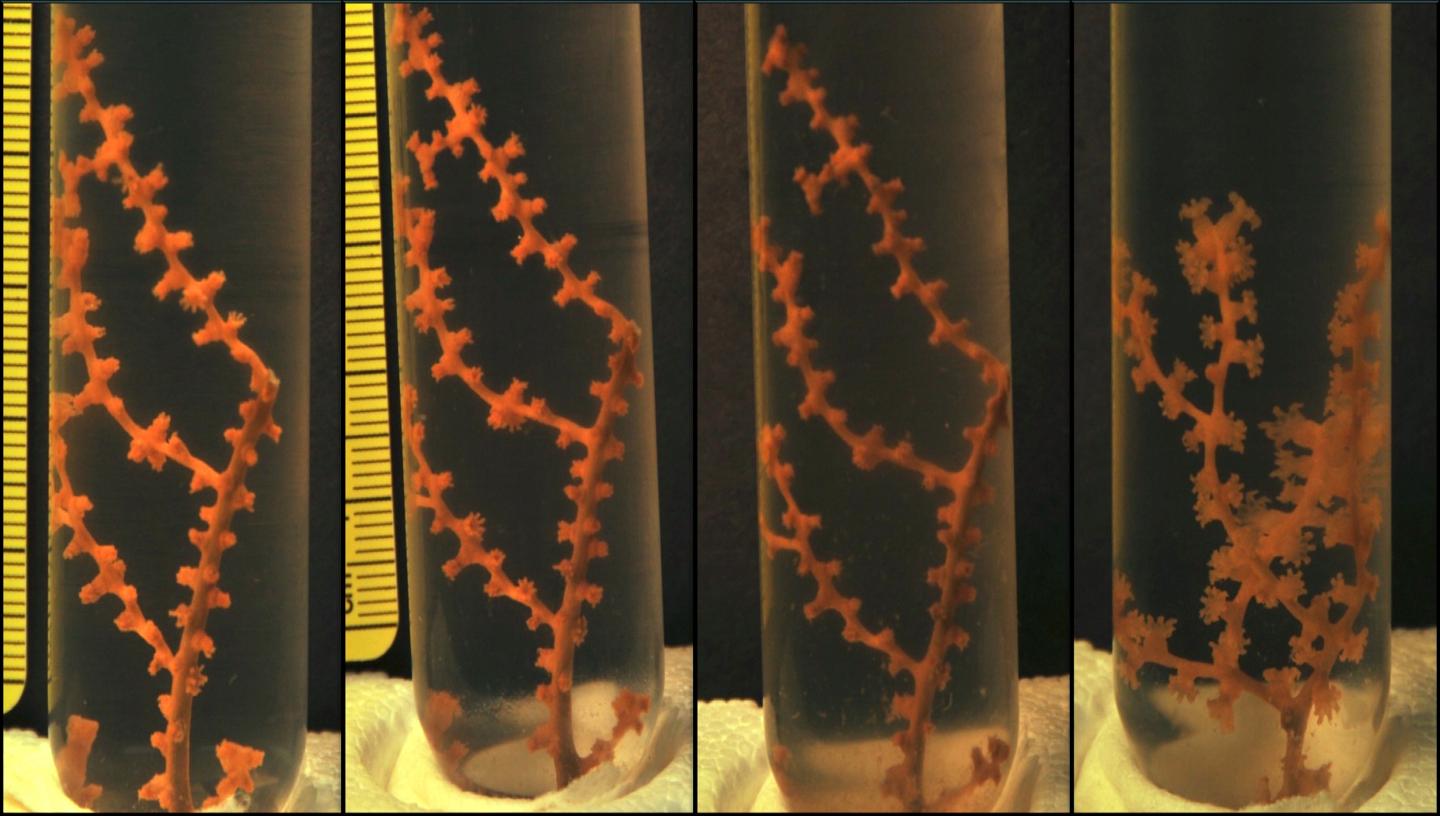
A coral specimen exposed to oil and dispersant displays declining health over time. The picture on the furthest right is a healthy control sample. The dispersant used to remediate the 2010 Deepwater Horizon oil spill in the Gulf of Mexico is more toxic to cold-water corals than the spilled oil, according to a study conducted at Temple University. The study comes on the eve of the spill's fifth anniversary, April 20th.
| Full story | 0 Comments | 5610 views |

| Biology | April 9, 2015 05:49 PM |
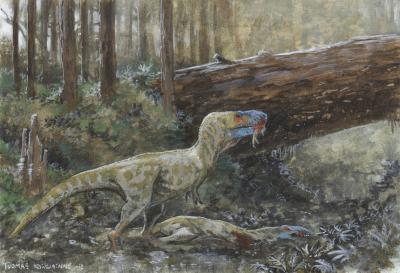
This is an artist's reconstruction of one Daspletosaurus feeding on another. A new study documents injuries inflicted in life and death to a large tyrannosaurine dinosaur. The paper shows that the skull of a genus of tyrannosaur called Daspletosaurus suffered numerous injuries during life, at least some of which were likely inflicted by another Daspletosaurus. It was also bitten after death in an apparent event of scavenging by another tyrannosaur. Thus there's evidence of combat between two large carnivores as well as one feeding on another after death.
| Full story | 0 Comments | 5273 views |

| Health & Medicine | April 9, 2015 05:49 PM |
Researchers at UC Davis have found that a gene, which is not active in some mothers, produces a breast milk sugar that influences the development of the community of gut bacteria in her infant. The sugars produced by these mothers, called "secretors," are not digested by the infant, but instead nourish specific bacteria that colonize the babies' guts soon after birth.
| Full story | 0 Comments | 5457 views |

- In some genetic cases of microcephaly, stem cells fail to launch
- Yale team discovers how Zika virus causes fetal brain damage
- Scientists uncover the way a common cell enzyme alerts the body to invading bacteria
- Arctic gives clues on worst mass extinction of life
- Calcium channel blockers caught in the act at atomic level
Search Bio News Net
Free Biology Newsletter
- Flexibility That A.C.A. Lent to Work Force Is Threatened by...International Herald Tribune
- Bacteria Behind Legionnaires’ Disease Found at New York Police StationInternational Herald Tribune
- Prescription Price Crisis? 28 Million Americans See Spike in Drug...MSNBC.com: Health
- Seizing on Opioid Crisis, a Drug Maker Lobbies Hard for...International Herald Tribune
- Republicans are taking a big political risk on health careAP Health News
- Why We're So Divided Over Saving WolvesNational Geographic News