


Almost all patients with a group of blood cancers called B-cell malignancies have two prominent "fingerprints" on the surface of leukemia and lymphoma cancers, called CD22 and CD19, Vallera explained. To develop the drug, Vallera and colleagues chose two antibody fragments that each selectively bind to CD19 and CD22. They used genetic engineering to attach these two antibodies to a potent toxin, the bacterial diphtheria toxin. When the antibody fragments bind to the two targets on the cancer cell, the entire drug enters the cell, and the toxin kills the cell.

| Molecular & Cell Biology | March 13, 2015 07:49 PM |
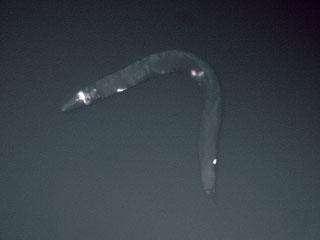
All the neurons within this microscopic roundworm are highlighted, with the large cluster at one end representing the brain. Even worms have free will. If offered a delicious smell, for example, a roundworm will usually stop its wandering to investigate the source, but sometimes it won't. Just as with humans, the same stimulus does not always provoke the same response, even from the same individual. New research at Rockefeller University, published online today (March 12) in Cell, offers a new neurological explanation for this variability, derived by studying a simple three-cell network within the roundworm brain.
| Full story | 0 Comments | 7953 views |

- In some genetic cases of microcephaly, stem cells fail to launch
- Yale team discovers how Zika virus causes fetal brain damage
- Scientists uncover the way a common cell enzyme alerts the body to invading bacteria
- Arctic gives clues on worst mass extinction of life
- Calcium channel blockers caught in the act at atomic level
Search Bio News Net
Free Biology Newsletter
- Flexibility That A.C.A. Lent to Work Force Is Threatened by...International Herald Tribune
- Bacteria Behind Legionnaires’ Disease Found at New York Police StationInternational Herald Tribune
- Prescription Price Crisis? 28 Million Americans See Spike in Drug...MSNBC.com: Health
- Seizing on Opioid Crisis, a Drug Maker Lobbies Hard for...International Herald Tribune
- Republicans are taking a big political risk on health careAP Health News
- Why We're So Divided Over Saving WolvesNational Geographic News