

Organs can become significantly damaged during transplantation, but a new article published in the BJS (British Journal of Surgery) offers a protective strategy that could keep them safe and allow them to function optimally after the procedure.

| Health & Medicine | November 17, 2014 05:48 PM |
Chronic myeloid leukemia develops when a gene mutates and causes an enzyme to become hyperactive, causing blood-forming stem cells in the bone marrow to grow rapidly into abnormal cells. The enzyme, Abl-kinase, is a member of the "kinase" family of enzymes, which serve as an "on" or "off" switch for many functions in our cells. In chronic myeloid leukemia, the hyperactive Abl-kinase is targeted with drugs that bind to a specific part of the enzyme and block it, aiming to ultimately kill the fast-growing cancer cell. However, treatments are often limited by the fact that the cancer cells can adapt to resist drugs. EPFL scientists have identified an alternative part of Abl-kinase on which drugs can bind and act with a reduced risk of drug resistance. Their work is published in Nature Communications.
| Full story | 0 Comments | 6332 views |

| Biotechnology | November 17, 2014 05:48 PM |
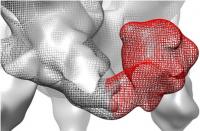
New techniques in electron microscope reveal new information about viruses, for example on the location of the variable V2 loop of HIV Env protein (red). This could give new insight... UC Davis researchers are getting a new look at the workings of HIV and other viruses thanks to new techniques in electron microscopy developed on campus.
| Full story | 0 Comments | 8469 views |

- In some genetic cases of microcephaly, stem cells fail to launch
- Yale team discovers how Zika virus causes fetal brain damage
- Scientists uncover the way a common cell enzyme alerts the body to invading bacteria
- Arctic gives clues on worst mass extinction of life
- Calcium channel blockers caught in the act at atomic level
Search Bio News Net
Free Biology Newsletter
- Flexibility That A.C.A. Lent to Work Force Is Threatened by...International Herald Tribune
- Bacteria Behind Legionnaires’ Disease Found at New York Police StationInternational Herald Tribune
- Prescription Price Crisis? 28 Million Americans See Spike in Drug...MSNBC.com: Health
- Seizing on Opioid Crisis, a Drug Maker Lobbies Hard for...International Herald Tribune
- Republicans are taking a big political risk on health careAP Health News
- Why We're So Divided Over Saving WolvesNational Geographic News