

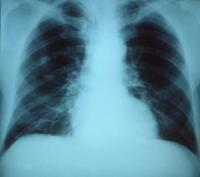
Researchers report they have found a way to disrupt the spread of antibiotic-resistance genes among S. pneumoniae bacteria, which can contribute to pneumonia (pictured), meningitis and other dangerous ailments. The bacterium Streptococcus pneumoniae – which can cause pneumonia, meningitis, bacteremia and sepsis – likes to share its antibiotic-defeating weaponry with its neighbors. Individual cells can pass resistance genes to one another through a process called horizontal gene transfer, or by "transformation," the uptake of DNA from the environment.

| Molecular & Cell Biology | October 24, 2012 07:01 PM |
| Full story | 0 Comments | 15067 views |

The European pied flycatcher, and later its close relative the collared flycatcher, have long been an important research organism for scientists at many universities. Just how new species are established is still one of the most central questions in biology. In an article in the leading scientific journal Nature, researchers at Uppsala University in Sweden describe how they mapped the genomes of the European pied flycatcher and the collared flycatcher and found that it is disparate chromosome structures rather than separate adaptations in individual genes that underlies the separation of the species.
| Full story | 0 Comments | 7526 views |

- In some genetic cases of microcephaly, stem cells fail to launch
- Yale team discovers how Zika virus causes fetal brain damage
- Scientists uncover the way a common cell enzyme alerts the body to invading bacteria
- Arctic gives clues on worst mass extinction of life
- Calcium channel blockers caught in the act at atomic level
Search Bio News Net
Free Biology Newsletter
- Flexibility That A.C.A. Lent to Work Force Is Threatened by...International Herald Tribune
- Bacteria Behind Legionnaires’ Disease Found at New York Police StationInternational Herald Tribune
- Prescription Price Crisis? 28 Million Americans See Spike in Drug...MSNBC.com: Health
- Seizing on Opioid Crisis, a Drug Maker Lobbies Hard for...International Herald Tribune
- Republicans are taking a big political risk on health careAP Health News
- Why We're So Divided Over Saving WolvesNational Geographic News