


Corals are an invaluable part of the marine ecosystem, fostering biodiversity and protecting coastlines. But they're also increasingly endangered. Pathogenic bacteria, along with pollution and harmful fishing practices, are one of the biggest threats to the world's coral populations today.

| Bioinformatics | August 30, 2012 05:50 PM |

Matthias Meyer at work in the clean lab. The analyses of an international team of researchers led by Svante Pääbo of the Max Planck Institute for Evolutionary Anthropology in Leipzig, Germany, show that the genetic variation of Denisovans was extremely low, suggesting that although they were present in large parts of Asia, their population was never large for long periods of time. In addition, a comprehensive list documents the genetic changes that set apart modern humans from their archaic relatives. Some of these changes concern genes that are associated with brain function or nervous system development.
| Full story | 0 Comments | 9320 views |

| Biology | August 30, 2012 05:50 PM |
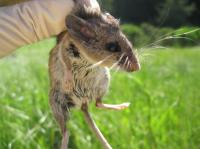
The California mouse (Peromyscus californicus) is a species of rodent in the family Cricetidae found in northwestern Mexico and central to southern California. In the foothills of the Santa Cruz Mountains two closely related species of mice share a habitat and a genetic lineage, but have very different social lives. The California mouse (Peromyscus californicus) is characterized by a lifetime of monogamy; the deer mouse (Peromyscus maniculatus) is sexually promiscuous.
| Full story | 0 Comments | 10002 views |
| Biology | August 30, 2012 05:50 PM |

MSU researchers show that microbes help hyenas communicate via scent. Bacteria in hyenas' scent glands may be the key controllers of communication.
| Full story | 0 Comments | 10825 views |

- In some genetic cases of microcephaly, stem cells fail to launch
- Yale team discovers how Zika virus causes fetal brain damage
- Scientists uncover the way a common cell enzyme alerts the body to invading bacteria
- Arctic gives clues on worst mass extinction of life
- Calcium channel blockers caught in the act at atomic level
Search Bio News Net
Free Biology Newsletter
- Flexibility That A.C.A. Lent to Work Force Is Threatened by...International Herald Tribune
- Bacteria Behind Legionnaires’ Disease Found at New York Police StationInternational Herald Tribune
- Prescription Price Crisis? 28 Million Americans See Spike in Drug...MSNBC.com: Health
- Seizing on Opioid Crisis, a Drug Maker Lobbies Hard for...International Herald Tribune
- Republicans are taking a big political risk on health careAP Health News
- Why We're So Divided Over Saving WolvesNational Geographic News