

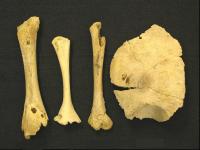
Pictured are the left femur, two right humerus and a right hemifrontal bone belonging to at least two newborns found at "La Ermita de la Soledad " in Huelva. All show... The ancient bones of newborns are very useful to recover the ancient DNA of the bacteria causing syphilis, the Treponema pallidum pallidum. This is the conclusion reached by a study led by Universitat Autònoma de Barcelona (UAB), which was able to obtain the genetic material from the bacteria in more than one individual, in what is considered to be the oldest case known to date. Several previous intents had only achieved to yield this material in one occasion and from only one individual.

| Microbiology | July 3, 2012 10:07 AM |
| Full story | 0 Comments | 7441 views |

| Stem Cell Research | July 3, 2012 10:07 AM |
Stem cells found in amniotic fluid can be transformed into a more versatile state similar to embryonic stem cells, according to a study published today in the journal Molecular Therapy. Scientists from Imperial College London and the UCL Institute of Child Health succeeded in reprogramming amniotic fluid cells without having to introduce extra genes. The findings raise the possibility that stem cells derived from donated amniotic fluid could be stored in banks and used for therapies and in research, providing a viable alternative to the limited embryonic stem cells currently available.
| Full story | 0 Comments | 7423 views |
| Microbiology | July 3, 2012 10:07 AM |

One of the first signs of FMD is excessive salivation and lesions on the tongue and hooves. One of the most economically devastating diseases in the world for those who raise cows, sheep, pigs, goats, deer and other cloven-hoofed animals is foot and mouth Disease (FMD). This incredibly contagious and fast-spreading disease causes fever, blisters on the feet and mouth (hence the name), loss of appetite, drooling, and lameness. Most herds affected are culled, as in the case of the 2001 outbreak in Great Britain when over 10 million animals had to be destroyed.
| Full story | 0 Comments | 7415 views |

- In some genetic cases of microcephaly, stem cells fail to launch
- Yale team discovers how Zika virus causes fetal brain damage
- Scientists uncover the way a common cell enzyme alerts the body to invading bacteria
- Arctic gives clues on worst mass extinction of life
- Calcium channel blockers caught in the act at atomic level
Search Bio News Net
Free Biology Newsletter
- Flexibility That A.C.A. Lent to Work Force Is Threatened by...International Herald Tribune
- Bacteria Behind Legionnaires’ Disease Found at New York Police StationInternational Herald Tribune
- Prescription Price Crisis? 28 Million Americans See Spike in Drug...MSNBC.com: Health
- Seizing on Opioid Crisis, a Drug Maker Lobbies Hard for...International Herald Tribune
- Republicans are taking a big political risk on health careAP Health News
- Why We're So Divided Over Saving WolvesNational Geographic News