


A new multi-university study reports that differences in bacterial colonization of the infant gut in formula-fed and breast-fed babies lead to changes in the expression of genes involved in the infant's immune system.

| Microbiology | May 21, 2012 04:57 PM |
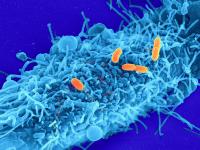
This image shows bacterial infection of host cells: Pathogens of the type Salmonella typhimurium (orange) establish contact to a human host cell (blue). The plague, bacterial dysentery, and cholera have one thing in common: These dangerous diseases are caused by bacteria which infect their host using a sophisticated injection apparatus. Through needle-like structures, they release molecular agents into their host cell, thereby evading the immune response. Researchers at the Max Planck Institute for Biophysical Chemistry in Göttingen in cooperation with colleagues at the Max Planck Institute for Infection Biology in Berlin and the University of Washington in Seattle (USA) have now elucidated the structure of such a needle at atomic resolution. Their findings might contribute to drug tailoring and the development of strategies which specifically prevent the infection process.
| Full story | 0 Comments | 7550 views |

- In some genetic cases of microcephaly, stem cells fail to launch
- Yale team discovers how Zika virus causes fetal brain damage
- Scientists uncover the way a common cell enzyme alerts the body to invading bacteria
- Arctic gives clues on worst mass extinction of life
- Calcium channel blockers caught in the act at atomic level
Search Bio News Net
Free Biology Newsletter
- Flexibility That A.C.A. Lent to Work Force Is Threatened by...International Herald Tribune
- Bacteria Behind Legionnaires’ Disease Found at New York Police StationInternational Herald Tribune
- Prescription Price Crisis? 28 Million Americans See Spike in Drug...MSNBC.com: Health
- Seizing on Opioid Crisis, a Drug Maker Lobbies Hard for...International Herald Tribune
- Republicans are taking a big political risk on health careAP Health News
- Why We're So Divided Over Saving WolvesNational Geographic News