


Non-fouling materials that resist cell adhesion are very important in fundamental research on cell–biomaterial interactions and for practical applications. Thus, they have been extensively investigated during the last decade. Natural biomacromolecules such as bovine serum albumin (BSA) have conventionally been used to block cell adhesion. Zhao and Ding (Fudan University, Shanghai, China) recently reported that the purple membrane (PM) containing a natural photoresponsive protein, bacteriorhodopsin (BR), can serve as a new basic substance that resists adhesion of mammalian cells.

| Environment | March 1, 2012 05:35 PM |
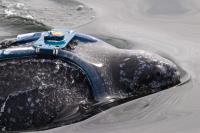
A major new study of migration patterns has identified high-use areas -- potential danger zones -- in the Pacific Ocean for the critically endangered leatherback turtle. The majestic leatherback turtle is the largest sea turtle in the world, growing to more than 6 feet in length. It is also one of the most threatened. A major new study of migration patterns has identified high-use areas—potential danger zones—in the Pacific Ocean for this critically endangered species. This new understanding could help inform decisions about fishing practices to help reduce further deaths of this fragile species.
| Full story | 0 Comments | 12005 views |

| Microbiology | March 1, 2012 05:35 PM |
Leafcutter ants, the tiny red dots known for carrying green leaves as they march through tropical forests, are also talented farmers that cultivate gardens of fungi and bacteria. Ants eat fungi from the so-called fungal gardens, but the bacteria's role has been unclear until now.
| Full story | 0 Comments | 9957 views |

| Health & Medicine | March 1, 2012 05:35 PM |
Depression is common enough – afflicting one in ten adults in the United States – that it seems the possibility of depression must be "hard-wired" into our brains. This has led biologists to propose several theories to account for how depression, or behaviors linked to it, can somehow offer an evolutionary advantage.
| Full story | 0 Comments | 11587 views |

- In some genetic cases of microcephaly, stem cells fail to launch
- Yale team discovers how Zika virus causes fetal brain damage
- Scientists uncover the way a common cell enzyme alerts the body to invading bacteria
- Arctic gives clues on worst mass extinction of life
- Calcium channel blockers caught in the act at atomic level
Search Bio News Net
Free Biology Newsletter
- Flexibility That A.C.A. Lent to Work Force Is Threatened by...International Herald Tribune
- Bacteria Behind Legionnaires’ Disease Found at New York Police StationInternational Herald Tribune
- Prescription Price Crisis? 28 Million Americans See Spike in Drug...MSNBC.com: Health
- Seizing on Opioid Crisis, a Drug Maker Lobbies Hard for...International Herald Tribune
- Republicans are taking a big political risk on health careAP Health News
- Why We're So Divided Over Saving WolvesNational Geographic News