

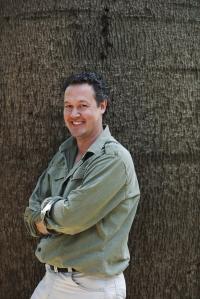
This is professor Andrew Lowe, Director of the Australian Centre for Evolutionary Biology and Biodiversity, University of Adelaide. Advances in DNA 'fingerprinting' and other genetic techniques led by Adelaide researchers are making it harder for illegal loggers to get away with destroying protected rainforests.

| Environment | June 30, 2011 08:33 PM |
| Full story | 0 Comments | 8332 views |

| Biotechnology | June 30, 2011 08:33 PM |
A sizzling genetic discovery by Chinese scientists may one day allow pig tissue to be transplanted successfully into humans. Their research presented in the Journal of Leukocyte Biology (http://www.jleukbio.org) represents a major step forward toward filling the shortage of vital organs for human transplantation. At the core of their work, they showed that altering or overexpressing the human programmed death ligand-1 (PD-L1) molecule in the endothelial cells of pig arteries reduces the conditions that lead to rejection. This strongly suggests that humans could receive altered porcine organs with fewer complications.
| Full story | 0 Comments | 7692 views |

| Biology | June 30, 2011 08:32 PM |
Northwestern University researchers have provided new biological evidence suggesting that the brain works differently when memorizing the face of a person from one's own race than when memorizing a face from another race.
| Full story | 0 Comments | 7607 views |
| Biology | June 30, 2011 08:32 PM |
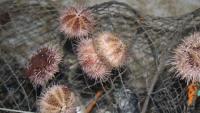
These are sea urchins. Many animals have eyes that are incredibly complex – others manage without. Researchers at the University of Gothenburg have shown that sea urchins see with their entire body despite having no eyes at all. The study has been published in the scientific journal Proceedings of the National Academy of Sciences (PNAS).
| Full story | 0 Comments | 7433 views |

| Molecular & Cell Biology | June 30, 2011 08:32 PM |
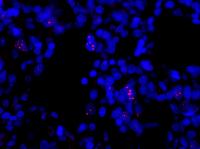
This image shows fluorescent staining of abnormal telomere DNA in pancreatic neuroectodermal tumors. Scientists at Johns Hopkins have provided more clues to one of the least understood phenomena in some cancers: why the "ends caps" of cellular DNA, called telomeres, lengthen instead of shorten.
| Full story | 0 Comments | 7532 views |

- In some genetic cases of microcephaly, stem cells fail to launch
- Yale team discovers how Zika virus causes fetal brain damage
- Scientists uncover the way a common cell enzyme alerts the body to invading bacteria
- Arctic gives clues on worst mass extinction of life
- Calcium channel blockers caught in the act at atomic level
Search Bio News Net
Free Biology Newsletter
- Flexibility That A.C.A. Lent to Work Force Is Threatened by...International Herald Tribune
- Bacteria Behind Legionnaires’ Disease Found at New York Police StationInternational Herald Tribune
- Prescription Price Crisis? 28 Million Americans See Spike in Drug...MSNBC.com: Health
- Seizing on Opioid Crisis, a Drug Maker Lobbies Hard for...International Herald Tribune
- Republicans are taking a big political risk on health careAP Health News
- Why We're So Divided Over Saving WolvesNational Geographic News