

Canada, Mexico and the United States are joining forces to protect and conserve the Monarch butterfly, which has become a symbol of North America's shared environment.

| Health & Medicine | June 27, 2008 09:06 PM |
Researchers from McGill University's Faculty of Medicine have discovered a compound that reduces resistance to chemotherapy agents used to treat cancer. Their results were published in the June issue of The Journal of Clinical Investigation (JCI).
| Full story | 0 Comments | 6649 views |

| Environment | June 27, 2008 09:06 PM |
The battle to reduce carbon emissions is at the heart of many eco-friendly efforts, and researchers from the University of Missouri have discovered that nature has been lending a hand. Researchers at the Missouri Tree Ring Laboratory in the Department of Forestry discovered that trees submerged in freshwater aquatic systems store carbon for thousands of years, a significantly longer period of time than trees that fall in a forest, thus keeping carbon out of the atmosphere.
| Full story | 0 Comments | 7949 views |
| Health & Medicine | June 27, 2008 09:06 PM |

Almonds. Almonds, as well as being high in vitamin E and other minerals, are also thought to have other health benefits, such as reducing cholesterol. Recently published work by the Institute of Food Research has identified potential prebiotic properties of almonds that could help improve our digestive health by increasing levels of beneficial gut bacteria.
| Full story | 0 Comments | 7933 views |

| Biology | June 27, 2008 09:06 PM |
The ancestors of maize originally grew wild in Mexico and were radically different from the plant that is now one of the most important crops in the world. While the evidence is clear that maize was first domesticated in Mexico, the time and location of the earliest domestication and dispersal events are still in dispute. Now, in addition to more traditional macrobotanical and archeological remains, scientists are using new genetic and microbotanical techniques to distinguish domesticated maize from its wild relatives as well as to identify ancient sites of maize agriculture. These new analyses suggest that maize may have been domesticated in Mexico as early as 10,000 years ago.
| Full story | 0 Comments | 8830 views |

| Molecular & Cell Biology | June 27, 2008 09:06 PM |
In the late 19th century Gregor Mendel used peas to show that one copy of a gene (allele) is inherited from the mother and one from the father. In the progeny, the inherited genes are expressed at the right time and in the right place, but until recently, it was thought that although gene products could be modified during the life of the organism, the genes themselves were unchanged, except for random mutation. Now it appears that one copy of some genes can alter the expression of the other copy, and those changes are passed down to the next generation. These epigenetic alterations, called paramutations may be important in introducing changes when plants and other organisms are environmentally stressed. The exact mechanisms of how genes talk to other genes and change their behavior are being investigated, and recent results suggest that these processes could be important in engineering plants responsive to a variety of environmental conditions.
| Full story | 0 Comments | 6732 views |
| Environment | June 27, 2008 09:06 PM |
A detailed analysis of data from nearly 50 years of weekly fish-trawl surveys in Narragansett Bay and adjacent Rhode Island Sound has revealed a long-term shift in species composition, which scientists attribute primarily to the effects of global warming.
| Full story | 0 Comments | 6829 views |
| Biology | June 27, 2008 09:06 PM |
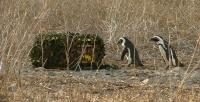
African penguins pass by a camera system on Robben Island, South Africa. Ground-breaking technology that will enable biologists to identify and monitor large numbers of endangered animals, from butterflies to whales, without being captured, will be shown to the public for the first time at this year's Royal Society Summer Science exhibition [30 June to 3 July].
| Full story | 0 Comments | 6420 views |

- In some genetic cases of microcephaly, stem cells fail to launch
- Yale team discovers how Zika virus causes fetal brain damage
- Scientists uncover the way a common cell enzyme alerts the body to invading bacteria
- Arctic gives clues on worst mass extinction of life
- Calcium channel blockers caught in the act at atomic level
Search Bio News Net
Free Biology Newsletter
- Flexibility That A.C.A. Lent to Work Force Is Threatened by...International Herald Tribune
- Bacteria Behind Legionnaires’ Disease Found at New York Police StationInternational Herald Tribune
- Prescription Price Crisis? 28 Million Americans See Spike in Drug...MSNBC.com: Health
- Seizing on Opioid Crisis, a Drug Maker Lobbies Hard for...International Herald Tribune
- Republicans are taking a big political risk on health careAP Health News
- Why We're So Divided Over Saving WolvesNational Geographic News