


The Butterfly bush was introduced to Europe about one hundred years ago from China and has been cultivated since then. Invasive plant species can flourish better in their new homes than in their place of origin. The reasons for this can be genetic changes or the lack of herbivores such as insects that first have to adapt to the newcomers. These are the conclusions of researchers from the Helmholtz Centre for Environmental Research (UFZ) from their research on Buddleia or the Butterfly bush (Buddleja davidii) and Oregon grape (Mahonia aquifolium). Due to this, invasive plant species would have an advantage over other native plant species and could therefore pose a threat to the ecological balance, as researchers have written in the scientific journal Diversity and Distributions.

| Biology | May 27, 2008 02:55 PM |
| Full story | 0 Comments | 9157 views |
| Biology | May 27, 2008 02:55 PM |
Geneticists of Leiden University Medical Centre (LUMC) are the first to determine the DNA sequence of a woman. She is also the first European whose DNA sequence has been determined. This has been announced by the researchers this morning, during a special press conference at ‘Bessensap’, a yearly meeting of scientists and the press in the Netherlands.
| Full story | 0 Comments | 6538 views |

| Molecular & Cell Biology | May 27, 2008 02:55 PM |
Scientists at the Swedish medical university Karolinska Institutet have developed a new DNA-sequencing method that is much cheaper than those currently in use in laboratories. They hope that this new method will make it possible to map disease genes in large patient groups, which in turn can mean quicker breakthroughs for new treatments for a wide variety of diseases.
| Full story | 0 Comments | 6518 views |

| Environment | May 27, 2008 02:55 PM |
What causes tropical life to thrive: temperature, or sunlight?
| Full story | 0 Comments | 6450 views |
| Molecular & Cell Biology | May 27, 2008 02:55 PM |
The first large-scale analysis of proteins in the brains of monkeys addicted to cocaine reveals new information on how long-term cocaine use changes the amount and activity of various proteins affecting brain function.
| Full story | 0 Comments | 8423 views |

| Microbiology | May 27, 2008 02:55 PM |
A pair of Los Alamos National Laboratory theorists have developed a mathematical tool that could help health experts and crisis managers determine in real time whether an emerging infectious disease such as avian influenza H5N1 is poised to spread globally.
| Full story | 0 Comments | 5970 views |
| Biology | May 27, 2008 02:55 PM |
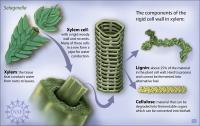
Both lignin and cellulose are found in the rigid cell walls of the xylem cells (those that conduct water) in the primitive plant, Selaginella. Biologists have discovered that a fundamental building block in the cells of flowering plants evolved independently, yet almost identically, on a separate branch of the evolutionary tree--in an ancient plant group called lycophytes that originated at least 420 million years ago.
| Full story | 0 Comments | 12887 views |
| Biology | May 27, 2008 02:55 PM |
Is the smell of almonds closer to that of roses or bananas? Weizmann Institute scientists have now answered that question (roses) by showing for the first time that smells can be mapped and the relative distance between various odors determined. Their findings, which appeared recently in Nature Methods, may help scientists to unravel the basic laws underlying our sense of smell, as well as potentially enabling odors to be digitized and transferred via computer in the future.
| Full story | 0 Comments | 6010 views |
| Molecular & Cell Biology | May 27, 2008 02:55 PM |
A new study into the potential health hazards of the revolutionary nano-sized particles known as ‘buckyballs’ predicts that the molecules are easily absorbed into animal cells, providing a possible explanation for how the molecules could be toxic to humans and other organisms.
| Full story | 0 Comments | 6505 views |

- In some genetic cases of microcephaly, stem cells fail to launch
- Yale team discovers how Zika virus causes fetal brain damage
- Scientists uncover the way a common cell enzyme alerts the body to invading bacteria
- Arctic gives clues on worst mass extinction of life
- Calcium channel blockers caught in the act at atomic level
Search Bio News Net
Free Biology Newsletter
- Flexibility That A.C.A. Lent to Work Force Is Threatened by...International Herald Tribune
- Bacteria Behind Legionnaires’ Disease Found at New York Police StationInternational Herald Tribune
- Prescription Price Crisis? 28 Million Americans See Spike in Drug...MSNBC.com: Health
- Seizing on Opioid Crisis, a Drug Maker Lobbies Hard for...International Herald Tribune
- Republicans are taking a big political risk on health careAP Health News
- Why We're So Divided Over Saving WolvesNational Geographic News