

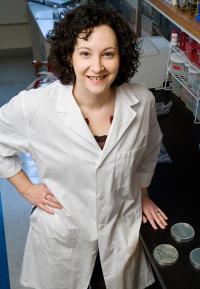
Microbiology professor Carin Vanderpool has identified the unique metabolic activities of one of the small ribonucleic acids in bacteria called SgrS. They are often overlooked, and were once thought to be too small to contribute much to major cellular processes, but in recent years the study of small ribonucleic acids (sRNA) has gained momentum. Now a team from the University of Illinois has identified the unique metabolic activities of one of these bit players, a 200-nucleotide-long RNA molecule in bacteria called SgrS.

| Molecular & Cell Biology | November 30, 2007 09:44 PM |
| Full story | 0 Comments | 7484 views |

| Biology | November 30, 2007 08:44 PM |
Research published in this week’s Science journal shows that some of our closest extinct relatives had more in common with gorillas than previously thought. Dr Charles Lockwood, UCL Department of Anthropology and lead author of the study, said: “When we examined fossils from 1.5 to 2 million years ago we found that in one of our close relatives the males continued to grow well into adulthood, just as they do in gorillas. This resulted in a much bigger size difference between males and females than we see today.
| Full story | 0 Comments | 7332 views |
| Biology | November 30, 2007 07:44 PM |
When fruit fly larvae are poked or prodded, they fold themselves up and corkscrew their bodies around, a behavior that appears to be the young insects’ equivalent of a “judo move,” say researchers reporting online on November 29th in the journal Current Biology, a publication of Cell Press. They now trace that rolling behavior to neurons resembling those that sense pain.
| Full story | 0 Comments | 6758 views |
| Molecular & Cell Biology | November 30, 2007 06:44 PM |
Crossovers and double-strand DNA breaks do not occur randomly on yeast chromosomes during meiosis, but are greatly influenced by the proximity of the chromosome’s telomere, according to research in the laboratory of Whitehead Fellow Andreas Hochwagen. This work may lead to a better understanding of developmental chromosome abnormalities and birth defects.
| Full story | 0 Comments | 8451 views |
| Biology | November 30, 2007 05:44 PM |
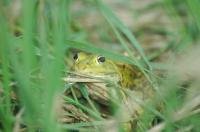
The marsh frog (Rana ridibunda) Indigenous water frogs can be crowded out by immigrant or imported species. This is the finding of a Franco-German study. The scientists investigated water frog populations in France and Northern Spain and noticed that the marsh frog (Rana ridibunda), which normally occurs only in Eastern Europe, has the potential to crowd out indigenous species like Graf’s hybrid frog (Rana grafi) and the Iberian water frog (Rana perezi).
| Full story | 0 Comments | 7759 views |
| Molecular & Cell Biology | November 30, 2007 04:44 PM |
Scientists at Duke University have created the first map of imprinted genes throughout the human genome, and they say a modern-day Rosetta stone – a form of artificial intelligence called machine learning – was the key to their success.
| Full story | 0 Comments | 6156 views |

| Health & Medicine | November 30, 2007 03:44 PM |
Wellcome Trust-funded researchers have successfully completed the clinical trial for a new rapid test for the sexually transmitted infection Chlamydia. The researchers believe the test, which is able to detect Chlamydia in less than 30 minutes – and often much faster – could be a valuable addition to screening programmes already in place, as well as providing a crucial diagnostic test in the developing world.
| Full story | 0 Comments | 6746 views |
| Molecular & Cell Biology | November 30, 2007 02:44 PM |
In the December 15th cover story of G&D, a research team led by Dr. Howard Chang (Stanford University School of Medicine) reports that the blockage of a single gene, called NF-êB, can reverse aging in the mammalian skin. This finding sets the stage for the development of future genetic age-intervention therapies.
| Full story | 0 Comments | 7458 views |

| Stem Cell Research | November 30, 2007 01:44 PM |
A noninvasive, polarized light microscope invented at the Marine Biological Laboratory (MBL) played a crucial role in a recent breakthrough in embryonic stem-cell research aimed at developing medical therapies.
| Full story | 0 Comments | 7663 views |
| Health & Medicine | November 30, 2007 12:44 PM |
Increasing the level of Quitline smoking cessation services and offering free nicotine patches are a successful and cost-effective way to reduce smoking rates, according to two new studies in the December issue of Tobacco Control, a peer-reviewed publication of the British Medical Journal. Both studies were conducted by researchers at Kaiser Permanente’s Center for Health Research in Portland, the Oregon Health Department, and Free & Clear in Seattle, a phone-based tobacco treatment program.
| Full story | 0 Comments | 6750 views |
| Molecular & Cell Biology | November 30, 2007 10:44 AM |
Researchers investigating blood vessels at Barts and The London School of Medicine have hit upon a new discovery in neurobiology that could have implications for patients experiencing peripheral nerve disorders. Their work, which was conducted in close collaboration with scientists at Imperial College London, University College London, Cancer Research UK and the University of Geneva, features in this week’s edition (30 November 2007) of the renowned journal Science.
| Full story | 0 Comments | 7530 views |

- In some genetic cases of microcephaly, stem cells fail to launch
- Yale team discovers how Zika virus causes fetal brain damage
- Scientists uncover the way a common cell enzyme alerts the body to invading bacteria
- Arctic gives clues on worst mass extinction of life
- Calcium channel blockers caught in the act at atomic level
Search Bio News Net
Free Biology Newsletter
- Flexibility That A.C.A. Lent to Work Force Is Threatened by...International Herald Tribune
- Bacteria Behind Legionnaires’ Disease Found at New York Police StationInternational Herald Tribune
- Prescription Price Crisis? 28 Million Americans See Spike in Drug...MSNBC.com: Health
- Seizing on Opioid Crisis, a Drug Maker Lobbies Hard for...International Herald Tribune
- Republicans are taking a big political risk on health careAP Health News
- Why We're So Divided Over Saving WolvesNational Geographic News