

The cellular mechanism that turns DNA into all of the thousands of proteins that make up a human body is itself both intricate and interesting. A key player in the process—called transcription—is the enzyme RNA polymerase III. Work published online this week in the open-access journal PLoS Biology reports that a mutation of this enzyme prevents cell division, but surprisingly, only affects the development of specific organs. It may also have a therapeutic application against cancer.

| Environment | November 27, 2007 06:05 PM |
A study by Indiana University researchers found the chlorinated flame retardant Dechlorane Plus in the bark of trees across the northeastern United States, with by far the highest concentrations measured near the Niagara Falls, N.Y., factory where this chemical is produced.
| Full story | 0 Comments | 7637 views |

| Health & Medicine | November 27, 2007 05:05 PM |
Investigators at the University of California, San Diego School of Medicine have developed a new drug called nitrosyl-cobinamide. Cobinamide is a vitamin B12 analog, and, in fact, is the penultimate compound in the biosynthesis of vitamin B12 by bacteria. The UCSD investigators have shown that cobinamide binds relatively tightly to nitric oxide (NO), forming nitrosyl-cobinamide. Because the binding is reversible, nitrosyl-cobinamide can be used as a NO donor. NO is produced by most cells in the body, and helps regulate a variety of physiological functions including maintaining blood pressure, optimizing heart function, and serving as a neurotransmitter. The report on this study, led by Dr. Gerry R. Boss, will appear in the December 07 issue of Experimental Biology and Medicine.
| Full story | 0 Comments | 7202 views |

| Biology | November 27, 2007 04:05 PM |
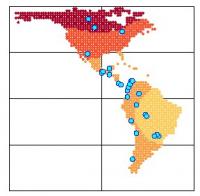
The U-M study, which analyzed genetic data from 29 Native American populations, suggests a Siberian origin is much more likely than a South Asian or Polynesian origin. Did a relatively small number of people from Siberia who trekked across a Bering Strait land bridge some 12,000 years ago give rise to the native peoples of North and South America?
| Full story | 0 Comments | 7431 views |
| Biology | November 27, 2007 03:05 PM |
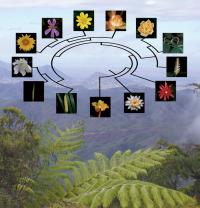
Phylogenetic relationships among the major lineages of flowering plants based on plastid genome sequences. Pictured counter-clockwise from the root at the base of the circle tree are: Amborella trichopoda, Nymphaea odorata, Illicium floridanum, Chloranthus angustifolius, Piper longum, Liriodendron tulipifera, Ceratophyllum demersum, Ranunculus ficaria, Pelargonium exstipulatum, Helianthus annuus, Yucca filamentosa, Triticum aestivum, and Acorus americanus. New Caledonia, home to Amborella trichopoda, is shown in the background. The evolutionary Tree of Life for flowering plants has been revealed using the largest collection of genomic data of these plants to date, report scientists from The University of Texas at Austin and University of Florida.
| Full story | 0 Comments | 8983 views |

| Biotechnology | November 27, 2007 02:05 PM |
A surgeon accidently kills a patient, undoes the error and starts over again. Can mathematics make such science fiction a reality?
| Full story | 0 Comments | 7341 views |
| Health & Medicine | November 27, 2007 01:05 PM |
A vaccine used to protect travelers from cholera, an infection characterized by diarrhea and severe dehydration, could also be used effectively among those living in cholera-prone (endemic) areas, according to a research study by Ira Longini and colleagues published in PLoS Medicine. The study lends support to the idea that public-health officials should consider mass vaccination in their efforts to control endemic cholera.
| Full story | 0 Comments | 7669 views |
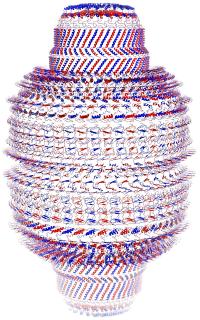
Model of the vault derived by UCLA researchers, with applications to drug delivery (figure published in Nov. 27, 2007, PLoS Biology). Researchers at UCLA's California NanoSystems Institute, the David Geffen School of Medicine at UCLA and the Howard Hughes Medical Institute have modeled the structure of the largest cellular particle ever crystallized, suggesting ways to engineer the particles for drug delivery.
| Full story | 0 Comments | 6750 views |

| Molecular & Cell Biology | November 27, 2007 10:05 AM |
A mouse resistant to cancer, even highly-aggressive types, has been created by researchers at the University of Kentucky. The breakthrough stems from a discovery by UK College of Medicine professor of radiation medicine Vivek Rangnekar and a team of researchers who found a tumor-suppressor gene called "Par-4" in the prostate.
| Full story | 0 Comments | 8831 views |

- In some genetic cases of microcephaly, stem cells fail to launch
- Yale team discovers how Zika virus causes fetal brain damage
- Scientists uncover the way a common cell enzyme alerts the body to invading bacteria
- Arctic gives clues on worst mass extinction of life
- Calcium channel blockers caught in the act at atomic level
Search Bio News Net
Free Biology Newsletter
- Flexibility That A.C.A. Lent to Work Force Is Threatened by...International Herald Tribune
- Bacteria Behind Legionnaires’ Disease Found at New York Police StationInternational Herald Tribune
- Prescription Price Crisis? 28 Million Americans See Spike in Drug...MSNBC.com: Health
- Seizing on Opioid Crisis, a Drug Maker Lobbies Hard for...International Herald Tribune
- Republicans are taking a big political risk on health careAP Health News
- Why We're So Divided Over Saving WolvesNational Geographic News