

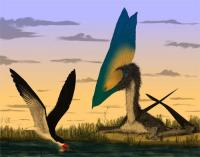
Physical and theoretical models show that pterosaurs (Thalassodromeus, right) could not meet the energy requirements of skimming, a rare feeding strategy practiced habitually by just a few extant Rynchops species (black skimmer, left). Credit: Image: Mark Witton In order to envisage the behaviors and lifestyles of now extinct animals, palaeontology often relies on extrapolating from modern species. Scientists identify shared anatomical features and infer from these shared ways of life. This method is often used to predict the diet of an extinct species based on comparisons of fossilized teeth, or used to conclude that species with large eyes were nocturnal. However, a new paper from Stuart Humphries, Richard Bonser, and colleagues, published in the open access journal PLoS Biology, provides a cautionary tale. Previous work on pterosaurs concluded that some species fed by skimming along the surface of the water with their mouths held open, but this paper overturns that inference, showing that this kind of feeding was highly unlikely to have occurred in pterosaurs after all.

| Biology | July 26, 2007 04:57 PM |
| Full story | 0 Comments | 8094 views |
| Biology | July 26, 2007 02:57 PM |
Cochlear implants—electronic devices inserted surgically in the ear to allow deaf people to hear—may restore normal auditory pathways in the brain even after many years of deafness.
| Full story | 0 Comments | 6745 views |

| Bioinformatics | July 26, 2007 12:57 PM |
Cancer patients don’t have time to waste. Many go through several different treatments, however, to find one that is more effective against their particular type of tumor.
| Full story | 0 Comments | 6390 views |

| AIDS & HIV | July 26, 2007 10:57 AM |
Researchers at the University of Minnesota’s Center for Drug Design have developed a new method to combat HIV/AIDS, potentially replacing the traditional cocktail drug approach.
| Full story | 0 Comments | 6661 views |

- In some genetic cases of microcephaly, stem cells fail to launch
- Yale team discovers how Zika virus causes fetal brain damage
- Scientists uncover the way a common cell enzyme alerts the body to invading bacteria
- Arctic gives clues on worst mass extinction of life
- Calcium channel blockers caught in the act at atomic level
Search Bio News Net
Free Biology Newsletter
- Flexibility That A.C.A. Lent to Work Force Is Threatened by...International Herald Tribune
- Bacteria Behind Legionnaires’ Disease Found at New York Police StationInternational Herald Tribune
- Prescription Price Crisis? 28 Million Americans See Spike in Drug...MSNBC.com: Health
- Seizing on Opioid Crisis, a Drug Maker Lobbies Hard for...International Herald Tribune
- Republicans are taking a big political risk on health careAP Health News
- Why We're So Divided Over Saving WolvesNational Geographic News