

The metamorphosis of biology into a science offering numerically precise descriptions of nature has taken a leap forward with a Princeton team's elucidation of a key step in the development of fruit fly embryos -- discoveries that could change how scientists think not just about flies, but about life in general.

| Biology | July 20, 2007 06:45 PM |
New research published in the journal Nature (19 July) has proved the single origin of humans theory by combining studies of global genetic variations in humans with skull measurements across the world. The research, at the University of Cambridge and funded by the Biotechnology and Biological Sciences Research Council (BBSRC), represents a final blow for supporters of a multiple origins of humans theory.
| Full story | 0 Comments | 6555 views |

| Molecular & Cell Biology | July 20, 2007 03:45 PM |
Pediatrics researchers have identified a gene variant that raises a child’s risk of Crohn’s disease, a chronic and painful condition attributed to inflammation of the gastrointestinal tract.
| Full story | 0 Comments | 7217 views |

| Biotechnology | July 20, 2007 12:45 PM |
Scientists report they have merged two of nature’s most elegant strategies for wet and dry adhesion to produce a synthetic material that one day could lead to more durable and longer-lasting bandages, patches, and surgical materials. As published in this week’s issue of the journal Nature, the scientists, supported by the National Institute of Dental and Craniofacial Research (NIDCR), part of the National Institutes of Health, have designed a synthetic material that starts with the dry adhesive properties of the gecko lizard and supplements it with the underwater adhesive properties of a mussel. The hybrid material, which they call a geckel nanoadhesive, proved in initial testing to be adherent under dry and wet conditions. It also adhered much longer under both extremes than previous gecko-based synthetic adhesives, a major issue in this area of research.
| Full story | 0 Comments | 5885 views |
| Molecular & Cell Biology | July 20, 2007 09:45 AM |
Scientists have shown for the first time that a protein involved in the transfer of fat in the blood may also influence how fat cells store fat. Richard E. Morton and Lahoucine Izem, research scientists at the Cleveland Clinic Foundation, have shown that the protein, called cholesteryl ester transfer protein (CETP), is involved in the cellular storage and regulation of cholesterol and other fats and, as a result, probably has unexpected contributions to obesity and diabetes.
| Full story | 0 Comments | 5593 views |
| Molecular & Cell Biology | July 20, 2007 06:45 AM |
A typical human mouth teems with as many as 700 different species of microbes. A handful of these have been specifically implicated in promoting gum disease, dental cavities, and bad breath, but for the most part, the make-up of this complex ecosystem and its impact on human health remain largely unexplored. A new device created by Howard Hughes Medical Institute (HHMI) researchers, however, may make some of the most reclusive members of this and other microscopic communities much more accessible for laboratory study.
| Full story | 0 Comments | 5522 views |
| Biology | July 20, 2007 03:45 AM |
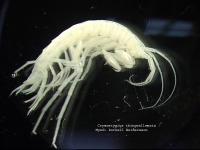
Crymostygius thingvallensis, the only species in a recently described family of groundwater amphipods Crymostygidae. Many scientists believe that the ice ages exterminated all life on land and in freshwater in large parts of the Northern Hemisphere, especially on ocean islands such as Iceland. Scientists at Holar University College and the University of Iceland have challenged that belief, at least when looking at groundwater animals. They have discovered two species of groundwater amphipods in Iceland that are the only animals species found solely in Iceland. “These finding can only be explained by these animals surviving glaciations in some kind of refugium under the glaciers,” says Bjarni K. Kristjánsson, the scientist who found the species.
| Full story | 0 Comments | 6070 views |

| AIDS & HIV | July 20, 2007 03:45 AM |
An international team of researchers has identified three gene variants in the DNA of 486 people infected with HIV that appear to have helped some of the patients fight off the virus and delay the onset of full-blown AIDS.
| Full story | 0 Comments | 5311 views |

- In some genetic cases of microcephaly, stem cells fail to launch
- Yale team discovers how Zika virus causes fetal brain damage
- Scientists uncover the way a common cell enzyme alerts the body to invading bacteria
- Arctic gives clues on worst mass extinction of life
- Calcium channel blockers caught in the act at atomic level
Search Bio News Net
Free Biology Newsletter
- Flexibility That A.C.A. Lent to Work Force Is Threatened by...International Herald Tribune
- Bacteria Behind Legionnaires’ Disease Found at New York Police StationInternational Herald Tribune
- Prescription Price Crisis? 28 Million Americans See Spike in Drug...MSNBC.com: Health
- Seizing on Opioid Crisis, a Drug Maker Lobbies Hard for...International Herald Tribune
- Republicans are taking a big political risk on health careAP Health News
- Why We're So Divided Over Saving WolvesNational Geographic News