
Biology News Net
RSS 2.0 Feed
Molecular & Cell Biology


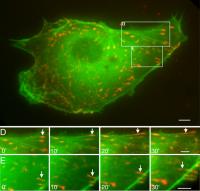
These time-lapse images of a bovine aortic endothelial cell reveal the motion toward the cell's nucleus of a message-carrying protein called paxillin (orange) in tandem with actin filaments (green). Credit: UC San Diego
Scientists have captured on video the intracellular version of a postal delivery service. Reporting in the journal Biochemical and Biophysical Research Communications (BBRC), bioengineering researchers at UC San Diego published videos of a key message-carrying protein called paxillin moving abruptly from hubs of communication and transportation activity on the cell surface toward the nucleus. Paxillin was labeled with a red fluorescence marker to make it stand out in live cells.

Video available at http://video-jsoe.ucsd.edu/asx/Paxillin.paper.wmv.asx

Molecular & Cell Biology


Cucurbita moschata, an obligate short-day flowering wild squash.
The length of the day relative to night, or photoperiod, is a strong determining factor for the induction of flowering in many plant species. Short day (SD) plants require a short day length (or more precisely, a long night) in order to flower. These are plants that flower as the days grow shorter, such as in the fall in temperate regions. Long day (LD) plants will flower when nights are short (and days are long), and typically flower in late spring or early summer. SD crops include rice and maize, and LD crops include wheat, barley, oats and peas. Day-neutral plants will flower under either long or short days. In addition to its fundamental importance in basic plant biology, understanding and manipulating the photoperiodic control of flowering time is an important objective in crop breeding and development programs, because it can aid in optimizing crop yields and other traits for local environmental conditions.

Molecular & Cell Biology

Researchers have discovered the first inherited gene mutation that increases a person's risk for chronic lymphocytic leukemia (CLL), one of the most common forms of the disease.

Molecular & Cell Biology

Scientists at Johns Hopkins have discovered one way the p53 gene does what it's known for—stopping the colon cancer cells. Their report will be published in the June 8 issue of Molecular Cell.