

Infectious disease can play a key role in mediating the outcome of competition between rival groups, as seen in the effects of disease-bearing conquistadors in the New World--or, on a much smaller ecological scale, the ability of bacteria to spread their viruses to competing bacteria. In a new study, researchers have compared two different general ways in which bacteria compete with one another, and they have found that each strategy seems to be particularly effective under different ecological circumstances--for example, depending on whether the bacteria are rare invaders or abundant residents. The findings, reported by a group of researchers including Sam P. Brown of the University of Texas at Austin, Cambridge University, and University of Montpellier II, and François Taddei of University of Paris, appear in the October 24th issue of Current Biology.

Mayo Clinic study suggests that a central nervous system viral infection can lead to memory deficits |
| Health & Medicine | October 23, 2006 10:33 PM |
In one of the first known laboratory studies that explores memory deficits associated with a viral infection of the central nervous system, Mayo Clinic researchers have evidence that this infection can lead to memory loss late in life. The study, which was conducted in animal models, suggests that over the lifetime of an individual, a picornavirus-related infection could possibly have a permanent effect on memory late in life.
| Full story | 0 Comments | 6904 views |

| Microbiology | October 23, 2006 09:33 PM |
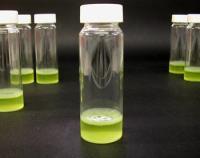
Psuedomonas fluorescens "wrinkly-spreader" biofilms. For more information, see the article by Brockhurst et al. in the October 24 issue of Current Biology. Understanding how cooperation evolves and is maintained represents one of evolutionary biology's thorniest problems. This stems from the fact that freeloading cheats will evolve to exploit any cooperative group that doesn't defend itself, leading to the breakdown of cooperation.
| Full story | 0 Comments | 7738 views |
| Health & Medicine | October 23, 2006 08:33 PM |
Computer-based tasks aimed at increasing mental activity and enhancing mental function can improve cognition in patients with Alzheimer's disease, serving as an effective addition to medications commonly used to treat the disease. Researchers found that the internet-accessible computer activities were even more successful than classic exercises of mental stimulation commonly used with dementia patients. The findings, from the Fundació ACE, Institut Català de Neurociències Aplicades in Barcelona, Spain, and the University of Pittsburgh School of Medicine, are published in the October issue of the Journal of Neurology, Neurosurgery and Psychiatry.
| Full story | 0 Comments | 7674 views |

| Molecular & Cell Biology | October 23, 2006 07:33 PM |
In a finding that furthers our understanding of how hybridization may contribute to genome changes and the evolution of new species, researchers have found that the genomes of three sunflower species that arose in evolution as hybrids of the same two parental types have undergone a massive proliferation of genetic entities known as transposable elements. The findings are reported by Mark Ungerer and colleagues at Kansas State University and appear in the October 24th issue of the journal Current Biology, published by Cell Press.
| Full story | 0 Comments | 11329 views |

| Biology | October 23, 2006 06:33 PM |
Before you request a paternity test, spend a few minutes looking at your child's eye color. It may just give you the answer you're looking for. According to Bruno Laeng and colleagues, from the University of Tromso, Norway, the human eye color reflects a simple, predictable and reliable genetic pattern of inheritance. Their studies, published this week in the Springer journal Behavioral Ecology and Sociobiology, show that blue-eyed men find blue-eyed women more attractive than brown-eyed women. According to the researchers, it is because there could be an unconscious male adaptation for the detection of paternity, based on eye color.
| Full story | 3 Comments | 26672 views |
| Molecular & Cell Biology | October 23, 2006 05:33 PM |
By investigating how animals can predict the timing of food availability, researchers have identified the first gene critical for anticipation of mealtime. This gene, called Period 2, is a key component of the circadian time-keeping system. The findings are reported by Urs Albrecht of the University of Fribourg and Etienne Challet of the University Louis Pasteur/CNRS and colleagues in the October 24th issue of the journal Current Biology, published by Cell Press.
| Full story | 0 Comments | 6127 views |
| Molecular & Cell Biology | October 23, 2006 03:33 PM |
Researchers have uncovered a new way in which the aging process is linked to DNA damage--which occurs normally as a result of cell metabolism and environmental influences--and the various ways in which cells repair that damage. In the new work, researchers found that cells in young fruit flies make use of a different mix of molecular DNA-repair mechanisms compared to cells in older flies. The findings are reported by William Engels and colleagues at the University of Wisconsin and appear in the October 24th issue of the journal Current Biology, published by Cell Press.
| Full story | 0 Comments | 7112 views |

- In some genetic cases of microcephaly, stem cells fail to launch
- Yale team discovers how Zika virus causes fetal brain damage
- Scientists uncover the way a common cell enzyme alerts the body to invading bacteria
- Arctic gives clues on worst mass extinction of life
- Calcium channel blockers caught in the act at atomic level
Search Bio News Net
Free Biology Newsletter
- Flexibility That A.C.A. Lent to Work Force Is Threatened by...International Herald Tribune
- Bacteria Behind Legionnaires’ Disease Found at New York Police StationInternational Herald Tribune
- Prescription Price Crisis? 28 Million Americans See Spike in Drug...MSNBC.com: Health
- Seizing on Opioid Crisis, a Drug Maker Lobbies Hard for...International Herald Tribune
- Republicans are taking a big political risk on health careAP Health News
- Why We're So Divided Over Saving WolvesNational Geographic News