

The authors describe the discovery of a novel class of mutations that disrupt the function of a gene and thereby cause a specific phenotype. The mutation created the appearance of an "illegitimate" microRNA (miRNA) recognition site in a gene that did not have it in its normal form. In this study, the gene concerned is the myostatin. This gene is expressed in the skeletal muscle and the function of the derived protein is to inhibit muscular growth. The mutation discovered among sheep exposed a recognition site for two miRNAs that are highly expressed in the muscle. In "mutant" animals, these miRNAs will consequently target the myostatin gene and block its translation. The result is that the absence of myostatin provokes a muscular hypertrophy among Texel sheep.

| Health & Medicine | June 5, 2006 09:22 PM |
Virtually all babies in the U.S. have their heels pricked soon after birth to get a blood sample for genetic testing. These "heel stick" tests identify rare metabolic disorders before they cause irreversible damage, but as more disorders are added to the screening – many states now test for 30 or more – false-positive results are on the rise. In the June issue of Pediatrics, researchers from Children's Hospital Boston report that false-positive results cause considerable parental stress, even when the baby proves negative on retesting, and that the stress could be alleviated by better education for parents and pediatricians.
| Full story | 1 Comment | 5784 views |

| Biology | June 5, 2006 08:22 PM |
By studying how genes influence the development and use of neural circuits that control a specific set of mating behaviors in the fruit fly, researchers have provided new insight into how instinctual behaviors – those that are not based on prior experience – arise in the developing nervous system. The work is reported by Jean-Christophe Billeter and other members of Stephen Goodwin's group at the University of Glasgow, along with research groups at Brandeis and California State University, and appears in the June 6th issue of Current Biology.
| Full story | 0 Comments | 5423 views |
| Health & Medicine | June 5, 2006 07:22 PM |
Want to know a person's real age? Just look at their hands, reports a study in the June issue of Plastic and Reconstructive Surgery®, the official medical journal of the American Society of Plastic Surgeons (ASPS). According to the study, most people can accurately tell a person's age by viewing only their hands.
| Full story | 0 Comments | 6377 views |
| Biology | June 5, 2006 06:43 PM |

A "robomussel," actually an intertidal temperature data logger, can mimic
the thermal characteristics of an individual mussel and record temperature
data at 10-minute intervals for up to seven months.Based on current trends for both air and water temperatures, by 2100 the body temperatures of California mussels -- found along thousands of miles of coast in the northeast Pacific Ocean and not just in California –- could increase between about 2 degrees F and 6.5 F depending on where they live.
| Full story | 0 Comments | 5142 views |

| Environment | June 5, 2006 06:22 PM |
Beavers, long known for their beneficial effects on the environment near their dams, are also critical to maintaining healthy ecosystems downstream. Researchers have found that ponds created by beaver dams raised downstream groundwater levels in the Colorado River valley, keeping soil water levels high and providing moisture to plants in the otherwise dry valley bottom. The results will be published 8 June in Water Resources Research, a journal of the American Geophysical Union.
| Full story | 0 Comments | 6745 views |
| Biology | June 5, 2006 05:22 PM |
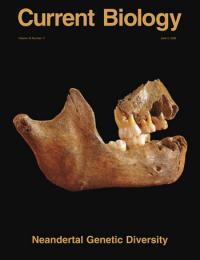
A new neandertal haplotype was recovered from a 100,000 year old specimen from Scladina cave. It confirms that Neandertals and modern humans were only distant relatives but concomitantly reveals that the genetic diversity of Neandertals has been thus far underestimated. Credits: G. FocantBy recovering and sequencing intact DNA from an especially ancient Neandertal specimen, researchers have found evidence suggesting that the genetic diversity among Neandertals was higher than previously thought. The findings also suggest that genetic diversity may have been higher in earlier Neandertal periods relative to later periods that approached the arrival of humans in Europe. Changes in genetic diversity over time are thought to reflect population events, such as low-population bottlenecks caused by disease or environmental change, as well as the influence of random genetic change. The findings are reported in the June 6th issue of Current Biology by a group of researchers including Ludovic Orlando and led by Catherine Hänni of Ecole Normale Supérieur in Lyon, France.
| Full story | 0 Comments | 8092 views |

| Microbiology | June 5, 2006 04:22 PM |
Chocolate lovers, beware. Each year 20 percent of the cacao beans that are used to make chocolate are lost to plant diseases, but even greater losses would occur if important diseases spread.
| Full story | 0 Comments | 7344 views |

| Molecular & Cell Biology | June 5, 2006 02:22 PM |
Researchers have found that the neurotransmitter serotonin, known to affect many behaviors, also appears to promote lasting, quality sleep in an animal model for understanding how sleep is regulated. While central to the lives of most animals, the proper regulation sleep remains a largely enigmatic process.
| Full story | 0 Comments | 8934 views |

- In some genetic cases of microcephaly, stem cells fail to launch
- Yale team discovers how Zika virus causes fetal brain damage
- Scientists uncover the way a common cell enzyme alerts the body to invading bacteria
- Arctic gives clues on worst mass extinction of life
- Calcium channel blockers caught in the act at atomic level
Search Bio News Net
Free Biology Newsletter
- Flexibility That A.C.A. Lent to Work Force Is Threatened by...International Herald Tribune
- Bacteria Behind Legionnaires’ Disease Found at New York Police StationInternational Herald Tribune
- Prescription Price Crisis? 28 Million Americans See Spike in Drug...MSNBC.com: Health
- Seizing on Opioid Crisis, a Drug Maker Lobbies Hard for...International Herald Tribune
- Republicans are taking a big political risk on health careAP Health News
- Why We're So Divided Over Saving WolvesNational Geographic News