

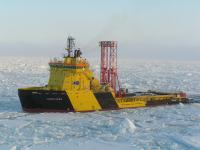
Swedish drilling vessel, Vidar Viking, led the Arctic Coring Expedition, when scientists set out to retrieve subseafloor sediment records to support their investigations into climate change.A group of ocean-drilling research scientists that explored the Arctic Ocean subseafloor in Fall 2004 have released new findings in a report to be published in Nature on June 1. The report, supported by Integrated Ocean Drilling Program (IODP) research operations, contains analyses of subseafloor sediment samples gathered from 430 meters beneath the Arctic Ocean, near the North Pole. To recover the sediments that yielded the prehistoric climate records, the research team needed to manage three ice-breakers, one of which was equipped with a drill rig. The sediment records were recovered from the Lomonsov Ridge, in water about 1000 meters deep.

| Environment | May 31, 2006 11:40 PM |
| Full story | 0 Comments | 6392 views |
| Environment | May 31, 2006 10:40 PM |
Ecosystems containing many different plant species are not only more productive, they are also better able to withstand and recover from climate extremes, pests and disease over long periods of time.
| Full story | 0 Comments | 5931 views |

| Biology | May 31, 2006 09:19 PM |
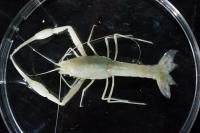
Closeup of one of the crustaceans found in cave near Ramle, IsraelDiscovery of eight previously unknown, ancient animal species within "a new and unique underground ecosystem" in Israel was revealed today by Hebrew University of Jerusalem researchers.
| Full story | 1 Comment | 8305 views |

| Molecular & Cell Biology | May 31, 2006 08:19 PM |
Researchers found that they could eliminate the rewarding effect of cocaine on mice by genetically manipulating a key target of the drug in the animal's brain.
| Full story | 0 Comments | 9733 views |
| Biology | May 31, 2006 07:40 PM |
Comfortable living is not why so many different life forms seem to converge at the warmer areas of the planet.
| Full story | 0 Comments | 5656 views |
| Biology | May 31, 2006 06:40 PM |
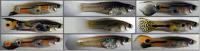
Guppies are small tropical fish native to Trinidad and other areas of the Caribbean. They are characterized by sexual dimorphism in size and color patterns. The color pattern variation of the males (left and right columns) is mostly genetic variation, not environmental. New data indicates that rare-colored males not only attract females (center column), they are also more likely to survive predation.Any owner of a freshwater aquarium likely has had guppies (Poecilia reticulata), those small brightly colored fish with a propensity for breeding. Now guppy populations manipulated in natural habitats in Trinidad have taught researchers an evolutionary lesson on the survival of a rare genetic trait.
| Full story | 0 Comments | 8395 views |

| Biotechnology | May 31, 2006 05:39 PM |
Researchers have discovered the genetic controls which cause trees to stop growing and go dormant in the fall, as well as the mechanism that causes them to begin flowering and produce seeds – a major step forward in understanding the basic genetics of tree growth.
| Full story | 0 Comments | 6197 views |

- In some genetic cases of microcephaly, stem cells fail to launch
- Yale team discovers how Zika virus causes fetal brain damage
- Scientists uncover the way a common cell enzyme alerts the body to invading bacteria
- Arctic gives clues on worst mass extinction of life
- Calcium channel blockers caught in the act at atomic level
Search Bio News Net
Free Biology Newsletter
- Flexibility That A.C.A. Lent to Work Force Is Threatened by...International Herald Tribune
- Bacteria Behind Legionnaires’ Disease Found at New York Police StationInternational Herald Tribune
- Prescription Price Crisis? 28 Million Americans See Spike in Drug...MSNBC.com: Health
- Seizing on Opioid Crisis, a Drug Maker Lobbies Hard for...International Herald Tribune
- Republicans are taking a big political risk on health careAP Health News
- Why We're So Divided Over Saving WolvesNational Geographic News