Biology News Net
RSS 2.0 Feed
AIDS & HIV
AIDS & HIVNovember 13, 2005 02:18 PM

A man in the U.K. tested positive for HIV-1 3 years ago and then tested negative a year later. It is the first case of 'documented' clearance of the virus; but there is a catch. The man does not want to get tested anymore to confirm his HIV-1 negative status for some reason. He also does not want to volunteer for further studies that could help understand how he cleared the virus, if it is really the case. Was his first diagnosis a false positive? On the other hand, maybe his negative test was a false negative a year later? Is it a miracle or he is just a lucky man with a very effective immune system? What do you think?

See the whole story at the BBC : Caution over HIV 'cure' claims

0 Comments 6480 views
Biotechnology

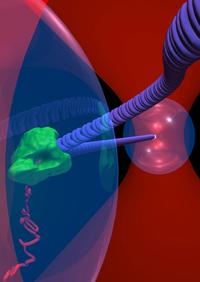
su1108.jpgA Stanford University research team has designed the first microscope sensitive enough to track the real-time motion of a single protein down to the level of its individual atoms. Writing in the Nov. 13 online issue of the journal Nature, the Stanford researchers explain how the new instrument allowed them to settle long-standing scientific debates about the way genes are copied from DNA--a biochemical process that's essential to life.

Health & Medicine

Scientists at the Universities of Heidelberg and Ulm and a unit of the European Molecular Biology Laboratory (EMBL) in Monterotondo, Italy, have discovered that a specific signal within brain cells may determine whether they live or die after a stroke. Their study, published online (November 13) by Nature Medicine, strongly suggests that new therapies for victims of strokes could be developed by controlling a molecule involved in passing the signal.

Health & Medicine

An experimental treatment that spares disability from acute stroke may be delivered much later than the current three-hour treatment standard – a potential advance needed to benefit more stroke victims.

Biology

Researchers working with rats have found the first solid evidence that still "sharp" older brains store and encode memories differently than younger brains.