
Biology News Net
RSS 2.0 Feed
Biology

Batagur_3.JPG
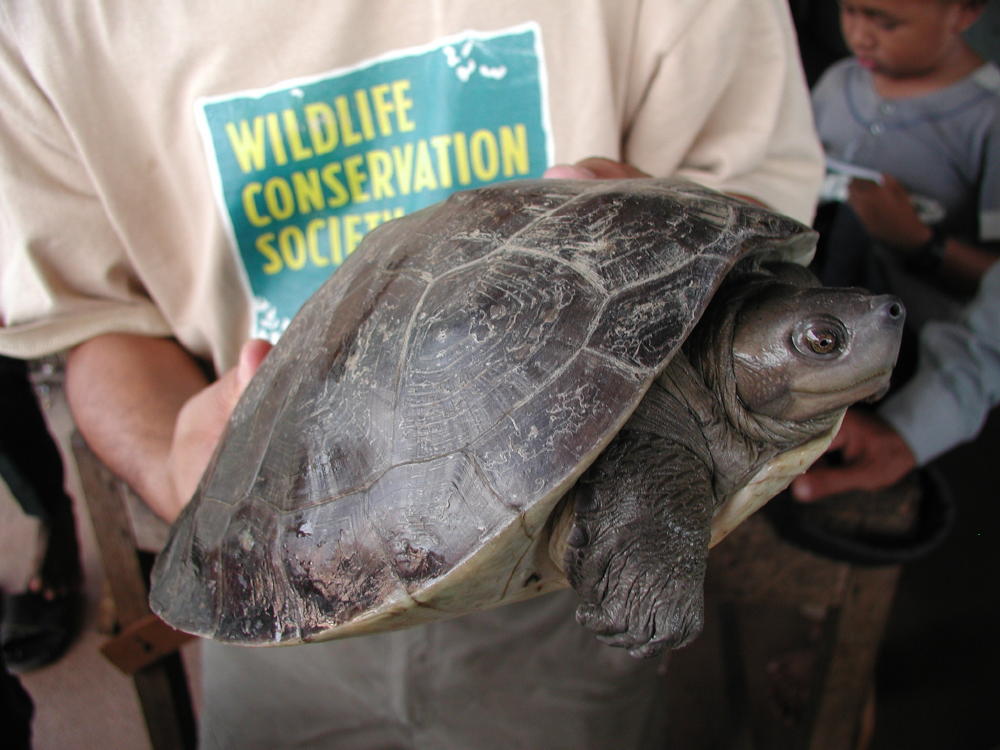
Sre Ambel River mangrove turtle. Picture courtesy of WCS.
An extremely rare "royal" turtle narrowly escaped a trip to a Chinese soup-pot, thanks to a tiny microchip implanted in its skin, according to experts from the New York-based Wildlife Conservation Society (WCS), who rediscovered the species four years ago in Cambodia.

Wildlife inspectors discovered the 33-pound (15 kg) turtle in a crate of confiscated wildlife in Vietnam, where smugglers planned to send the shipment on to China. The inspectors used a special reading device to detect the microchip, and quickly learned that the turtle came from Cambodia, where it was released two years ago in the Sre Ambel River ago by Cambodia's Fisheries Department. Authorities also called in the Vietnam-based conservation group Wildlife at Risk who confirmed field identification of the turtle.

Molecular & Cell Biology

A startling discovery about the properties of human bone has been made by scientists at the University of California, Santa Barbara.

The scientists describe their results –– finding a sort of "glue" in human bone –– in the cover story of the August issue of the international scientific journal, Nature Materials.

Health & Medicine

A compound derived from cottonseed could help improve the effectiveness of chemotherapy at treating head and neck cancer, researchers at the University of Michigan Comprehensive Cancer Center have found.

Molecular & Cell Biology

The tongue's ability to differentiate between sweet and bitter tastes may reside in the same taste bud cells, a new study reports.

The study explains the discovery of a chemical messenger called neuropeptide Y (NPY) in taste bud cells. Though researchers have long known that NPY is active in the brain and gut, this is the first study to show that it is also active in taste bud cells.

Environment

Changing environmental conditions in the Canadian Rockies are stifling the mating choices of butterflies in the region, say University of Alberta researchers.

Environment

The chance discovery of a vast ecosystem beneath the collapsed Larsen Ice Shelf will allow scientists to explore the uncharted life below Antarctica's floating ice shelves and further probe the origins of life in extreme environments. Researchers discovered the sunless habitat after a recent underwater video study examining a deep glacial trough in the northwestern Weddell Sea following the sudden Larsen B shelf collapse in 2002.

Molecular & Cell Biology

New knowledge of how plants "breathe" may help us breed and select plants that would better survive scorching summers, says a University of Toronto study.

Microbiology

Cornell University scientists have developed a rapid, less costly and sensitive new technique for detecting group A streptococcus, the bacteria that cause scarlet fever. Details will be announced today at the Institute of Food Technologists Annual Meeting and Food Expo in New Orleans.

Health & Medicine

An outbreak of 72 cases of monkeypox in the United States during the summer of 2003 didn't produce a single fatality, even though the disease usually kills 10 percent of those infected.

Why did none of the patients die? New research from Saint Louis University Health Sciences Center and several partner institutions may provide an answer.

AIDS & HIV

Interleukin-2 (IL-2), an immune-boosting drug used experimentally in HIV therapy, greatly increases the lifespan of certain subsets of immune system T cells in some HIV-positive people who respond to this therapy, discovered researchers from the National Institutes of Health (NIH) Clinical Center and the National Institute of Allergy and Infectious Diseases (NIAID), part of the NIH. A report describing the study, led by the Clinical Center’s Joseph A. Kovacs, M.D., appears online today in The Journal of Clinical Investigation.

Molecular & Cell Biology

A common chemical used in the manufacturing and pharmaceutical industries can repair damage to cardiac muscle cell membranes and prevent heart failure in mice with the genetic mutation that causes Duchenne muscular dystrophy, according to scientists at the University of Michigan Medical School.

Molecular & Cell Biology

A protein that provides a vital passage through a bacterium's outer cell wall will misfold and malfunction if that wall is built of the 'wrong' material, scientists at The University of Texas Medical School at Houston report in a finding that has long-term implications for understanding diseases caused by misfolded proteins such as cystic fibrosis, Alzheimer's disease, and mad cow disease.