Biology News Net
RSS 2.0 Feed
Biology

utah042805_1sm.jpg
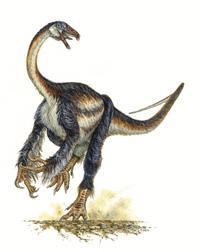
This artist's conception shows the bird-like feathered dinosaur Falcarius utahensis. A mass graveyard with fossils of hundreds to thousands of the creatures was found in Utah by paleontologists from the Utah Geological Survey and the Utah Museum of Natural History at the University of Utah. They reported the discovery in the May 5, 2005, issue of the journal Nature. The small, 4.5-foot-tall dinosaur lived 125 million years ago and represents a missing link between earlier, vicious meat-eaters and later, plant-munching herbivores. Credit: Mike Skrepnick.
Scientists have discovered a mass graveyard of bird-like feathered dinosaurs in Utah. The previously unknown species provides clues about how vicious meat-eaters related to Velociraptor ultimately evolved into plant-munching vegetarians.

Discovery of the bizarre new species, Falcarius utahensis, is reported in the Thursday May 5 issue of the journal Nature by paleontologists from the Utah Geological Survey and the Utah Museum of Natural History at the University of Utah.

Scientists do not yet know if the creature ate meat, plants or both, says James Kirkland, Utah state paleontologist at the Utah Geological Survey and principal scientist for the new study. But "Falcarius shows the beginning of features we associate with plant-eating dinosaurs, including a reduction in size of meat-cutting teeth to leaf-shredding teeth, the expansion of the gut to a size needed to ferment plants, and the early stages of changing the legs so they could carry a bulky body instead of running fast after prey."

The adult dinosaur walked on two legs and was about 13 feet long (4 meters) and stood 4.5 feet tall (1.4 meters). It had sharp, curved, 4-inch-long (10 centimeter) claws.

Falcarius, which dates to the Early Cretaceous Period about 125 million years ago, belongs to a group of dinosaurs known as therizinosaurs. The group includes feathered dinosaurs such as Beipiaosaurus that were found in southeast China in recent years. Falcarius and Beipiaosaurus are about the same age and appear to represent an intermediate stage between deadly carnivores and later, plant-eating therizinosaurs. Falcarius is anatomically more primitive than the Chinese therizinosaurs.

Biology

Scientists at the University of Washington and their colleagues at other research centers have found a way to significantly extend the lifespan of mice while reducing the impact of the aging process. Their study, which will be published online by the journal Science on May 5, lends more credence to the free-radical theory of aging.

Stem Cell Research

While the field of human embryonic stem cell research receives a tremendous amount of public attention, many scientists are also exploring the potential of adult stem cells for possible therapies. But this field raises other difficulties. Although adult stem cell research isn't fraught with the controversies that surround embryonic stem cells, adult stem cells are extremely difficult to isolate and then to multiply in a lab dish. Now, as reported in the May 6 issue of the journal Cell, researchers in the lab of Whitehead Institute Member Rudolf Jaenisch have discovered a mechanism that might enable scientists to multiply adult stem cells quickly and efficiently.

Microbiology

llnl050505_1sm.jpg
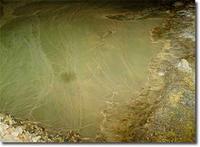
Acidophilic microbes thrive in this biofilm growing inside an abandoned mine at Iron Mountain, Calif. The microbes' metabolism creates highly toxic acid mine drainage, a major environmental problem associated with the mining of coal and uranium.
When humans gather in communities, they specialize and adapt. Farmers grow crops and raise animals for food based on the area's climate and soil. Builders fashion structures engineered to keep their inhabitants warm in winter and cool in summer. Physicians tend to the sick; police and firefighters protect the public.

Communities of microorganisms, researchers are finding, exhibit very similar behavior – genetically evolving, specializing and cooperating in ways that allow them to adapt to extreme conditions of temperature, acidity, toxicity and pressure.

Molecular & Cell Biology

New research on a bacterium that can survive encounters with specific immune system cells has strengthened scientists' belief that these plentiful white blood cells, known as neutrophils, dictate whether our immune system will permit or prevent bacterial infections. A paper describing the research was released today online in The Journal of Immunology. Frank R. DeLeo, Ph.D., of Rocky Mountain Laboratories (RML), part of the National Institute of Allergy and Infectious Diseases (NIAID) of the National Institutes of Health, directed the work at RML, in Hamilton, MT, in collaboration with lead author Dori L. Borjesson, D.V.M., Ph.D., of the University of Minnesota in St. Paul.

Biology

Embryos distinguish vibrational differences, hatching early to snake attacks but not to rain

At the edge of Ocelot Pond, Panama, red-eyed tree frog embryos still in their eggs are about to make a life-or-death decision. The egg clutch, a gelatinous blob clinging to a leaf overhanging the water, has been spied by a bright green parrot snake. In a twinkling, the snake tears a few eggs from the clutch.

Microbiology

By deciphering the ingenious mechanism used by a particular enzyme to modify bacterial chromosome chemistry, scientists have come a step closer to designing a new kind of drug that could stop virulent bacterial infections in their tracks. Their research will be published in the May 6 issue of the journal Cell.

Microbiology

A microbial community thriving under bizarre natural conditions in California could be a gold mine to researchers in their quest to understand the complex biological relationships and how these inner workings might apply on a grander scale.