

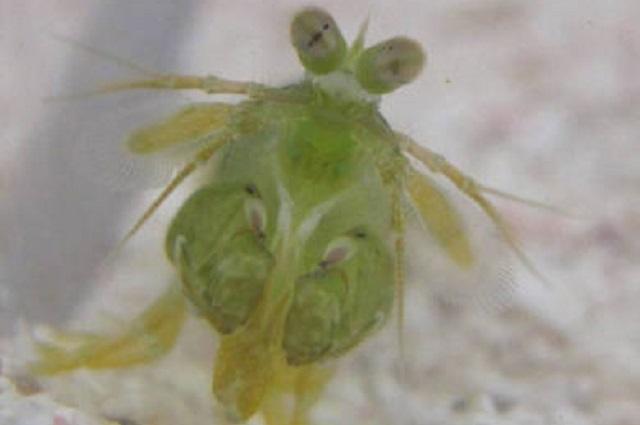
A mantis shrimp displaying its meral spots, visible as two purple dots. Mantis shrimp, often brightly colored and fiercely aggressive sea creatures with outsized strength, use the ultraviolet reflectance of their color spots as well as chemical signals to assess the likelihood of victory in combat, according to research led by a Tufts University doctoral candidate. The findings, published today in Royal Society Open Science, mark the first time that researchers have demonstrated that mantis shrimp (Neogonodactylus oerstedii) use both color and chemical cues when fighting over resources.

| Biology | August 3, 2016 04:41 PM |
| Full story | 0 Comments | 19629 views |

| Health & Medicine | August 3, 2016 04:41 PM |
Patients suffering from so-called immune-mediated neuropathies frequently have a long medical record. As there are no diagnostic tests available to reliably diagnose the disease, the diagnosis is frequently made belatedly and patients can be misdiagnosed. Accordingly, many years often pass before an effective therapy is started. However, not all patients respond to first-choice drugs even when treated immediately.
| Full story | 0 Comments | 9883 views |
| Biology | August 3, 2016 04:41 PM |
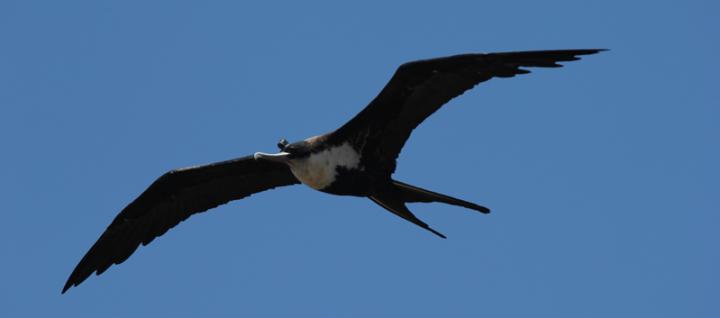
Frigatebirds reaches a wingspan of over two metres. They are excellent gliders and can cover several hundred kilometers a day. For the first time, researchers have discovered that birds can sleep in flight. Together with an international team of colleagues, Niels Rattenborg from the Max Planck Institute for Ornithology in Seewiesen measured the brain activity of frigatebirds and found that they sleep in flight with either one cerebral hemisphere at a time or both hemispheres simultaneously. Despite being able to engage in all types of sleep in flight, the birds slept less than an hour a day, a mere fraction of the time spent sleeping on land. How frigatebirds are able to perform adaptively on such little sleep remains a mystery.
| Full story | 0 Comments | 19091 views |

- In some genetic cases of microcephaly, stem cells fail to launch
- Yale team discovers how Zika virus causes fetal brain damage
- Scientists uncover the way a common cell enzyme alerts the body to invading bacteria
- Arctic gives clues on worst mass extinction of life
- Calcium channel blockers caught in the act at atomic level
Search Bio News Net
Free Biology Newsletter
- Flexibility That A.C.A. Lent to Work Force Is Threatened by...International Herald Tribune
- Bacteria Behind Legionnaires’ Disease Found at New York Police StationInternational Herald Tribune
- Prescription Price Crisis? 28 Million Americans See Spike in Drug...MSNBC.com: Health
- Seizing on Opioid Crisis, a Drug Maker Lobbies Hard for...International Herald Tribune
- Republicans are taking a big political risk on health careAP Health News
- Why We're So Divided Over Saving WolvesNational Geographic News